
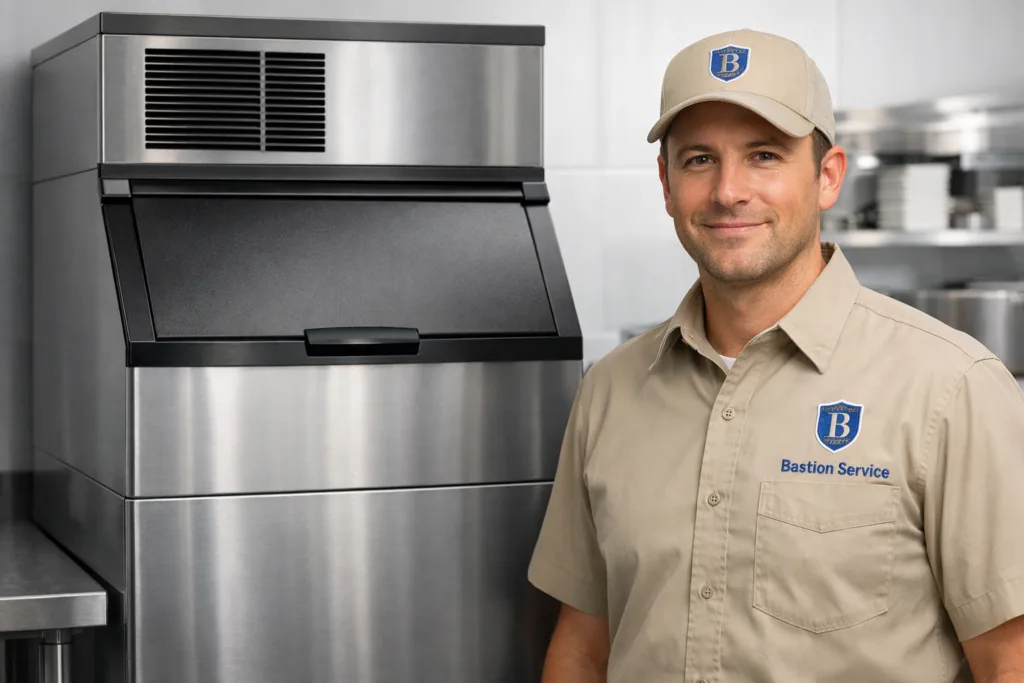




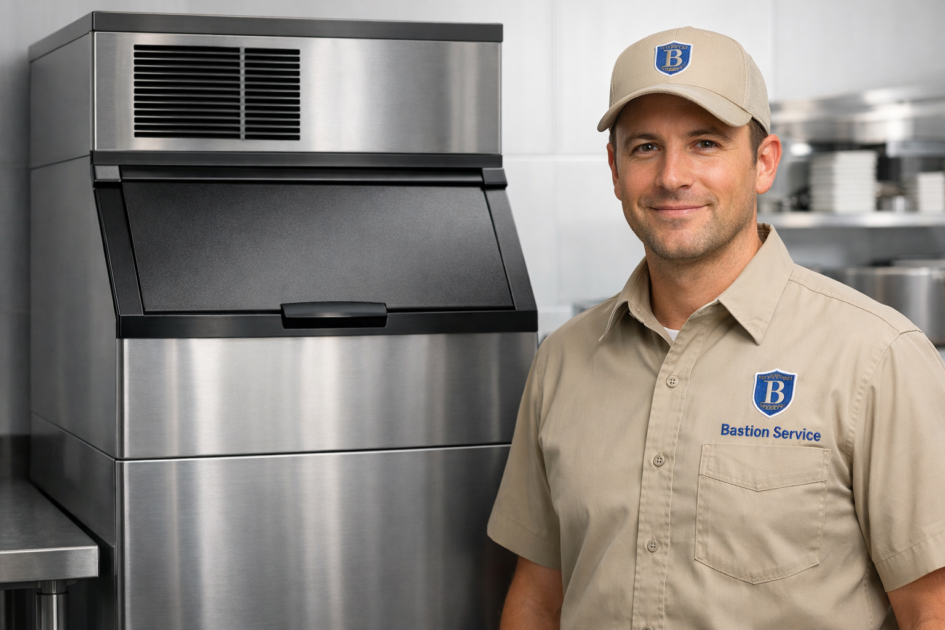
Commercial ice machines usually fail in ways that show up before a complete shutdown. A unit may still run but produce ice too slowly, make undersized or cloudy cubes, drop wet ice into the bin, or stop harvesting consistently. In restaurants, bars, cafés, markets, and medical or office breakroom settings, those symptoms can quickly affect service speed, food handling, and staff workflow.
Related commercial equipment paths in Sawtelle include Hoshizaki Ice Machine Repair in Sawtelle.
Common symptoms and what they often mean
Low ice production is one of the most frequent complaints. In many cases, the cause is not simply “the machine is old.” Production loss can come from scale buildup on water-contact surfaces, a restricted inlet valve, a clogged filter, weak condenser airflow, sensor problems, or a refrigeration issue that prevents the freeze cycle from finishing correctly. When output drops gradually, that usually points to buildup, airflow restriction, or a component that is weakening rather than a sudden single-point failure.
Ice quality also provides useful clues. Hollow cubes, soft cubes, sheets of fused ice, or irregular slab formation can suggest water distribution trouble, fill timing errors, uneven freezing, or harvest problems. If the bin contains clumped ice or excessive meltwater, the machine may be producing inconsistent batches, storing ice in poor temperature conditions, or failing to complete cycles the way it should.
Leaks deserve prompt attention because they can involve more than one system. Water on the floor may come from a supply connection, drain routing problem, internal overflow, cracked tubing, or ice obstruction that causes water to escape where it should not. In a commercial space, even a small recurring leak can create sanitation concerns, slip risk, and unnecessary cleanup time.
Why ice machines fall behind during busy operations
An ice machine that cannot recover during peak periods is not always undersized for the business. It may be losing performance because the condenser is dirty, the incoming water supply is restricted, the ambient temperature around the machine is too high, or the refrigeration section is no longer pulling temperatures down efficiently. Recovery issues often show up first during lunch, dinner, events, or other high-demand windows when the machine has little room for error.
If the symptom includes longer freeze times, incomplete batches, or repeated cycling without normal output, the service visit should determine exactly where the production sequence is slowing down. That means checking fill, freeze, harvest, bin controls, drain behavior, and the condition of the cooling system rather than guessing based only on the visible symptom.
When the problem may involve more than the ice machine
Some Sawtelle businesses notice ice trouble at the same time they notice poor holding temperatures in nearby cold equipment. If cooling problems are centered in the freezer compartment, Commercial Freezer Repair in Sawtelle may be more relevant while the ice system is being evaluated, especially when frost, slow temperature recovery, or airflow problems appear in the same work area.
In other cases, the ice machine itself is only part of a broader refrigeration issue. If prep units or reach-in storage are also warming, cycling too often, or struggling after door openings, Commercial Refrigerator Repair in Sawtelle may be the better service path for the related refrigerator symptoms while the source of the ice production issue is being narrowed down.
Signs continued use could make the repair worse
It is common for staff to keep using a machine as long as it still makes some ice, but partial operation can still lead to bigger failures. A machine that runs extended cycles to produce fewer batches puts added strain on motors, controls, pumps, and refrigeration components. Repeated freeze-ups, poor drainage, or meltback in the bin can also create secondary problems that increase cleanup, shorten component life, and complicate the eventual repair.
Businesses should be cautious when the unit is shutting off intermittently, making grinding or buzzing sounds, producing only partial batches, or showing visible scale and overflow at the same time. Those are signs that the machine may no longer be failing in just one area.
Repair versus replacement
Repair is often the right move when the machine is structurally sound and the fault is limited to a valve, sensor, pump, fan, control, water-path component, or a serviceable refrigeration-related issue. A targeted repair can restore output and stabilize operation without the higher cost and disruption of replacement.
Replacement becomes more realistic when the unit has chronic reliability issues, advanced corrosion, major internal wear, poor sanitation condition, or repeated service needs that continue to interrupt operations. The decision should also account for parts availability, the age of the machine, and how costly downtime is for the business. For some operations, a machine that “mostly works” is still too risky if it regularly falls short during peak demand.
What a service visit should clarify
A productive commercial ice machine repair appointment should identify where the failure is happening in the cycle and why. That includes confirming whether the problem starts with water supply, freezing performance, harvest timing, bin control, drainage, airflow, or a deeper sealed-system concern. The most useful outcome is a specific explanation of the failure, what should be addressed now, and whether the equipment is likely to remain reliable after repair.
For Sawtelle businesses, that kind of diagnosis supports better planning around labor, inventory, and downtime. Instead of treating every low-output or leak complaint as the same problem, the goal is to identify the actual cause and choose the repair path that best protects daily operations.


