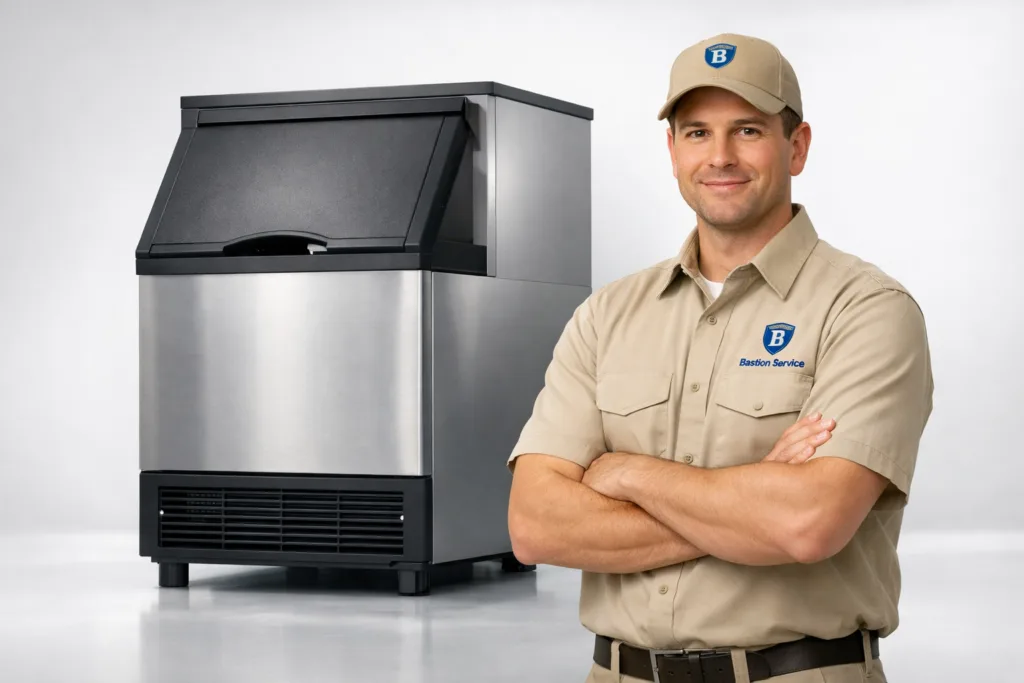




When a Manitowoc ice machine starts falling behind, the effect is usually felt immediately in day-to-day operations. Ice shortages, leaking water, irregular harvest cycles, or shutdowns can disrupt beverage service, prep flow, and staff routines. For businesses in Sawtelle, the right next step is to schedule service based on the exact symptom pattern so the problem can be isolated before it leads to broader equipment downtime.
Related commercial service paths in Sawtelle include Manitowoc Commercial Repair in Sawtelle, Commercial Ice Machine Repair in Sawtelle, and Hoshizaki Ice Machine Repair in Sawtelle.
Service should focus on the symptom, not just the shutdown
Manitowoc ice machines can fail in ways that look similar on the surface but come from very different causes. Low production may be tied to restricted water flow, scale buildup, condenser problems, refrigeration loss, or sensor issues. A machine that stops mid-cycle may be dealing with controls, safety cutoffs, drain problems, or harvest faults. That is why repair should begin with a full operating check rather than replacing parts based on guesswork.
Bastion Service helps businesses in Sawtelle evaluate these issues in a way that supports repair planning, scheduling, and a faster return to normal ice production. The goal is to identify what failed, what contributed to it, and whether the unit can be restored reliably with repair.
Common Manitowoc ice machine problems and what they often mean
Low ice production or slow recovery
If the bin is not filling as expected, the machine may still be running but not producing enough during normal demand. Common causes include a restricted water supply, scaled components, dirty condenser surfaces, poor airflow, failing water-related parts, or a refrigeration issue that slows freeze time. In many cases, staff first notice the problem when the machine cannot recover fast enough during busy periods.
No ice at all
A complete stop in ice production can point to power loss, control failure, a failed sensor, water fill problems, freeze-cycle interruption, or a fault that prevents harvest. When a Manitowoc machine is on but not making ice, the important detail is whether it fills, freezes, circulates water, or attempts to cycle at all. Those behaviors help narrow the repair path quickly.
Thin, incomplete, or poor-quality cubes
Misshapen or cloudy ice often signals fill inconsistencies, mineral buildup, filtration issues, temperature imbalance, or evaporator-related problems. Poor ice quality is not only a product issue. It can also indicate a machine that is working harder than it should, which can increase wear and reduce dependable output over time.
Leaks or water around the machine
Water on the floor may come from clogged drains, loose connections, overflow during fill, cracked lines, or problems during freeze and harvest. Even a small leak should be checked promptly because it can affect sanitation, create slip hazards, and damage adjacent surfaces or equipment.
Shutting down, short cycling, or restarting unexpectedly
Repeated stopping and restarting usually means the machine is not completing normal operation. Possible causes include control faults, overheating conditions, sensor failures, electrical issues, or protective shutdowns triggered by another underlying problem. A unit that keeps cycling off should not be treated as stable just because it comes back on temporarily.
Noise changes during operation
Buzzing, rattling, grinding, or knocking sounds can point to fan motor problems, pump trouble, loose internal parts, scale interference, or strain during harvest. Changes in sound often appear before a full breakdown, making them a useful reason to schedule service before production stops entirely.
Why is my Manitowoc ice machine not making enough ice?
This is one of the most common service calls because several different faults can reduce output without stopping the machine completely. In a Manitowoc unit, low production may be caused by:
- Restricted incoming water flow
- Scale buildup on internal components
- Dirty condenser coils or poor airflow
- Slow or incomplete freeze cycles
- Harvest problems that delay the next batch
- Sensor or control issues affecting timing
- Refrigeration performance that has started to weaken
When output drops gradually, it is easy to assume the machine only needs cleaning or a reset. Sometimes that helps, but recurring low production usually means there is a system-level issue that should be diagnosed before the machine loses more capacity.
When to stop relying on resets and schedule repair
Simple resets may get a machine running again for a short time, but repeated interruptions usually mean the underlying fault is still present. If the unit leaks, shuts down, takes too long to freeze, makes inconsistent ice, or shows the same problem again after cleaning, service is usually the better next step.
It is time to book repair when:
- Ice output is no longer keeping up with normal demand
- The machine starts and stops unpredictably
- Harvest cycles are delayed or incomplete
- Water is pooling near the unit
- Ice appearance or consistency changes suddenly
- Staff are hearing unusual noise during freeze or harvest
- The same fault keeps returning after basic troubleshooting
Continuing to run a struggling machine can worsen wear on pumps, motors, controls, and refrigeration components. It can also increase cleanup issues and create avoidable interruptions during service hours.
Repair or replacement depends on stability after service
Many Manitowoc ice machine problems can be repaired effectively when the failure is limited to a specific component or a correctable operating condition. Water system faults, sensor issues, drain restrictions, certain control problems, and maintenance-related performance drops often fall into that category.
Replacement becomes a more serious consideration when the machine has recurring breakdowns, multiple systems are failing together, corrosion is advanced, or the cost of restoring stable operation no longer makes sense for the business. The key question is not just whether the unit can run again, but whether it can return to consistent production without repeated disruption.
What to expect from a well-planned service visit
A useful service call should do more than confirm that the machine is having trouble. It should identify where the operating sequence is breaking down and whether the issue is tied to water supply, drainage, controls, harvest function, refrigeration performance, or maintenance condition. That includes checking how the machine fills, freezes, releases ice, and responds over a full cycle when possible.
For businesses in Sawtelle, that kind of evaluation helps with immediate repair decisions and with planning around downtime. If the machine can be restored, the repair path is clearer. If the unit is nearing the end of reliable service life, the decision becomes easier because it is based on actual operating condition rather than repeated trial-and-error fixes.
If your Manitowoc ice machine is making less ice, leaking, shutting down, or struggling through freeze and harvest cycles, scheduling service early usually protects both uptime and workflow. For Sawtelle businesses, the most practical next step is a symptom-based repair visit that identifies the fault, explains the repair options, and helps get the machine back into dependable operation.