
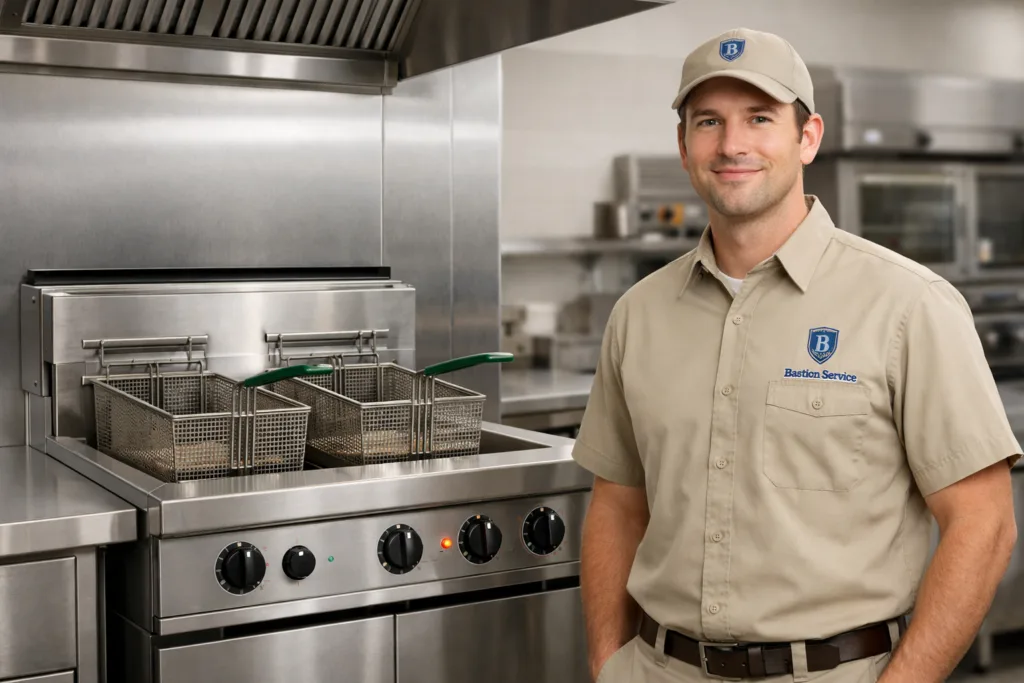




In a busy Mid-Wilshire kitchen, fryer problems tend to show up first in production flow: longer ticket times, uneven color on fried items, or staff having to wait for oil to recover between batches. Those symptoms matter because the same complaint can point to very different failure paths, including heat-source problems, control issues, sensor drift, safety shutdowns, or oil-related performance loss.
Related commercial equipment paths in Mid-Wilshire include Frymaster Fryer Repair in Mid-Wilshire and Pitco Fryer Repair in Mid-Wilshire.
Common fryer symptoms and what they can mean
A fryer that will not heat at all may be dealing with an ignition failure, a tripped high-limit, a control fault, a power-supply issue, or a failed heating component. A fryer that heats only sometimes can be harder to pin down, since intermittent operation may involve loose electrical connections, unstable gas ignition, a weak contactor, or a sensor that is no longer reading accurately.
Slow recovery is another common complaint in commercial settings. If the fryer struggles to return to set temperature after each basket drop, the problem may involve weak burner performance, element output loss, restricted airflow, carbon buildup, sensor inaccuracy, or controls that are cycling incorrectly. This is often where businesses notice food quality changes before a full equipment shutdown happens.
Temperature swings usually show up as products cooking too dark, too pale, or inconsistently from one batch to the next. That can indicate thermostat drift, RTD or probe problems, overheating conditions, or a fryer that is technically heating but not controlling oil temperature reliably under normal kitchen demand.
Signs the issue may be more than routine wear
Repeated resets, random shutdowns, and recurring error codes often suggest a deeper control or safety-circuit problem rather than simple day-to-day wear. If the fryer runs briefly and then locks out, service should focus on why the unit is failing during operation, not just on getting it restarted.
Leaks also deserve prompt attention. Oil around drain valves, fittings, or cabinet areas can create cleanup hazards, affect safe operation, and sometimes point to failing seals or stressed components. Smoke or sharp odors outside normal cooking conditions can indicate residue buildup, overheating, or burner issues that should be checked before continued use.
If the symptom involves fryer heat instability alongside broader cooking-line temperature problems, Commercial Oven Repair in Mid-Wilshire may be the better service path for the oven side of the issue while the fryer is diagnosed separately.
Why proper diagnosis matters before parts are approved
Commercial fryer repair is rarely just about replacing the first part that seems likely. A fryer that appears to have a thermostat problem may actually have a bad sensor input, damaged wiring, an ignition interruption, or a control board that is no longer responding correctly. Swapping parts too early can increase cost and delay a reliable fix.
A solid diagnostic process usually includes checking the heat source, verifying temperature response, reviewing safety devices, inspecting visible wear points, and confirming whether the failure is constant or intermittent. For gas units, ignition sequence and flame performance matter. For electric units, elements, relays, and incoming power all need to be evaluated in context.
When to stop using the fryer and schedule service
Service should be scheduled as soon as the fryer stops reaching temperature, starts overheating, shuts down during active use, leaks oil, or displays recurring fault conditions. These problems can affect food consistency and kitchen throughput long before the unit fails completely.
It also makes sense to call for service when the fryer is still operating but showing early warning signs, such as delayed startup, slower recovery than usual, irregular cook times, or controls that do not respond consistently. Catching those symptoms early can help reduce emergency downtime and prevent additional damage to connected components.
Repair versus replacement
Repair is often the practical choice when the failure is isolated and the fryer still meets the kitchen’s output needs once restored. Replacement becomes more relevant when the unit has frequent breakdowns, multiple systems are failing at once, or temperature control and recovery are no longer dependable during normal service volume.
For Mid-Wilshire businesses, the real question is usually operational risk. If a repair returns the fryer to stable performance, it may protect uptime at a reasonable cost. If the equipment has become a recurring source of disruption, diagnosis helps clarify whether another repair makes business sense or whether replacement planning is the better move.
What operators should expect from a service visit
A useful service visit should identify the active fault, explain whether the issue is isolated or part of a larger wear pattern, and outline what may affect near-term reliability. That gives managers a better basis for scheduling, parts approval, and production planning instead of making decisions from incomplete symptoms alone.


