
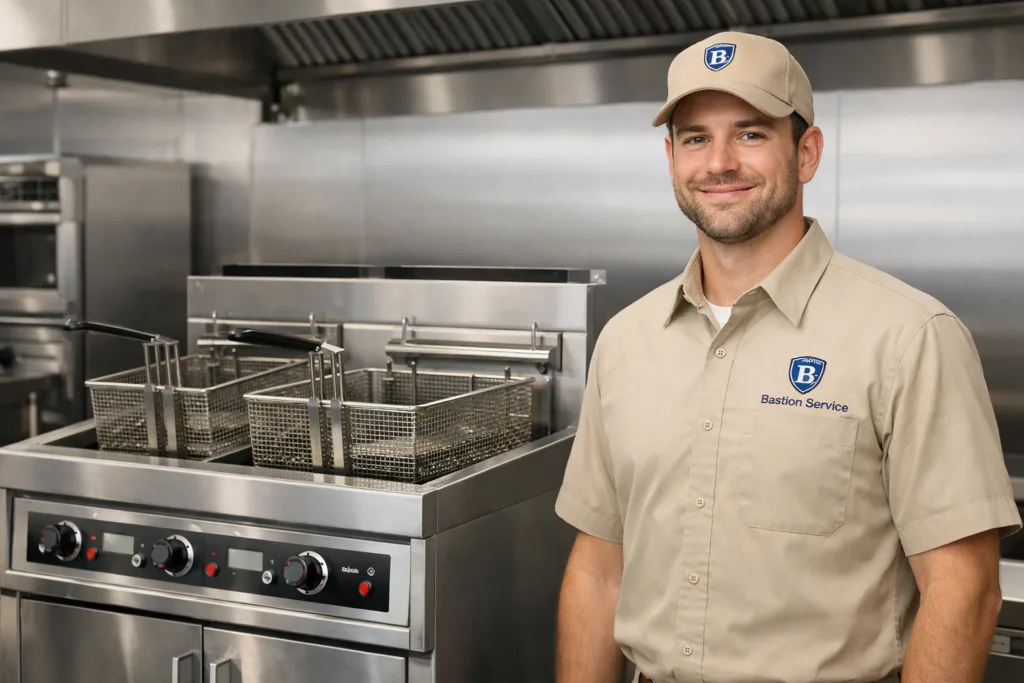




Commercial fryers rarely fail in a convenient way. A unit that overheats, recovers too slowly, leaks oil, or shuts down during service can immediately affect ticket times, product consistency, and staff workflow in Marina del Rey. Because similar symptoms can come from very different causes, the most useful first step is identifying whether the problem starts with heat production, temperature sensing, fuel or power delivery, safety controls, or wear in the tank and drain system.
Related commercial equipment paths in Marina del Rey include Frymaster Fryer Repair in Marina del Rey and Pitco Fryer Repair in Marina del Rey.
Common fryer problems and what they can indicate
Temperature complaints are among the most common service calls. If the fryer will not reach set temperature, overshoots, or drifts unpredictably, the issue may involve the thermostat, probe, control board, contactor, gas valve, or heating elements. In a commercial kitchen, unstable oil temperature does more than affect food quality. It can shorten oil life, increase waste, and force staff to compensate with longer cook times that slow production.
Slow recovery is another symptom that matters operationally. A fryer may heat eventually but struggle to bounce back between batches because of weak elements, restricted gas flow, burner issues, sensor inaccuracy, or internal buildup affecting performance. Kitchens often notice this first during peak periods, when the equipment seems functional at opening but cannot keep pace once demand increases.
Intermittent shutdowns usually point to a safety or control problem rather than a one-time interruption. A fryer that starts normally and then stops heating may be tripping the high-limit, losing ignition, dropping flame, or dealing with loose electrical connections. Repeated resets are a warning sign that the unit needs inspection before the pattern becomes a full outage during service.
Oil leaks, smoke, burnt odors, and darkened oil often indicate a different category of fault. Leaks may come from the drain valve, fittings, worn seals, or damage to the fry tank itself. Smoke and scorching can suggest overheating, poor calibration, residue buildup, or a control issue that is allowing oil temperature to rise beyond the intended range. When operators keep adjusting settings to work around the symptom, the original failure can become harder to isolate.
Signs the issue may involve nearby cooking equipment
Not every hot-line complaint starts in the fryer. If the symptom involves burner heat and oven temperature at the same time, Commercial Oven Repair in Marina del Rey may be the better service path. Distinguishing between an isolated fryer fault and a broader cooking-line issue can save time, especially when multiple pieces of equipment seem to be underperforming during the same shift.
When service should be scheduled
Service should be scheduled when recovery times get noticeably longer, oil temperature becomes inconsistent, controls stop responding normally, or staff begin relying on workarounds to finish orders. Continued use can increase the risk of additional damage when the fryer is overheating, short cycling, leaking, or showing signs of electrical instability. What starts as a manageable parts failure can turn into larger downtime if the unit remains in operation without diagnosis.
Safety concerns should also move the call forward quickly. Shutoffs that trip more than once, visible oil leakage, ignition failures, or unusual smells near the fryer are not issues to monitor indefinitely. In a commercial setting, these conditions affect more than one machine. They can disrupt prep timing, station coordination, and overall kitchen output.
Repair versus replacement considerations
Repair is often the practical option when the problem is tied to controls, ignition components, heating circuits, sensors, switches, valves, or accessible leak points and the fryer body remains structurally sound. Many performance issues can be corrected once the failed component is identified and the unit is tested under operating conditions.
Replacement becomes more likely when there is significant tank damage, severe corrosion, repeated control failures on aging equipment, or a repair history that no longer supports reliable uptime. The right decision depends on safety, parts condition, expected downtime, and whether the fryer can return to consistent day-to-day use after the current issue is corrected.
What a productive service visit should clarify
A useful commercial fryer service visit should do more than name a bad part. It should confirm the complaint, evaluate heating performance, check safety controls, inspect ignition or electrical response, and determine whether the failure is isolated or part of a larger wear pattern. For businesses in Marina del Rey, that kind of diagnosis helps management make better decisions about timing, parts investment, and whether the equipment is still a good fit for ongoing production demands.


