
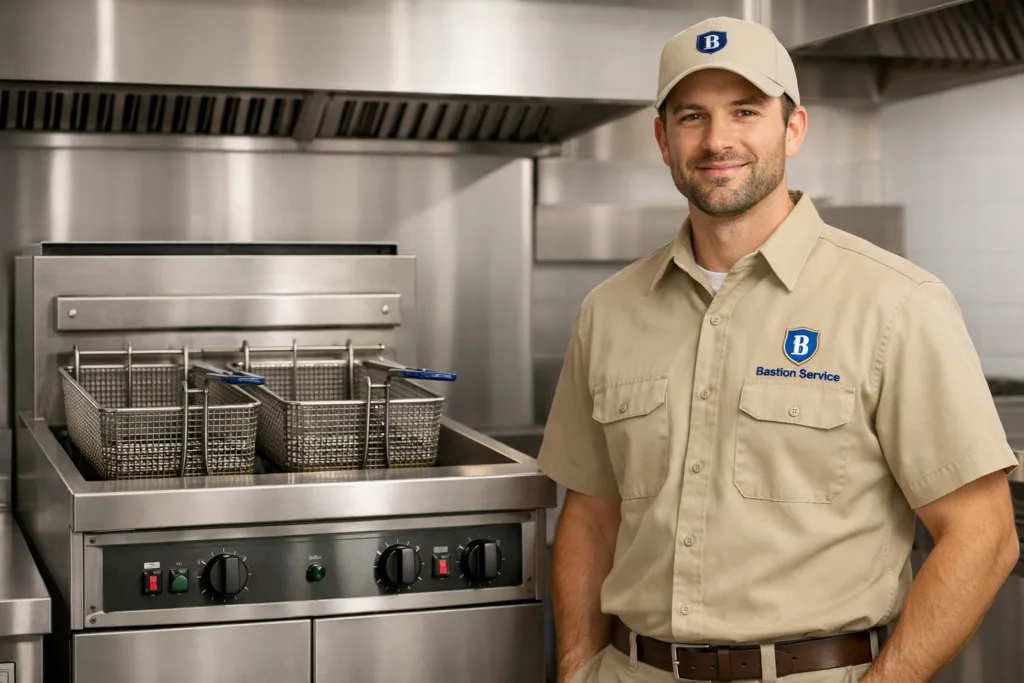




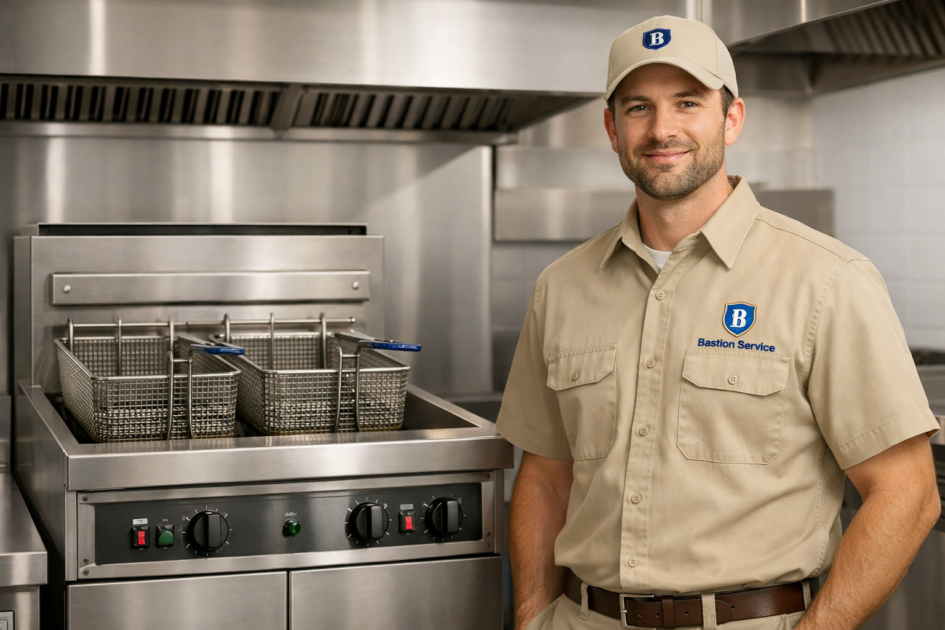
Fryer problems rarely stay isolated for long in a busy kitchen. When a Pitco unit starts heating unevenly, taking too long to recover, shutting down during use, or showing control faults, the priority is to identify what is actually failing before downtime spreads into prep, ticket times, and product consistency. Bastion Service works with businesses in Marina del Rey to inspect symptom patterns, test the affected systems, and schedule repair around the operating impact of the problem.
Related commercial service paths in Marina del Rey include Pitco Commercial Repair in Marina del Rey, Commercial Fryer Repair in Marina del Rey, and Frymaster Fryer Repair in Marina del Rey.
The most useful service call is one that connects the complaint to a specific cause. A fryer that runs cool may have a burner issue, a sensor problem, a control fault, or a safety component interrupting normal operation. A unit that seems to work early in the day but struggles during rush periods may be showing a recovery problem rather than a total heat failure. That is why repair planning should be based on how the fryer behaves under real use, not on assumptions from a single visible symptom.
Common Pitco fryer symptoms and what they can indicate
Not heating or taking too long to recover
If the fryer does not reach set temperature, heats very slowly, or drops too far after each batch, the issue may involve burners, heating components, temperature sensing, controls, or limit devices. In day-to-day kitchen use, this usually shows up first as longer cook times, inconsistent product color, or staff having to wait between baskets because the fryer is not recovering fast enough.
Recovery problems are especially important to address early because they often get worse under volume. A fryer that appears acceptable when lightly used can become a production problem once demand increases and the unit can no longer keep up with normal output.
Oil temperature swings or overheating
When oil temperature fluctuates too widely, overshoots the set point, or cycles unpredictably, the fryer may have a control issue, a faulty probe, calibration drift, or a developing safety problem. These conditions can affect food quality as much as equipment reliability. Product may come out too dark, too light, greasy, or inconsistent from one batch to the next.
Overheating should not be treated as a minor nuisance. Excessive temperature stresses the oil, increases waste, and can lead to nuisance trips or shutdowns that interrupt service at the worst time.
Ignition failure, weak flame, or burner shutdowns
On gas Pitco fryers, delayed ignition, burners that fail to light, weak heating performance, or burners that cut out during operation can point to ignition parts, flame sensing, gas valve trouble, airflow restrictions, or combustion-related faults. These are often intermittent at first, which makes them easy to misread as random behavior.
If the fryer lights sometimes but not others, that pattern still matters. Intermittent ignition issues are often the beginning of a larger reliability problem and should be checked before repeated restart attempts create more wear or operational risk.
Controller problems, error codes, or power loss
An unresponsive display, recurring error messages, random resets, or a fryer that will not power on can involve the controller itself, wiring, switches, fuses, incoming power, or another component sending bad information to the control system. What looks like a board failure is not always a board failure, which is why testing matters before parts are ordered.
Control-related complaints also tend to overlap with heating complaints. A fryer may appear to have a temperature problem when the real issue is in the signal path between the sensor and the controller.
Oil leaks, drainage trouble, or filtration issues
Oil under the fryer, seepage around fittings, slow draining, leaking valves, or filtration problems can disrupt both workflow and cleanup. These issues may come from worn seals, drain components, lines, fittings, or filtration hardware that is no longer operating correctly.
Even a small leak deserves prompt attention. Hot oil can create safety concerns, damage nearby components, and force staff into workarounds that slow service and increase labor.
Why symptom-based diagnosis matters
Many fryer failures look similar from the outside. A high-limit trip can be caused by overheating, but overheating itself may come from sensor errors, control issues, or burner behavior that is no longer stable. A fryer that will not start may have a failed switch, but it may also be reacting to a deeper electrical or safety fault. Without diagnosis, it is easy to replace a part that was only reacting to the real problem.
Symptom-based diagnosis helps narrow the decision quickly: targeted repair, further testing, parts replacement, or planning around a larger equipment issue. That approach is often what keeps one fryer problem from turning into repeated service calls and unnecessary parts expense.
Signs the fryer needs service soon
Scheduling service is usually the right move when staff notice any of the following:
- The fryer no longer reaches or holds the selected temperature
- Recovery between batches is slower than normal
- Ignition becomes inconsistent or burners do not stay lit
- Error codes keep returning after resets
- The controller behaves unpredictably
- Oil leaks appear around the unit or drain area
- One vat performs differently from the other
- Staff are adjusting cook times just to compensate for poor heat performance
These are not just nuisance issues. In many Marina del Rey kitchens, they are the early signs that output, consistency, and safe operation are starting to slip.
When continued use can make the repair larger
Running a fryer with unstable heat, recurring ignition faults, or unresolved leaks can increase the scope of the repair. Components that are already under stress may begin to fail in sequence. A problem that began as poor sensing or weak ignition can eventually affect controls, safety circuits, oil condition, and daily workflow.
If staff are constantly resetting the fryer, avoiding one side of the unit, extending cook times, or planning around unreliable operation, that usually means the problem has moved beyond casual monitoring. At that point, service is less about convenience and more about preventing a broader interruption.
Repair or replacement?
Many Pitco fryer problems can be repaired effectively when the issue is limited to serviceable parts such as controls, ignition components, sensors, valves, wiring, or drain-related hardware. Repair often makes sense when the fryer still suits the kitchen’s output needs and the overall structure of the unit remains sound.
Replacement becomes more likely when there are multiple overlapping failures, repeated downtime over a short period, major wear, or repair costs that no longer match the condition of the equipment. For most businesses in Marina del Rey, the real question is not simply the fryer’s age. It is whether the unit can return to steady, predictable operation after repair.
What to have ready before a service visit
A few details can make diagnosis faster and more productive:
- Whether the fryer is not heating at all or just heating slowly
- If the problem happens all day or mainly during peak use
- Any error codes, resets, or flashing indicators observed by staff
- Whether ignition is failing completely or only intermittently
- Any recent oil leaks, draining issues, or unusual smells
- Whether one vat is affected or the entire fryer
- If the issue started suddenly or has been getting worse over time
Those details help connect the complaint to the right test sequence and reduce time spent chasing symptoms that only appear under certain conditions.
Service-focused next steps for Marina del Rey kitchens
When a Pitco fryer begins affecting output, consistency, or normal kitchen flow, the best next step is to schedule service based on the exact behavior of the unit rather than wait for a complete shutdown. A repair visit should confirm the failure pattern, identify the components involved, and outline the most sensible path forward so the fryer can return to reliable daily use with as little disruption as possible.


