





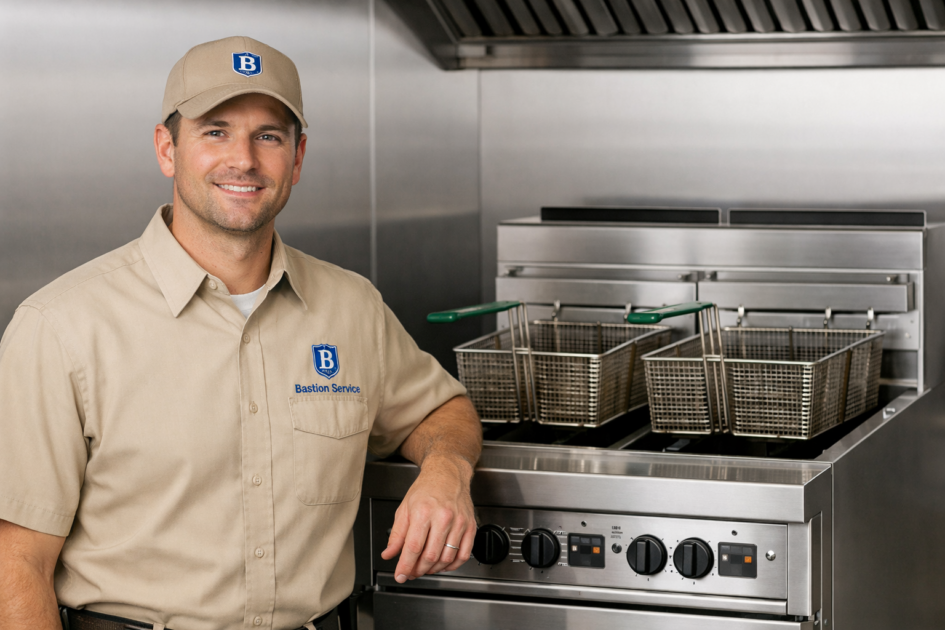
When a Frymaster fryer starts lagging on heat-up, overshoots temperature, or drops out during a rush, the issue quickly reaches beyond the appliance itself. Slow ticket times, uneven product color, shortened oil life, and staff workarounds can all follow. For businesses in Marina del Rey, service is most effective when the symptom pattern is tied to the actual failure before parts are replaced or the unit is pushed back into full production.
Related commercial service paths in Marina del Rey include Frymaster Commercial Repair in Marina del Rey, Commercial Fryer Repair in Marina del Rey, and Pitco Fryer Repair in Marina del Rey.
Frymaster fryer problems that commonly interrupt kitchen output
Most Frymaster fryer failures show up in a few recognizable ways. A fryer that will not reach set temperature, drifts above the target, or struggles to hold heat may be dealing with a control issue, a temperature-sensing problem, a hi-limit concern, burner trouble, or restricted performance caused by wear and buildup. Similar complaints can come from different root causes, which is why symptom-based testing matters.
Ignition-related failures are also common. If the fryer will not light, lights inconsistently, or shuts down during operation, the problem may involve the ignition assembly, flame sensing, gas valve function, safety circuits, or wiring. Intermittent shutdowns are especially important to evaluate promptly because they can be difficult for staff to predict and disruptive during active service.
Other warning signs include:
- Slow recovery between batches
- Oil temperature swings that affect cook consistency
- Frequent high-limit trips or resets
- Error codes or control irregularities
- Burner behavior that seems weak, uneven, or unstable
- Visible overheating or signs the fryer is running harder than normal
These symptoms often point to a fryer that is still operating in a limited way but no longer performing reliably enough for daily kitchen demand.
Why heating and recovery problems happen
A fryer that is not heating or recovering properly can fail in more than one way. In some cases, the unit does produce heat, but not at the rate needed to recover after baskets are dropped. In others, the fryer reaches temperature slowly, then cycles incorrectly or falls short under load. The difference matters because the repair path may involve very different components.
Common causes behind weak heating or poor recovery include faulty temperature probes, control board problems, burner issues, gas flow restrictions, damaged wiring, or safety components interrupting normal operation. Heavy use, contamination, and deferred maintenance can also affect heat transfer and make a fryer appear underpowered even when part of the heating system is still functioning.
From an operations standpoint, poor recovery usually shows up before total failure. Staff may begin extending cook times, avoiding one vat, cooking smaller loads, or noticing that product color varies from one batch to the next. Those adjustments are often early indicators that the fryer needs service rather than more operator compensation.
Signs the problem is getting worse
If the fryer now takes noticeably longer to cycle back to set temperature, shuts off at random, or struggles more during busy periods than it did previously, the problem may be progressing. Repeated resets, increasing temperature instability, or an ignition sequence that works only occasionally can indicate a component that is failing rather than a one-time interruption.
Once these patterns start affecting throughput, it is usually more cost-effective to schedule repair before the issue causes a complete outage or creates additional wear on related parts.
What a service diagnosis should confirm
A productive Frymaster fryer repair visit should identify whether the failure is tied to sensing, control response, ignition, safety shutdown behavior, gas-related performance, or another operating condition. That usually means verifying actual temperature performance, observing recovery behavior, checking whether the ignition sequence completes correctly, and testing how the fryer responds under normal operating conditions.
The goal is not simply to restore heat for the moment. It is to determine whether the unit can return to steady service without continued shutdowns, unstable cooking results, or repeat calls for the same complaint. For Marina del Rey kitchens, that distinction affects scheduling, parts decisions, and whether the fryer can realistically support production after repair.
Bastion Service helps businesses in Marina del Rey evaluate these failures based on the way the fryer is actually behaving, which is often the quickest way to separate a single-component repair from a larger reliability issue.
Symptoms that should be treated as urgent
Some fryer problems can wait for a planned service window. Others should be addressed as soon as possible because they affect safety, consistency, or the risk of a full shutdown.
- The fryer trips its safety limit repeatedly
- The burners do not stay on consistently
- Oil temperature rises too high or swings sharply
- The unit shuts down during active use
- Ignition becomes erratic from one startup to the next
- Recovery is too slow to keep up with normal order volume
When these issues are present, continued use can turn an isolated repair into a broader problem. Even if the fryer still runs part of the time, inconsistent operation can disrupt staffing, food quality, and line timing enough to justify prompt service.
Repair or replacement: making the practical decision
Many Frymaster fryer issues can be repaired when the cabinet, tank, and core structure remain in serviceable condition. If the failure is tied to a control, sensor, ignition part, valve-related issue, or safety component, repair is often the most practical next step. The key question is whether the unit is likely to return to stable operation after the problem is corrected.
Replacement becomes a stronger consideration when the fryer has repeated breakdowns, several worn systems at once, extensive age-related deterioration, or repair costs that continue stacking up without improving reliability. For kitchens that depend heavily on fried menu items, the right decision is often based on future uptime rather than the lowest immediate invoice.
A useful evaluation should weigh:
- Whether the current failure is isolated or part of a pattern
- The condition of major operating systems
- How often performance problems have been recurring
- The expected reliability after repair
- The operational impact of another unexpected shutdown
How to prepare for a fryer repair visit
Before service is scheduled, it helps to note exactly what the fryer is doing and when the problem appears. A complaint of “not heating” is helpful, but details such as whether the fryer starts cold and never ignites, heats slowly, recovers poorly after baskets, or shuts off once it gets hot can speed up diagnosis.
Useful details include:
- Whether the problem is constant or intermittent
- Any recent error messages or control behavior
- If one vat is affected more than another
- Whether staff have noticed temperature drift or longer cook times
- If shutdowns happen during startup, idle periods, or heavy use
That information helps connect the symptom to the likely system involved and can reduce unnecessary delays during the repair process.
When to schedule service
Service should be scheduled once the fryer shows a real change in heating, ignition, recovery, or temperature control, especially if staff are already changing kitchen routines to compensate. A unit that still operates inconsistently is often more disruptive than one that is clearly down, because it creates uncertainty during production and can affect food quality before anyone realizes the pattern is worsening.
For businesses in Marina del Rey, the best next step is to have the fryer evaluated while the symptoms are still specific enough to trace. Timely repair can help limit downtime, avoid unnecessary part replacement, and restore more predictable performance before the problem spreads into a larger interruption.


