





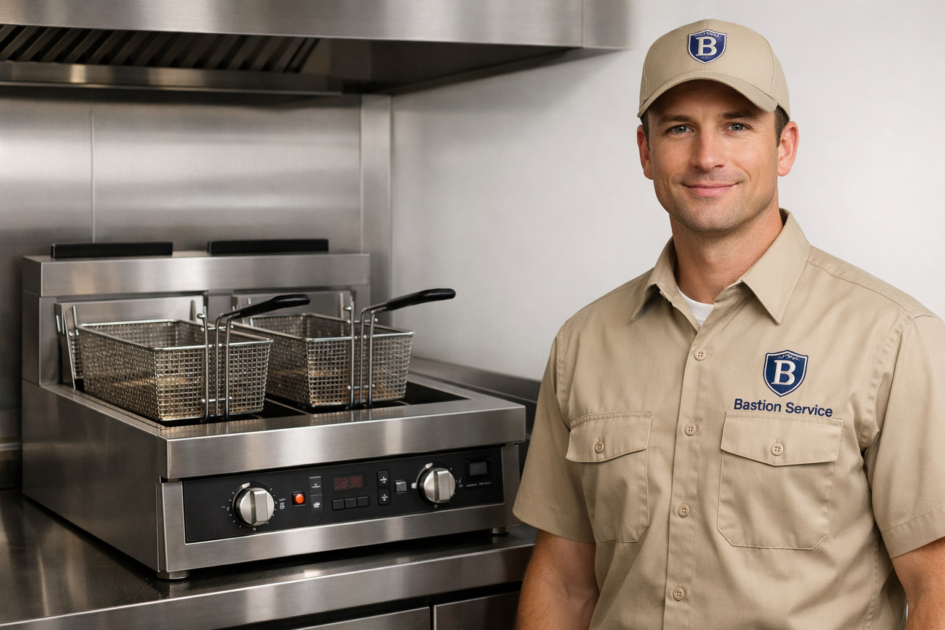
When a Pitco fryer starts missing temperature, cycling unpredictably, or shutting down during service, the problem quickly moves beyond the equipment itself. In Century City, fryer downtime can disrupt ticket flow, delay prep, affect product consistency, and force staff to work around equipment that no longer performs the way the kitchen expects. The most useful next step is service built around the exact symptom pattern so the repair addresses the actual fault instead of guesswork.
Related commercial service paths in Century City include Pitco Commercial Repair in Century City, Commercial Fryer Repair in Century City, and Frymaster Fryer Repair in Century City.
Bastion Service helps businesses in Century City troubleshoot Pitco fryer failures by testing the heating system, controls, ignition sequence, sensing components, and visible wear points that may be affecting operation. That service-oriented approach helps managers decide whether the issue is isolated, whether the fryer can be stabilized quickly, and whether continued use could lead to more costly downtime.
Common Pitco fryer problems and what they can indicate
Fryer not heating or recovering temperature properly
If the fryer does not reach set temperature, takes too long to heat, or struggles to recover between baskets, the cause may involve burners, gas flow, ignition components, electric heat circuits on applicable models, temperature sensing, or control faults. In a busy kitchen, weak recovery often appears first as longer cook times, pale product, and staff compensating by changing basket loads or extending cycles. A proper inspection helps determine whether the issue is a failed part, a calibration problem, or a condition affecting overall heat performance.
Oil temperature swings and uneven cooking results
When oil runs too hot, too cool, or drifts away from the programmed setpoint, the fryer may have a thermostat or probe issue, control board fault, relay problem, or buildup affecting heat transfer. Temperature instability can damage product quality and shorten oil life. It also makes kitchen output harder to predict because the same cook program may produce different results from one batch to the next.
Ignition failure, burner dropout, or intermittent startup
If the fryer clicks but does not light, lights and then drops out, or requires repeated restart attempts, the fault may involve ignition modules, flame sensing, high-limit conditions, gas valve problems, or wiring issues. Intermittent operation is especially disruptive because the fryer may appear normal for part of the day and then fail during peak demand. That usually points to a component that is weakening rather than a one-time interruption.
Error conditions, safety shutdowns, or control problems
Unexpected shutdowns, lockouts, and erratic controller behavior can come from safety circuits, overheating protection, sensor faults, communication issues within the control system, or electrical problems affecting consistency. These faults should be checked promptly because they can prevent normal operation even when the fryer appears mechanically intact.
Leaks, drain valve issues, and signs of wear
Oil leaks around fittings, valves, filter-related connections, or below the cabinet should not be ignored. A leak can interfere with cleaning, create slip hazards, and point to wear that may worsen under daily use. Drain components that do not seal correctly can also create avoidable mess, lost oil, and readiness problems at the start of service.
Why these symptoms should not be ignored
Fryer problems rarely stay limited to one inconvenience. A unit that heats slowly may also begin cycling incorrectly. A startup issue can turn into repeated shutdowns. Temperature instability can increase oil consumption and affect consistency across the menu. In many kitchens, staff adjust around the problem for a while before calling for service, but those workarounds often hide a developing failure and make the outage more expensive later.
Scheduling repair early is often the better business decision when the fryer shows repeated signs of poor recovery, unexpected resets, ignition trouble, or unreliable temperature control. Restoring stable operation sooner can help protect throughput, food quality, and labor efficiency.
How fryer diagnosis usually works
A useful service visit should do more than confirm that the fryer is malfunctioning. It should narrow the problem to the specific system involved and identify whether the failure is isolated or part of broader wear. That usually includes checking:
- Actual heat-up and recovery performance
- Temperature accuracy versus setpoint
- Ignition sequence and flame stability
- Condition of probes, thermostatic controls, and high-limit devices
- Burner operation or electrical heating performance, depending on model
- Visible leaks, valve issues, and signs of deterioration
- Whether the symptom is constant or intermittent
That information matters because similar complaints can come from very different faults. A fryer that seems to have a temperature problem may actually be dealing with ignition interruption. A fryer that appears not to heat may have a control issue preventing normal operation. Accurate diagnosis helps avoid unnecessary parts replacement and short-term fixes that do not resolve the underlying cause.
When to schedule service
It is time to schedule Pitco fryer service when the unit shows repeated startup trouble, noticeable slow recovery, unexplained shutdowns, unstable oil temperature, visible leaks, or performance changes that staff can feel during normal production. If the fryer only works after multiple attempts, struggles during busy periods, or produces inconsistent results from the same cook cycle, it is already affecting operations enough to justify repair evaluation.
Businesses in Century City often benefit from scheduling service before the fryer goes fully down. Catching a failing ignition component, sensor issue, or control fault early can prevent broader disruption and reduce the chance of a breakdown during active service.
Repair or replacement: what to consider
Many Pitco fryer calls involve a repairable problem such as a failed ignition-related component, temperature sensing issue, control fault, burner problem, or leak at a specific wear point. If the cabinet, tank, and overall condition of the fryer remain sound, repair is often the most practical option.
Replacement becomes a more serious consideration when the fryer has multiple major faults at once, recurring breakdowns, ongoing leak problems, or age-related deterioration that affects reliability as a whole. The decision is less about a single symptom and more about whether the fryer can return to stable daily use without repeated interruptions.
Preparing for a service visit
Before service is scheduled, it helps to note exactly what the fryer is doing and when the problem appears. Useful details include whether the fryer fails during startup or after heating, whether temperature drift happens all day or only during heavy use, whether an error code appears, and whether the issue affects one unit or multiple fryers. Even simple observations can speed up diagnosis and help narrow the fault faster.
If there is leaking oil, repeated safety shutdown, a strong smell related to burner operation, or any sign that the fryer cannot be used safely, the unit should be taken out of use until it can be inspected.
Focused Pitco fryer repair support in Century City
For kitchens that depend on steady fry output, the priority is getting the fryer evaluated, identifying the cause of the failure, and moving quickly toward the repair that restores reliable operation. Whether the symptom is no heat, poor recovery, ignition trouble, temperature swings, or intermittent shutdown, service should lead to a clear explanation of the problem, the repair needed, and the next step for reducing downtime in Century City.


