
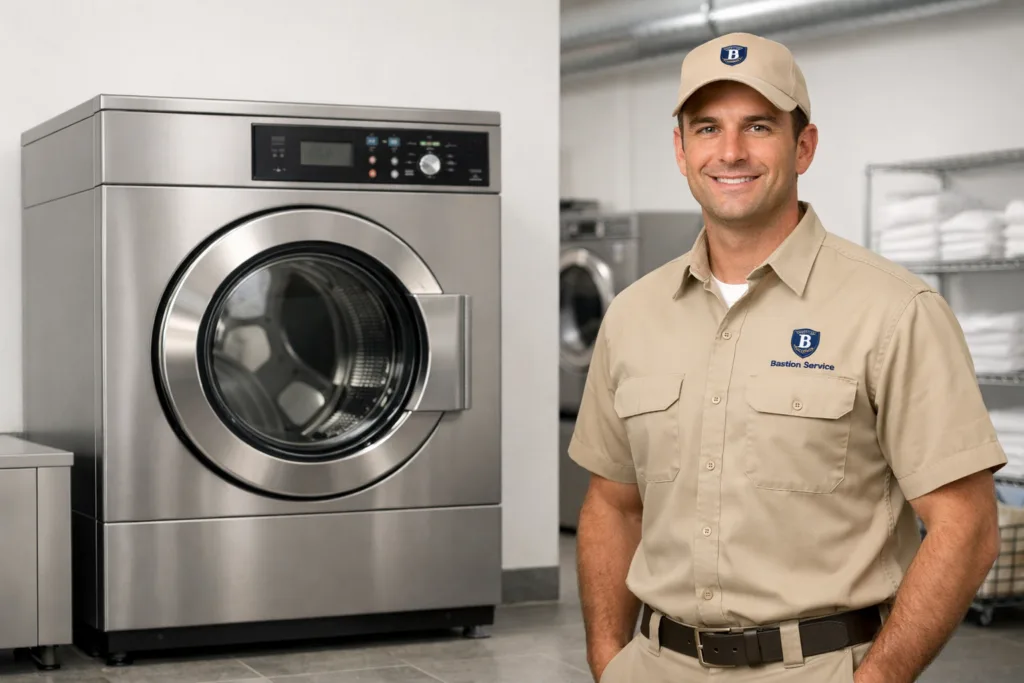





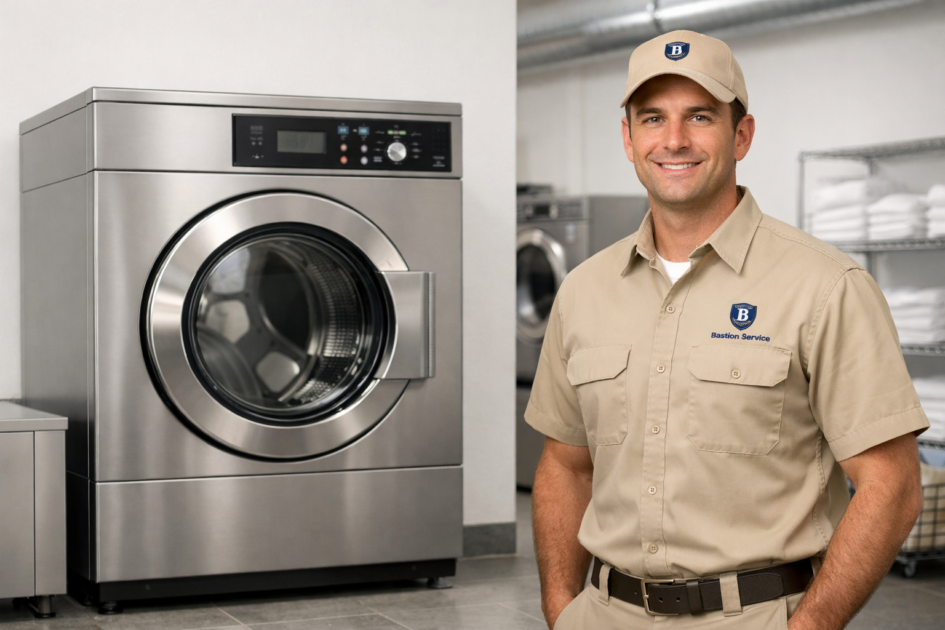
In a commercial laundry setting, dryer trouble rarely stays limited to a single machine. Delayed cycles can slow room turnover, interrupt linen availability, create staffing workarounds, and increase utility use as teams rerun loads or extend settings to compensate. Because similar symptoms can come from very different failures, the most useful next step is usually to narrow the problem by how the machine behaves under load, heat, and airflow demand.
Related commercial equipment paths in El Segundo include Speed Queen Dryer Repair in El Segundo and Wascomat Dryer Repair in El Segundo.
What common dryer symptoms often mean
No heat, weak heat, or heat that cuts out during the cycle can point to failed heating components, tripped safety devices, restricted exhaust, electrical supply issues, or control problems. A dryer that tumbles normally but leaves items damp may have an airflow restriction, poor temperature regulation, a moisture-sensing issue, or reduced drum performance that keeps loads from drying evenly.
Long dry times are especially disruptive in commercial environments because the machine may appear to be working while overall throughput steadily drops. In many cases, the problem is not the timer itself but restricted venting, inadequate airflow, inconsistent heat, or loads entering the dryer with too much retained moisture. If damp loads are starting with poor extraction on the wash side, Commercial Washer Repair in El Segundo may be the better place to start.
Unexpected shutdowns, repeated restarts, and cycles that stop before completion often suggest overheating, motor stress, door-switch faults, failing relays, or intermittent control behavior. These symptoms are worth addressing early because repeated thermal trips or restart attempts can add wear to the motor, belt path, and electrical components.
Noise, vibration, and drum movement problems
Abnormal sound is one of the most useful clues in commercial dryer repair. Squealing may indicate worn rollers or an idler problem. Thumping can suggest a drum support issue, a damaged wheel, or load-distribution trouble. Scraping or grinding may point to bearing wear, contact along the drum path, or hardware that has shifted out of alignment.
Vibration should also be taken seriously in a commercial unit. What starts as a nuisance can become a larger repair if drum supports, fasteners, belts, or motor mounts continue wearing under daily use. When the drum struggles under heavier loads, drying performance and component life often decline together.
Airflow problems that reduce capacity
Restricted airflow is one of the most common reasons a commercial dryer runs longer than expected. Heat may still be present, but if exhaust flow is weak, moisture cannot leave the drum efficiently. The result is extended cycle times, damp loads, overheating, and safety-limit trips that make the machine seem unreliable even when the root issue is in the air path.
Businesses often notice this first as an operations problem rather than a technical one. Staff may begin separating loads, choosing higher heat settings, or adding extra time to get acceptable results. Those adjustments may keep laundry moving temporarily, but they also increase energy use and can hide a developing restriction or heat-management fault.
Signs the dryer should be serviced soon
Commercial dryer problems should be evaluated when symptoms become repeatable, not only when the machine fails completely. Service is usually warranted when the unit overheats, shuts down under load, takes much longer to dry than comparable units, produces a burning odor, or makes new mechanical noise. These are signs that the equipment is no longer operating within normal conditions.
Visible overheating, scorched odor, frequent high-limit trips, and cabinets that feel unusually hot all deserve prompt attention. In a business environment, continued operation under those conditions can increase downtime risk and turn an otherwise manageable repair into a more expensive one.
Repair or replacement?
Not every commercial dryer problem leads to replacement. Many issues are still repairable when the failure is limited to heating elements, thermostats, sensors, belts, rollers, switches, igniters, contactors, or accessible electrical faults. When the machine has strong overall structural condition and the fault is isolated, repair is often the practical path.
Replacement becomes more likely when the dryer has multiple worn systems failing at once, major drum or bearing damage, severe cabinet deterioration, chronic overheating history, or repeated control failures that continue affecting uptime. The right decision usually depends on the machine’s overall condition, the urgency of production needs, and whether the proposed repair is likely to restore stable performance rather than only postpone another interruption.
What a focused service visit should evaluate
A useful commercial dryer diagnosis should go beyond the surface complaint. That generally means checking heat generation, temperature cycling, airflow through the exhaust path, drum rotation, belt and support condition, electrical input, safety devices, and control response. Symptom-based testing helps identify the real fault chain instead of relying on assumptions or unnecessary parts replacement.
For businesses in El Segundo, that approach supports better repair decisions, more predictable downtime planning, and clearer expectations about what the equipment needs next. Whether the issue is no heat, long dry times, shutdowns, or drum noise, accurate diagnosis is what turns a disruptive laundry problem into a manageable service plan.


