
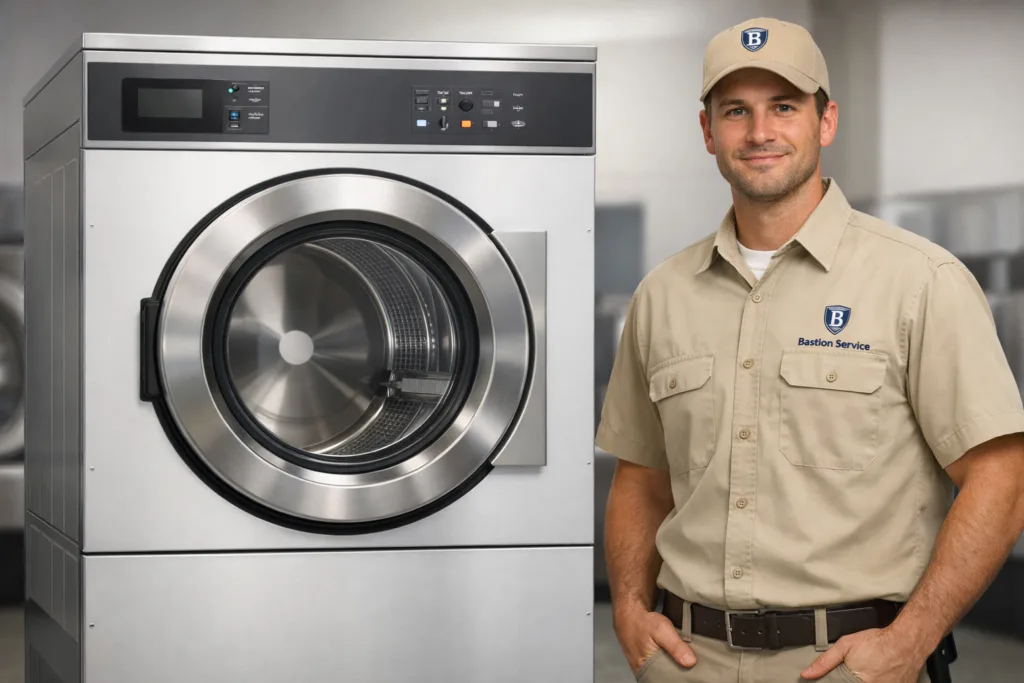




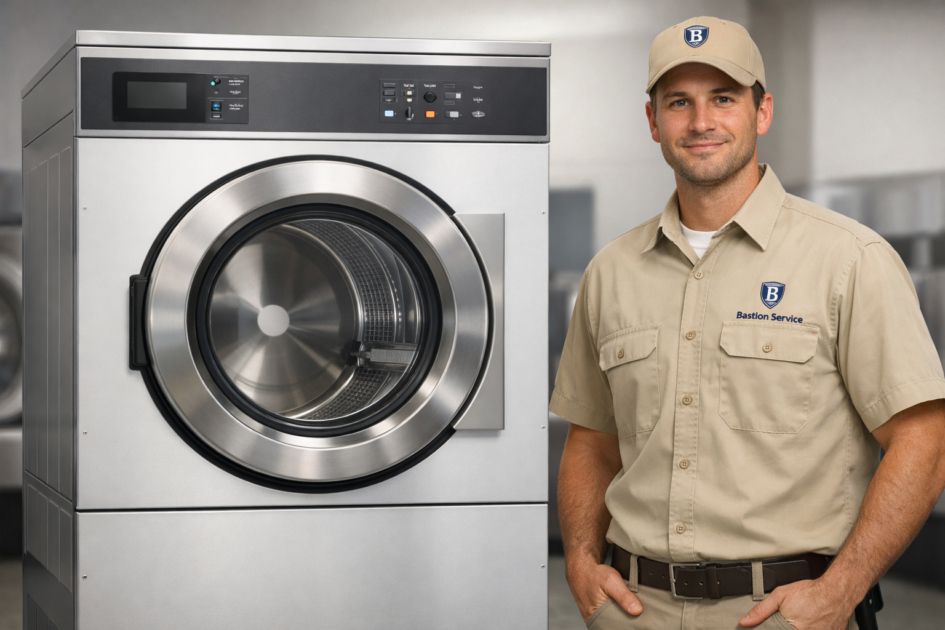
When a Wascomat dryer starts missing heat, stretching cycle times, stopping mid-load, or making unusual noise, the right next step is to have the symptom traced to the actual failure rather than assuming every drying problem comes from the same part. For businesses in El Segundo, that matters because one underperforming dryer can slow linen turnover, create staff bottlenecks, and put extra strain on the rest of the laundry setup. Bastion Service handles Wascomat dryer repair by focusing on how the machine is failing in real use, what that means for downtime, and whether immediate repair should be scheduled before the problem spreads.
Related commercial service paths in El Segundo include Wascomat Commercial Repair in El Segundo, Commercial Dryer Repair in El Segundo, and Wascomat Washer Repair in El Segundo.
Wascomat dryer issues that interrupt daily operations
A dryer does not have to be completely down to become a serious problem. Many service calls begin with a machine that still runs, but no longer finishes loads consistently or requires repeated cycles to get acceptable results. In a busy laundry room, that kind of partial failure can be just as disruptive as a no-start condition.
Common symptoms include:
- Drum turns but there is little or no heat
- Drying times are much longer than normal
- Cycle ends before the load is dry
- Dryer shuts off during operation
- Drum will not turn or turns inconsistently
- Scraping, thumping, squealing, or vibration
- Burning smell or signs of overheating
- Door switch, latch, or safety interlock problems
- Control panel errors or intermittent response
These complaints can point to heating faults, airflow restriction, moisture-sensing issues, drive wear, control failures, or electrical problems. Because several different failures can look similar from the outside, symptom-based diagnosis is usually the fastest way to decide what repair makes sense and what can wait.
Why is my Wascomat dryer not heating or finishing the cycle?
This is one of the most common service concerns because it can show up in different ways. Some dryers run with no heat at all. Others produce heat briefly, then lose it. Some seem to heat normally but still leave loads damp at the end of the cycle. Each pattern can point to a different problem.
Possible causes may include:
- Failed heating elements or ignition-related components
- Thermostat, thermal cutoff, or high-limit issues
- Restricted exhaust airflow or internal lint buildup
- Blower problems that reduce air movement
- Moisture sensor faults that end the cycle too early
- Relay or control board failures affecting heat operation
- Power supply issues that prevent proper heating performance
A dryer that is not heating and a dryer that is not finishing the cycle may sound like separate problems, but they often overlap. Weak heat, poor airflow, and bad sensing can all leave loads damp. That is why the repair decision should be based on how the unit behaves through the full cycle, not only on whether it gets warm for a few minutes.
Long dry times usually point to more than one possibility
When cycle times start increasing, operators often keep using the machine because it still appears functional. In practice, long dry times often signal an efficiency problem that is already affecting throughput. Loads back up, staff rerun cycles, and the dryer operates longer than intended, which adds wear to heating and drive components.
Long dry times often involve one or more of the following:
- Ventilation restriction limiting moisture removal
- Reduced heat output
- Blower wheel or air path issues
- Moisture sensor contamination or failure
- Temperature regulation problems
- Overloading patterns that reveal an existing airflow weakness
If the machine used to finish similar loads on schedule and no longer does, that change is worth investigating early. Waiting too long can turn a manageable repair into a shutdown caused by overheating protection, component stress, or repeated failed cycles.
What drum and drive symptoms can indicate
Drum not turning
If the motor runs but the drum does not move, the issue may involve the belt, pulley system, motor, switch assemblies, or other drive components. A dryer in this condition should not be forced back into service, because continued attempts to run it can increase damage.
Intermittent tumbling
When the drum turns inconsistently, starts late, or stops under load, the problem may be mechanical or electrical. Intermittent behavior is important because it often points to a component that is failing under heat or load rather than a simple constant failure.
Noise and vibration
Scraping, rumbling, squealing, and heavy vibration can come from worn supports, drum alignment issues, blower problems, foreign objects, or motor strain. These sounds often worsen gradually, which makes them easy to delay. In most cases, the better choice is to schedule service before a support issue becomes a larger mechanical repair.
Why dryers shut down mid-cycle
A Wascomat dryer that starts normally and then stops during operation is often reacting to a condition that should not be ignored. Shutdowns can be tied to overheating, restricted airflow, failing motors, unstable controls, or electrical faults. The machine may restart later, but repeated restarting does not solve the root problem.
Mid-cycle shutdowns are especially disruptive because they create uncertainty for staff. Loads may need to be moved, restarted, or split between other machines, which affects workflow for the rest of the day. If the same dryer repeatedly stops under similar conditions, it is usually a sign that the machine needs repair rather than monitoring.
When overheating or burning smells should be treated as urgent
Heat-related complaints deserve prompt attention, especially when the dryer smells hot, scorches fabric, trips safety limits, or feels unusually hot around the cabinet or exhaust path. These symptoms may indicate restricted airflow, failing temperature controls, lint accumulation, or stressed electrical components.
Continued use is harder to justify when any of the following are happening:
- Loads come out hotter than usual
- The dryer stops and restarts only after cooling down
- A burning odor appears during operation
- Lint is collecting in unusual areas
- The unit has repeated high-limit trips
These are the kinds of conditions that can move a routine repair into a more disruptive outage if they are ignored.
Why diagnosis should come before repair approval
One visible symptom can hide multiple causes. A no-heat complaint may involve a failed heating component, but it can also be connected to blocked airflow that contributed to the failure. A dryer that ends cycles too early may have a sensor problem, but it may also be struggling with heat consistency or control response. Replacing only the first suspected part can restore partial operation without fixing the actual reason the dryer became unreliable.
For businesses in El Segundo, a good diagnosis helps answer practical questions such as:
- Is this a single failed component or part of a larger wear pattern?
- Can the dryer be used safely until parts arrive?
- Will continued use risk more damage?
- Is the problem inside the dryer or related to airflow conditions around it?
- Does repair support continued use, or is the machine showing broader decline?
Those answers matter because the goal is not simply to make the dryer run for one cycle. The goal is to restore stable performance that fits the demands of daily operations.
When to schedule service instead of waiting
It is time to schedule repair when performance drops enough to affect workload, even if the dryer still turns on. Early service is often the better option when symptoms are recurring, getting worse, or causing staff to work around the machine instead of through it.
Scheduling is usually warranted when:
- Loads need repeated cycles to dry
- One dryer is slowing the rest of the laundry room
- Noise or vibration increases from shift to shift
- Heat is inconsistent or absent
- The unit shuts off unpredictably
- Error conditions keep returning
- Door or safety interlock issues prevent normal cycle use
Delaying service may seem easier if the machine still operates, but partial performance problems often create more downtime later, not less.
Repair versus replacement considerations
Many Wascomat dryer problems are repairable when the machine is otherwise structurally sound and the issue is limited to serviceable heating, sensing, drive, or control components. In those cases, repair can be the sensible choice for restoring output without replacing the entire unit.
Replacement becomes a more serious consideration when there are multiple overlapping failures, repeated control problems, major assembly wear, or repair costs that no longer fit the machine’s remaining useful life. The best decision usually depends on whether the current complaint is isolated or part of a broader pattern of declining reliability.
What helps prepare for a service visit
If a repair appointment is being scheduled, a few details can make the process more efficient. It helps to note whether the dryer has no heat, weak heat, long dry times, shutdowns, abnormal noise, or inconsistent cycle completion. It is also useful to know whether the issue affects every load or only certain load sizes, and whether the symptom began suddenly or gradually worsened.
Helpful observations include:
- Whether the drum turns normally
- Whether heat is present at the start of the cycle
- If the machine stops at a repeatable point
- Any smells, sounds, or visible overheating signs
- Whether staff have had to rerun loads regularly
- Any recent error messages or control irregularities
That information can speed up troubleshooting and help clarify whether the issue is most likely tied to heat production, airflow, controls, or mechanical movement.
Service-focused next steps for businesses in El Segundo
If a Wascomat dryer is creating slow turnaround, uneven results, or repeated interruptions, the most useful next step is to have the symptom evaluated in the context of actual operating demands. Businesses in El Segundo usually benefit from scheduling repair before a minor heating, airflow, or drive issue becomes a larger disruption across the laundry room. A service visit centered on the exact failure pattern can help determine whether the machine should be repaired now, used only in a limited way until parts are available, or evaluated for a broader equipment decision.


