
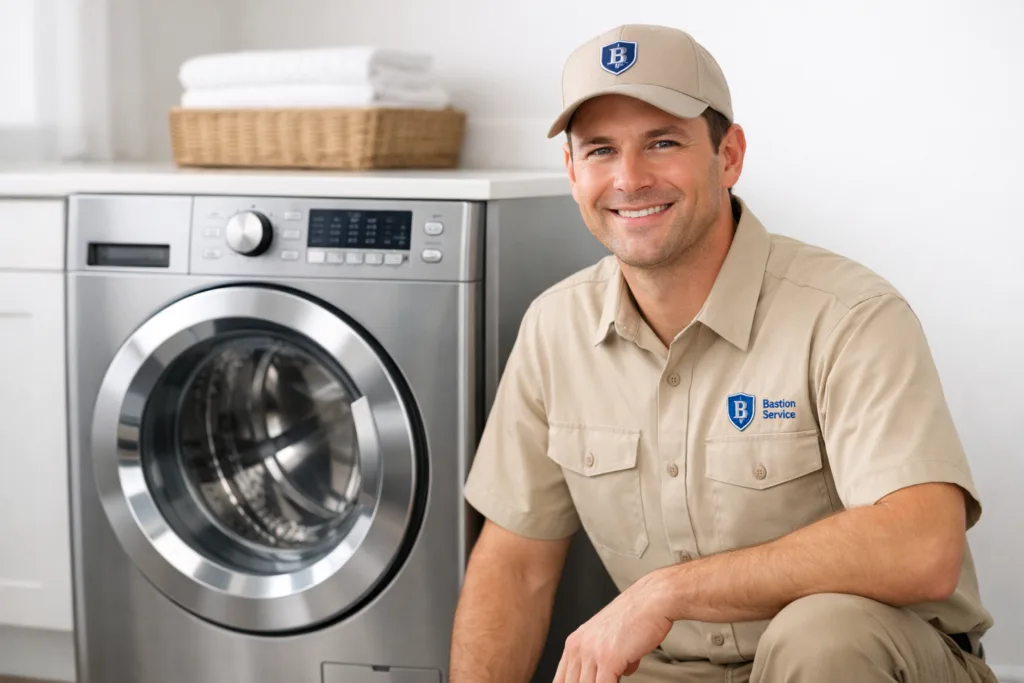






Most appliance failures are easier to solve when the pattern is described clearly instead of reduced to a single complaint. “Not cooling,” “not draining,” or “not heating” can each point to several different causes, and the next step depends on what happens before, during, and after the failure. A refrigerator that warms only in the fresh-food section is different from one that is fully dead. A washer that stops with water inside is different from one that finishes but leaves clothes soaked. Looking at the symptom sequence helps narrow the repair path faster.
How Blomberg appliance problems usually show up at home
Blomberg appliances often rely on sensors, control boards, switches, fans, pumps, and safety components working together. When one part falls out of range, the symptom may appear somewhere else. For example, a dishwasher with poor cleaning may actually have a heating or circulation issue. A dryer with long run times may be dealing with airflow restrictions rather than a failed heater. An oven that seems inaccurate may have a temperature sensing problem instead of a bad bake element alone.
For homeowners in Torrance, the most useful information to notice includes whether the problem is constant or intermittent, whether there are any error displays, whether unusual sounds started recently, and whether the appliance still completes part of its normal function. Those details often separate a small repair from a more involved one.
Refrigerator and freezer symptoms that deserve attention
Cooling problems usually develop in stages. You might first notice longer run times, condensation, frost, soft frozen food, or uneven temperatures between shelves. Later, the unit may begin warming noticeably, leaking water, or running almost nonstop. These clues matter because they can indicate airflow faults, fan problems, defrost issues, drain blockages, temperature sensor errors, door seal wear, or electronic control trouble.
If the refrigerator is cold in one area but warm in another, the issue is often related to air movement or temperature regulation. If the freezer is frosting heavily, it may be struggling with moisture intrusion, a defrost failure, or a door that is not sealing consistently. Water under the appliance or beneath drawers commonly points to drainage or condensation management problems.
- Warm food section with a colder freezer: often linked to airflow or evaporator fan problems.
- Heavy frost buildup: may suggest gasket, defrost, or door-closing issues.
- Constant running: can be caused by temperature loss, dirty airflow paths, or control faults.
- Water inside or under the unit: commonly tied to drain blockage or excess condensation.
Stop relying on the appliance for food storage if temperatures are clearly unsafe, if doors stop closing well because of ice buildup, or if the unit is cycling abnormally for long periods. Early action can prevent food loss and reduce the chance of stressing major cooling components.
Washer problems that interrupt the whole household
A washer problem becomes urgent quickly because it affects clothing, linens, and daily routines. Some failures are obvious, such as a unit that will not start or one that leaves standing water in the drum. Others show up as partial failure, including weak spinning, off-balance movement, repeated cycle pauses, detergent residue, or leaks around the front or underneath.
When a washer will not drain, the cause may involve a blockage, drain pump issue, pressure sensing problem, or control interruption. If it fills and tumbles but will not spin out properly, balance sensing, suspension wear, door lock faults, or drainage trouble may be involved. A machine that shakes violently should not be forced through more loads, since repeated use can worsen wear on suspension and drum-related parts.
Signs the issue may be getting worse
- Cycle times suddenly becoming much longer
- Water left behind after nearly every load
- New banging, grinding, or scraping sounds during spin
- Recurring leaks that spread beyond the machine footprint
- Frequent resets needed to finish a load
Leaks are especially important to address because even a slow drip can damage flooring, trim, or adjacent cabinets over time. If a washer begins stopping mid-cycle regularly, it is usually better to have it evaluated than to keep restarting it and hoping the problem clears on its own.
Dryer symptoms that affect performance and safety
Dryers often fail gradually. Clothes may start coming out damp, cycles may run longer, heat may seem inconsistent, or the drum may stop turning reliably. In other cases the failure is more direct, such as no heat at all, a burning smell, loud scraping, or overheating. The symptom matters because poor drying is not always caused by a heater problem. It may involve airflow restrictions, sensors, controls, motor components, or support parts affecting drum movement.
A dryer that tumbles but does not dry well may still have several possible causes, so replacing one part based on guesswork can miss the real issue. If the machine shuts off too soon, temperature sensing and ventilation should be considered along with heating components. If it runs but sounds rough, worn support parts or a failing drive system may be involved.
Stop using the dryer promptly if you notice a burning odor, visible overheating, or harsh metal-on-metal noise. Those symptoms can lead to more damage if ignored. Even when the problem seems limited to long dry times, ongoing use can strain components and waste energy while the underlying fault continues.
Dishwasher issues that are often more specific than they seem
Dishwashers can appear to have one simple problem while actually failing in a different area. Dishes that come out dirty may indicate circulation problems, spray arm blockage, heating faults, detergent dissolution issues, or water delivery problems. Standing water usually points more toward a drain restriction, pump problem, or control issue than a cleaning problem.
If the dishwasher leaks, the location of the leak matters. Water at the front may come from the door area, alignment, or overfilling. Water underneath can involve hoses, sump components, or internal seals. A unit that hums loudly, grinds, or stops partway through a cycle should not be run repeatedly without checking the cause, since pump and motor damage can worsen with continued use.
Common dishwasher complaint patterns
- Dishes still dirty: water circulation, spray delivery, heat, or detergent release issues
- Standing water after the cycle: drain blockage, pump fault, or drain control problem
- Leaks on the floor: door seal, hose, sump, or overfill-related causes
- No response when started: latch, power supply, or electronic control issues
Repair often remains worthwhile when the dishwasher is structurally sound and the problem is limited to drainage, circulation, heating, or control functions. The decision changes when repeated leaks have caused surrounding damage or when several major functions are failing at once.
Cooktop, oven, and range problems that change how meals get made
Cooking appliance issues tend to show up as weak heating, uneven cooking, burner problems, ignition trouble, or controls that do not respond properly. A cooktop burner that works intermittently may have a switch, ignition, element, or connection problem depending on the model and fuel type. An oven that takes too long to preheat or cooks unevenly may be dealing with a sensor issue, a weakened heating element, convection problems, calibration drift, or door seal wear.
One failed burner on an otherwise solid range is very different from an appliance with multiple heating and control failures. The first may be a focused repair. The second may require a broader cost comparison before moving forward. If baking results have changed noticeably, pay attention to whether food is consistently overdone on one side, underdone in the center, or taking longer than normal across several recipes. That pattern often helps isolate the fault.
If you ever notice a strong or persistent gas smell, stop using the appliance and address the safety issue first through the appropriate emergency channel. Repeated clicking without ignition or inconsistent flame also deserves prompt attention before normal cooking continues.
When repair makes sense and when replacement enters the conversation
Repair is usually the better option when the appliance is in otherwise good condition, the failure is limited to one system, and the fix is likely to restore normal use without stacking additional known problems. That is often the case with drain pump issues, door lock faults, igniters, sensors, seals, fan motors, or targeted control-related failures.
Replacement becomes more reasonable when the appliance has multiple active faults, severe internal deterioration, repeated breakdowns after recent repair, or damage that has spread into major systems. Water damage around a leaking machine, chronic reliability problems, or a long list of unresolved symptoms can all shift the value calculation. Household impact also matters. A refrigerator or main washer failure usually feels more urgent than a secondary freezer or less frequently used oven.
What to note before scheduling service
Useful details can make diagnosis more efficient. Before service, it helps to note the exact symptom, whether the issue is constant or intermittent, whether the appliance shows an error code, and what happens right before the failure. Try to remember if the problem started suddenly or developed gradually. Also note any recent power interruptions, unusual smells, water on the floor, or sounds such as clicking, humming, grinding, or rattling.
For homes in Torrance, the smartest next step is usually to stop using the appliance when there is a risk of water damage, overheating, spoiled food, or worsening mechanical wear, then arrange an evaluation based on the actual behavior. That approach leads to practical repair guidance and a better decision about whether the appliance should be fixed, monitored, or replaced.


