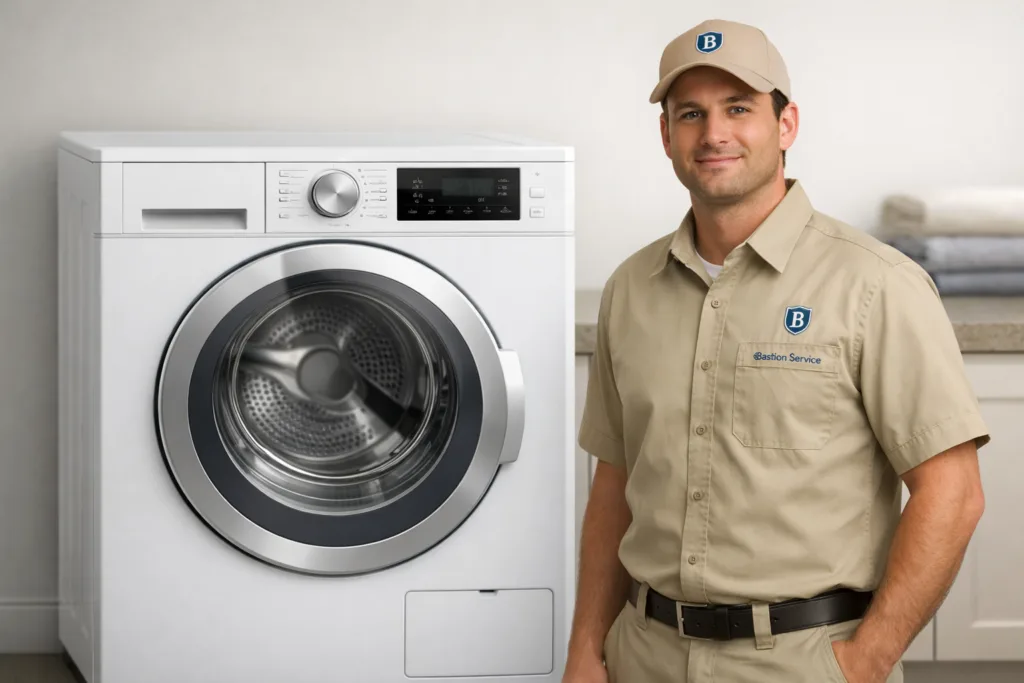
Dryer problems usually show up in everyday ways first: towels that stay damp, loads that need a second cycle, a drum that makes a new noise, or a machine that suddenly will not start. With a Blomberg dryer, those symptoms can come from airflow restrictions, heating failures, worn support parts, sensor issues, or electrical faults, so the best next step is to match the repair plan to the exact behavior of the machine.
Start with what the dryer is doing
Symptom-based diagnosis matters because two dryers can appear to have the same issue while needing very different repairs. A unit that tumbles with no heat is not the same problem as one that heats briefly and then cools down, and a dryer that stops mid-cycle is different from one that runs the full program but never fully dries clothes. Looking closely at the pattern helps narrow the likely cause faster.
No heat or not enough heat
If the drum turns but clothes remain wet, the problem may involve the heating element, thermostat, thermal fuse, control board, or incoming power. In some cases, the dryer is producing some heat, but not enough to dry properly. That often leads to long cycle times, hot cabinet surfaces, and disappointing results even with smaller loads.
Weak heat can be especially misleading because the dryer seems operational. Homeowners in Brentwood often notice this first with heavier items like towels, bedding, or jeans that come out warm but still damp. When that pattern repeats, it usually points to a fault that needs more than a settings change.
Long dry times
Extended dry times are commonly tied to restricted airflow. Lint buildup in the vent path, partial blockage, or poor air movement can keep moisture from leaving the dryer efficiently. The heater then cycles longer, the cabinet may run hotter than normal, and clothes still take too long to finish.
Long dry times can also come from sensor problems or reduced heating performance. If loads that used to finish in one cycle now need two, and the change happened without any major laundry routine changes, the dryer should be inspected rather than pushed harder.
Dryer will not start
A Blomberg dryer that does nothing when you press start may have a door switch problem, control issue, start circuit fault, blown thermal fuse, or power supply problem. Sometimes the display responds but the machine will not run. Other times the dryer appears completely dead.
Because no-start conditions can involve both simple component failures and more involved electrical issues, diagnosis should confirm whether the problem is in the control path, a safety component, or the machine’s incoming power before parts are replaced.
Stops mid-cycle or shuts off too soon
When a dryer starts normally and then shuts off, overheating protection, restricted airflow, motor trouble, or an intermittent electronic fault may be involved. If it ends cycles too early but the clothes are still damp, moisture sensing may be inaccurate or the sensor bars may not be reading properly.
This symptom is important because repeated shutdowns often mean the dryer is protecting itself from a larger problem. Running it again and again to test it can add stress to the same failing system.
Noise, scraping, or vibration
Unusual sound is often a sign of wear in moving parts. Squealing can point to support or idler wear. Rumbling may suggest drum rollers. Scraping can happen when a support part fails or an object gets trapped where it should not be. A heavy thump may come from a drum issue or something caught in the drum seam.
If the sound gets worse from one load to the next, it is usually a sign that continued use could damage the belt, motor, drum, or surrounding supports. Early repair is often simpler than waiting for the noise to become a full breakdown.
Signs the problem may be airflow-related
Airflow issues are one of the most common reasons a dryer seems weak even when some heat is present. Restricted venting can also mimic other failures, which is why it should always be considered during service.
- Clothes are hot at the end of the cycle but still damp
- Dry times keep getting longer over time
- The outside of the dryer feels unusually warm
- The laundry area gets hotter and more humid during operation
- The dryer shuts off before the load is dry
Even when airflow is the main issue, it can contribute to failure of heating and safety components if it is ignored for too long.
When to stop using the dryer
Some symptoms call for immediate caution. If your Blomberg dryer produces a burning smell, makes sharp metal-on-metal noise, becomes extremely hot, or repeatedly shuts off during use, it is better to stop running it until the cause is identified. The same goes for a dryer that trips breakers, shows erratic control behavior, or seems much louder than normal without an obvious reason.
These conditions can turn a manageable repair into a more extensive one if the machine keeps running under stress.
Repair versus replacement
Whether repair makes sense usually depends on the failed part, the appliance’s age, overall condition, and whether there have been several recent problems. Many Blomberg dryer issues are still worth repairing when the fault is isolated, such as a heating component, door switch, sensor issue, belt-related problem, or support-part wear.
Replacement becomes a more serious consideration when the dryer has multiple failing systems, repeated breakdowns, or a major repair need on a unit that is already showing broader wear. The most useful service visit is one that explains not just what failed, but what the repair is likely to restore and whether the machine is a good candidate for continued use.
What homeowners in Brentwood typically want from service
Most households are not looking for a complicated answer. They want to know why the dryer is misbehaving, whether the repair is worthwhile, and what can be done to restore normal drying without guesswork. For Blomberg dryer repair in Brentwood, that usually means identifying whether the issue is heat, airflow, sensing, startup, or mechanical wear and then recommending the right fix for that specific failure.
Helpful details to notice before service
Before scheduling a visit, it helps to pay attention to the pattern of the problem. Small details can make diagnosis faster and more accurate.
- Does the drum turn, or is the dryer completely inactive?
- Does it heat at all, or stay cool the entire time?
- Does the issue happen on every cycle or only certain settings?
- Are heavier loads affected more than lighter ones?
- Did the problem appear suddenly or get worse gradually?
- Is there any unusual smell, noise, or vibration?
Those observations often help separate a venting issue from a heater problem, or a sensor fault from a worn mechanical component.