
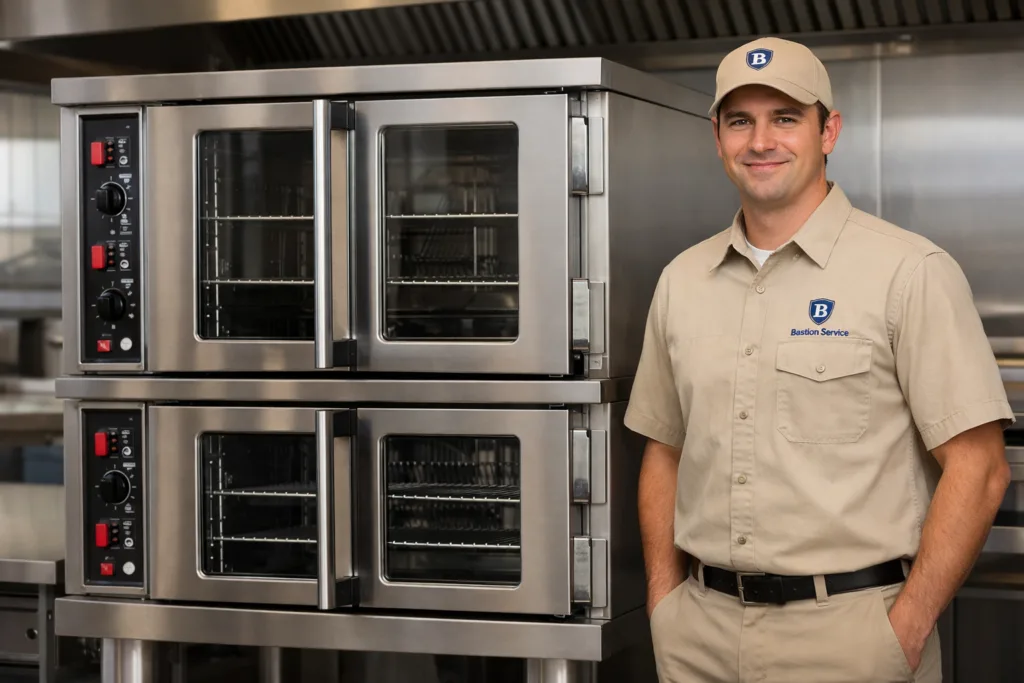




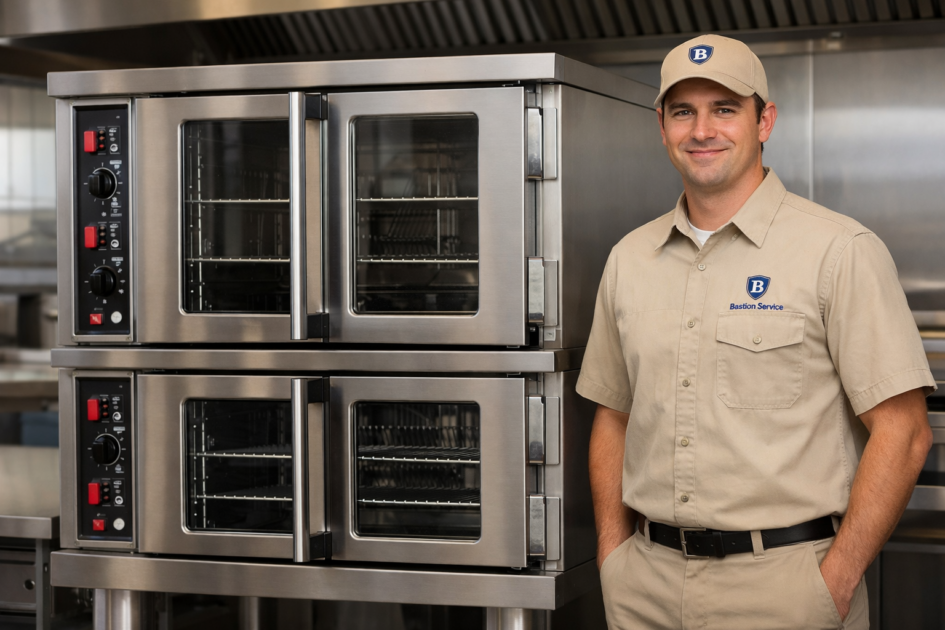
When Blodgett cooking equipment starts affecting output, the most important step is to identify the fault before the problem spreads into missed service windows, remakes, or unexpected shutdowns. For businesses in Palos Verdes Estates, repair scheduling is often driven by symptoms such as heat loss, ignition trouble, slow recovery, control faults, or inconsistent results. Bastion Service provides business-focused diagnosis and repair planning so managers can make informed decisions about continued use, temporary workarounds, and next repair steps.
For specific equipment paths in Palos Verdes Estates, review Blodgett Oven Repair in Palos Verdes Estates and Commercial Appliance Repair in Palos Verdes Estates.
Blodgett cooking equipment problems that commonly need service
Not every equipment issue begins with a full failure. In many kitchens, the first signs are reduced consistency, longer cook times, startup delays, or a unit that no longer holds normal temperature during busy periods. Blodgett cooking equipment repair is typically most effective when those early symptoms are evaluated before they lead to a complete stoppage.
Common service calls involve:
- Temperature inconsistency during normal operation
- Ignition failures or delayed startup
- Burner or heating performance problems
- Slow recovery between cooking cycles
- Control or sensor faults
- Unexpected shutdowns during production
- Error conditions that interrupt normal use
Temperature swings and uneven results
If food quality varies from batch to batch, the problem may not be staffing or loading patterns alone. Cooking equipment that runs too hot, too cool, or unevenly can point to sensor drift, thermostat or control issues, airflow problems, burner performance loss, or heat distribution faults. In a business setting, these symptoms usually lead to waste, inconsistent output, and slower ticket flow.
Service is especially important when the equipment appears to reach set temperature but cannot maintain it under real production demand. That pattern often suggests a problem that only becomes obvious once the unit is under load.
Ignition and heating-related failures
Startup problems are one of the clearest signs that service should be scheduled. If a unit clicks repeatedly, fails to light, lights inconsistently, or drops out after ignition, the issue may involve the ignition system, gas-related components, controls, safety circuits, or electrical supply conditions. Heating failure can also show up as weak flame performance, incomplete heat-up, or a unit that never reaches operating range.
These issues should not be treated as minor inconveniences. Repeated ignition attempts and unstable heating can interrupt production and may place added strain on related components if the equipment continues operating in a fault condition.
Slow recovery and reduced throughput
When cooking equipment takes too long to recover between loads, production often slows before anyone identifies the cause. Staff may begin spacing orders differently, extending cook times, or reducing batch size just to keep service moving. Slow recovery can be tied to weakened heating output, airflow restrictions, burner issues, or controls that are no longer responding correctly.
In Palos Verdes Estates, businesses that depend on predictable kitchen timing usually benefit from addressing this issue early. A unit that technically still runs but no longer recovers properly can create the same operational disruption as a partial shutdown.
Supported Blodgett equipment coverage
Although symptoms often differ by model, the repair decision usually comes down to whether the equipment can still operate safely, consistently, and at the pace the kitchen requires. Blodgett cooking equipment coverage commonly centers on business-use ovens and related heating performance concerns, including:
- Units with unreliable preheat performance
- Equipment that falls behind during peak production
- Cooking systems with burner or ignition issues
- Ovens showing control, sensor, or temperature regulation faults
- Equipment with intermittent shutdown behavior
For many businesses, the real issue is not just whether the equipment turns on. It is whether it can support prep, cooking, holding timelines, and service flow without creating delays across the kitchen.
Signs the equipment should be evaluated before continued use
Some operating problems stay relatively stable for a short period, while others tend to worsen quickly. Prompt repair is usually the better choice when the equipment shows any of the following:
- Repeated shutdowns during normal use
- Failure to maintain consistent temperature
- Longer-than-normal heat-up times
- Visible control errors or unresponsive settings
- Intermittent ignition or burner dropout
- Frequent remakes caused by uneven cooking
- Performance changes that only appear during busy periods
When these patterns are ignored, secondary damage can follow. Controls, wiring, ignition components, and heat-related parts may be affected by ongoing operation under unstable conditions. In many cases, early service helps limit both downtime and repair scope.
How symptom-based diagnosis helps repair decisions
Effective repair work starts by matching the complaint to actual operating behavior. A unit that overheats at idle may have a different failure path than one that loses temperature only during repeated cooking cycles. An oven that starts normally but shuts down later points to a different diagnostic path than one that struggles from the first ignition attempt.
That is why symptom details matter. Businesses should be ready to describe:
- Whether the problem happens at startup, during preheat, or under load
- How often the fault appears
- Whether the issue is constant or intermittent
- How the problem affects product quality or timing
- Whether staff have noticed unusual noises, odors, delays, or control behavior
This information helps determine whether the problem is likely isolated to one component, part of a broader control issue, or a sign that the equipment should be taken offline until repairs are completed.
Repair planning for Palos Verdes Estates businesses
Businesses in Palos Verdes Estates usually need more than a basic part replacement discussion. They need to know how the fault affects daily operations, whether limited use is realistic, and how quickly the equipment can return to dependable performance. That planning is especially important when the affected unit supports high-volume output or plays a central role in production timing.
A service visit should help answer practical questions such as:
- Is the equipment safe to keep using until repair is completed?
- Is the fault likely to create additional downtime if delayed?
- Does the symptom pattern suggest one failed part or multiple related issues?
- Would continued operation increase the chance of more extensive damage?
- Is repair likely to restore stable performance for ongoing business use?
Those answers make it easier for operators to decide whether to keep the unit in rotation, reduce dependence on it temporarily, or move ahead with repair as soon as possible.
What a service-focused appointment should address
For Blodgett cooking equipment repair in Palos Verdes Estates, the appointment should focus on real operating conditions rather than guesswork. That means reviewing the reported symptom pattern, checking how the unit behaves through startup and active use, isolating likely causes, and identifying the repair path that best supports kitchen uptime.
If your equipment is causing delays, inconsistent cooking, or repeated interruptions, the best next step is to schedule service, document the exact symptoms staff are seeing, and move forward with repairs based on the actual failure instead of trial-and-error. That approach helps reduce downtime and gives businesses in Palos Verdes Estates a clearer path back to stable daily operation.


