
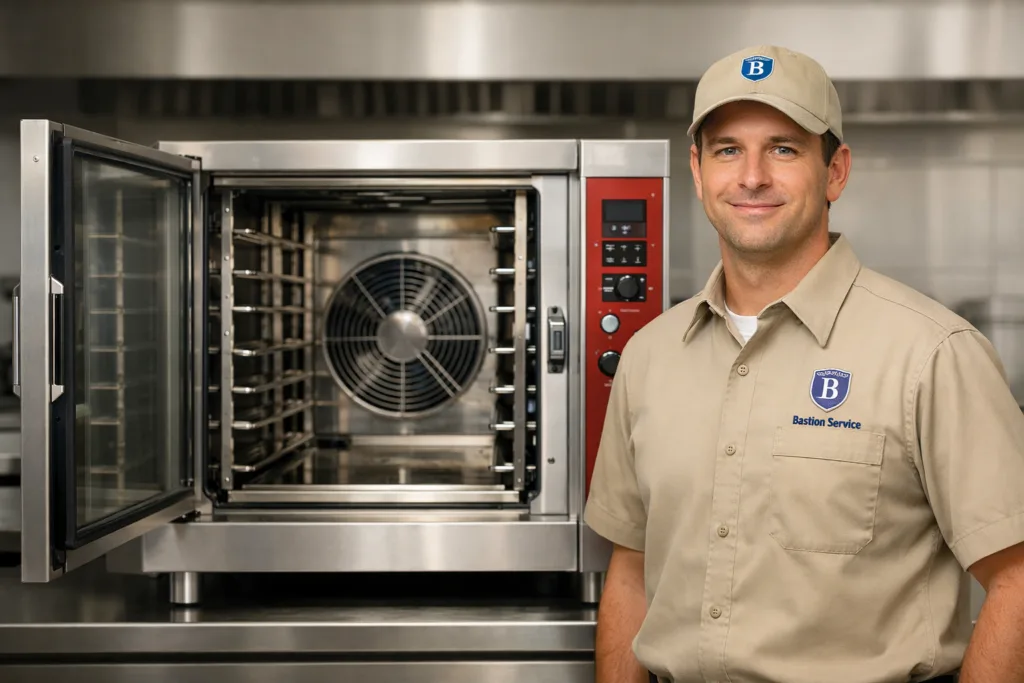




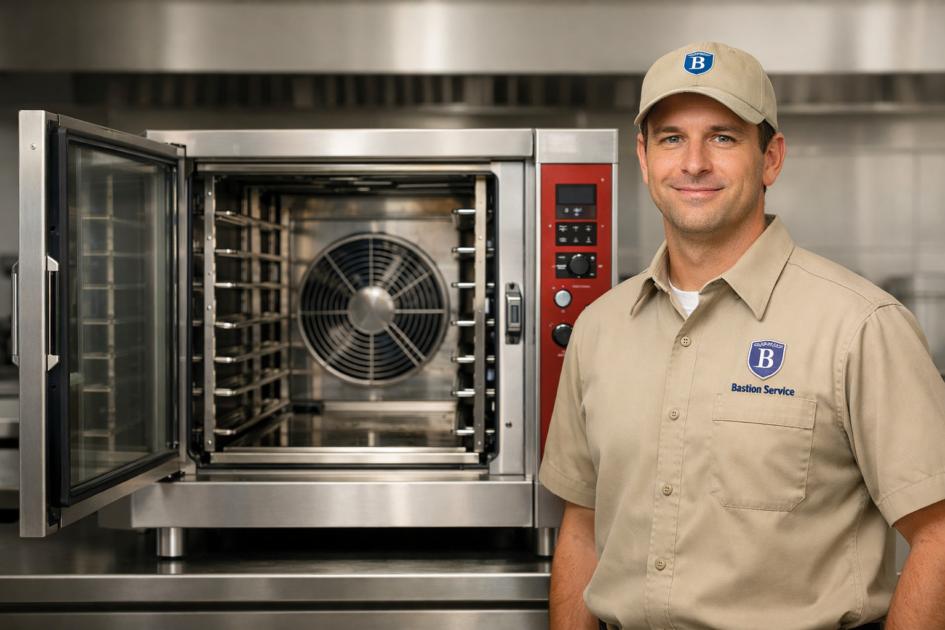
When Blodgett cooking equipment starts slowing production, missing temperatures, or dropping out during service, the priority is to identify the actual fault and schedule repair based on business impact. For restaurants, bakeries, institutional kitchens, and other food-service operations in Hermosa Beach, equipment trouble can quickly affect ticket times, product consistency, labor flow, and daily revenue. Bastion Service works with local operators to troubleshoot symptoms, determine repair urgency, and help decide whether a unit can remain in use until service is completed.
For specific equipment paths in Hermosa Beach, review Blodgett Oven Repair in Hermosa Beach and Commercial Appliance Repair in Hermosa Beach.
Blodgett cooking equipment problems that often need repair
Blodgett equipment is built for heavy kitchen use, but constant heat, repeated cycling, grease exposure, and long operating hours can wear down ignition parts, controls, burners, sensors, fans, and related components. In many cases, the first sign is not a total shutdown. It may begin as slow preheat, uneven results, delayed ignition, or temperature drift that forces staff to compensate during production.
Service is usually worth scheduling when a symptom starts affecting output, food quality, safe operation, or confidence in the equipment. A repair visit helps separate a one-part failure from a broader performance issue that could lead to repeat downtime.
Heating and temperature control faults
One of the most common complaints with cooking equipment is failure to maintain stable heat. Operators may notice that the unit does not reach the set temperature, takes too long to recover after loading, runs hotter than expected, or cycles in a way that creates inconsistent cooking results. These issues can point to thermostat or sensor problems, control faults, airflow issues, burner trouble, heating element failure, or calibration drift.
For kitchens trying to stay on schedule, temperature instability often creates a chain reaction. Staff may extend cook times, rotate pans more often, or change settings from batch to batch just to get usable results. That workaround can keep service moving temporarily, but it also makes quality less predictable and can hide a worsening problem.
Ignition and startup problems
If a Blodgett unit struggles to ignite, clicks repeatedly, starts inconsistently, or shuts off shortly after startup, the problem should be evaluated before normal production continues. Ignition symptoms may involve igniters, flame sensing components, gas valves, safety circuits, controls, or burner-related faults. Because several different failures can produce similar symptoms, testing matters more than guessing.
Intermittent startup issues are especially disruptive in busy kitchens because they create uncertainty at the exact moment equipment is needed most. What begins as an occasional failed start can become a full no-heat condition or recurring shutdown pattern during service.
If there is a strong or persistent gas odor, stop using the equipment and follow appropriate gas safety procedures before arranging repair.
Uneven cooking, hot spots, and slow recovery
Uneven browning, inconsistent baking from rack to rack, scorched edges, pale centers, or extended cook times can all indicate performance loss inside the heating or airflow system. Depending on the equipment configuration, the cause may involve fan components, burners, sensors, door sealing, controls, or heat distribution problems.
These symptoms matter because they affect more than product appearance. They influence portion consistency, waste, remake rates, and timing across the line. In high-volume kitchens, even minor unevenness can become a larger operational problem once staff begin adjusting recipes or timing to compensate.
Signs the equipment should not be ignored
Some issues are inconvenient but manageable for a short window. Others are a warning that continued use may increase repair costs or create a bigger interruption. Scheduling service becomes more urgent when you notice:
- Repeated shutdowns during preheat or active cooking
- Long recovery times between batches or door openings
- Temperature swings that affect product consistency
- Error displays, locked controls, or unresponsive settings
- Burners that do not light correctly or stay lit reliably
- Production delays caused by one unit falling behind
- Staff needing to restart the equipment repeatedly to finish service
When these patterns show up together, the problem is often bigger than normal wear. Early repair can help prevent emergency downtime during a rush or a complete loss of one of the kitchen’s key production pieces.
How symptom patterns help guide repair decisions
Not every equipment issue has the same urgency. A unit that runs slightly off temperature may still be usable in a limited role until service is scheduled, while a unit with ignition failure or unpredictable shutdowns may need to come out of rotation right away. The best repair decisions usually come from looking at the full symptom pattern rather than any single complaint.
Helpful details include when the issue happens, whether it appears only after warmup, whether it gets worse under load, whether another staff member noticed the same behavior, and whether the problem is constant or intermittent. That information helps narrow the likely fault path and makes the service visit more productive.
Supported Blodgett equipment coverage for kitchen operations
Although many calls center on oven performance, cooking equipment problems are often discussed in broader operating terms: heat loss, ignition trouble, burner issues, slow recovery, control failures, and shutdowns that interrupt production. For businesses using Blodgett equipment as part of daily kitchen output, repair needs are usually tied to throughput and reliability rather than to a part name.
This is why service conversations often focus on practical questions such as:
- Can the equipment still be used safely until the visit?
- Is the issue likely to worsen during continued operation?
- Does the symptom suggest a control problem, heat-system problem, or multiple failures?
- Is repair likely to restore dependable use without repeated callbacks?
For operators in Hermosa Beach, those answers matter because kitchen equipment failures rarely happen at convenient times. They affect prep schedules, lunch and dinner volume, special orders, and staffing decisions the same day.
When repair is often the better path
Businesses sometimes assume a struggling unit is near the end of its service life when the real issue is a targeted failure in the ignition, temperature, or control system. In many cases, repair is the faster and more cost-effective option when the equipment is otherwise structurally sound and still fits the kitchen’s production needs.
Replacement becomes a bigger consideration when there are repeated major failures, long-standing performance problems, or several worn components surfacing at once. Even then, a proper inspection is useful because it helps owners and managers compare immediate repair value against the cost and disruption of changing equipment.
What to have ready before scheduling service
Before booking a visit, it helps to gather a few details from the staff using the equipment most often. Useful information includes:
- The exact symptom and when it occurs
- Whether the problem happens during preheat, under load, or throughout the day
- Any error codes or unusual control behavior
- Whether the issue is getting worse or staying about the same
- Your hours of operation and the best access window for service
Clear notes can reduce delays during diagnosis and help prioritize the repair around kitchen needs.
If your Blodgett cooking equipment in Hermosa Beach is causing shutdowns, slow production, unreliable heat, or inconsistent results, the next step is to arrange service before the disruption spreads into a larger operating problem. A scheduled diagnosis can clarify the cause, identify whether continued use is reasonable, and map out the repair path that best fits your kitchen’s timeline.


