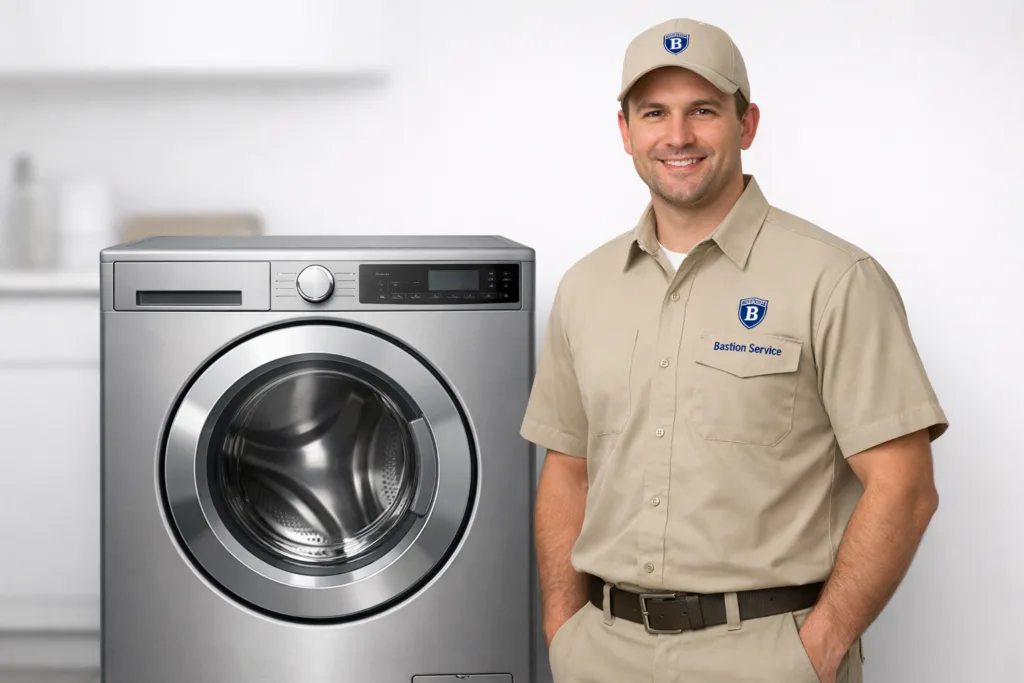
Asko washers are often very good at signaling that something is wrong, but the symptom on the surface does not always point to a single failed part. A machine that stops mid-cycle, leaves clothes wetter than usual, or flashes an error may be dealing with a drain restriction, a door-lock problem, a water-level sensing issue, or an electronic control fault. That is why symptom pattern matters so much when deciding the next step for a household washer in Venice.
How to read the symptom before the problem gets worse
Before service is scheduled, it helps to notice exactly where the cycle breaks down. Does the washer fill but not tumble? Does it wash normally and then fail at drain or spin? Does it only act up on larger loads, or does it happen even with a small normal load? Those details can help separate a simple setup or usage issue from a repair need.
A few observations are especially useful:
- Whether water is left in the drum at the end
- Whether the door locks and unlocks normally
- Whether the washer becomes noisy during spin only
- Whether the problem is constant or intermittent
- Whether an error code appears at the same point in the cycle
Even small differences in behavior can change the likely cause. A washer that will not spin because it cannot drain is a different repair path from one that will not spin because of suspension wear or control issues.
Common Asko washer problems in Venice homes
Not draining or stopping with water inside
When an Asko washer finishes with standing water in the drum, the most common causes include a blocked drain path, a weak or jammed pump, a hose issue, or a fault in the sensing system that tells the machine whether it has drained. Sometimes the washer pauses because it believes water is still present even after partial draining.
What homeowners usually notice is a cycle that never fully completes, a door that stays locked longer than expected, or laundry that remains soaked. If this happens more than once, it is best not to keep forcing additional cycles, because pump strain and stale water buildup can make the situation worse.
Clothes coming out too wet
Poor spin performance does not always mean the motor is failing. An Asko washer may reduce or cancel spin if it detects an out-of-balance load, if water is not draining fast enough, or if vibration control is not working properly. Suspension components, shock wear, or installation problems can also contribute.
If the issue only happens with bulky items, load distribution may be part of the problem. If it happens with ordinary mixed laundry, the washer likely needs further evaluation.
Leaks during fill, wash, or spin
Leaks can show up in different ways. Water near the front may suggest a door seal issue, oversudsing, or a problem during agitation or spin. Water near the back may point to inlet hoses, drain connections, or internal routing problems. Some leaks only happen at high speed, which can make them easy to miss until flooring or nearby cabinetry is affected.
Leak complaints should be addressed quickly. Even a small recurring drip can create hidden damage around the machine base or behind the unit.
Won’t start or won’t continue the cycle
If the controls light up but the washer does nothing when started, the cause may involve the door latch, start command, control board behavior, or a sensed condition that prevents operation. If the washer appears completely unresponsive, power supply issues, tripped protection, or internal electrical faults may be involved.
Repeated attempts to restart the washer are not always helpful. If the machine consistently refuses to begin or drops out early in the cycle, diagnosis is usually more useful than trial-and-error resets.
Noise, vibration, or banging
A washer that suddenly becomes loud deserves attention, especially if the sound is metallic, grinding, or much sharper than normal. Noise can come from items caught in the pump path, worn support parts, bearing problems, or severe load imbalance. Vibration may also be amplified by leveling issues or floor movement.
One noisy load does not always mean a mechanical failure, but repeated banging or harsh spin behavior is a good reason to stop running heavy laundry until the cause is identified.
Error codes and interrupted cycles
Error codes are useful clues, but they rarely mean “replace this one part” without testing. In many cases, the code points to a system that did not complete as expected, such as filling, heating, draining, or locking. A code that returns after clearing is usually more important than a one-time interruption.
If you see a code, make note of when it appeared and what the washer was doing at the time. That information often helps narrow down the fault much faster.
Basic checks that may help before repair
Not every washer problem starts with a failed component. A few simple checks can sometimes explain the symptom:
- Make sure the load is not overly heavy or tightly packed
- Use the correct amount and type of detergent to avoid excess suds
- Check that the drain hose is not kinked or crushed behind the machine
- Confirm the washer is sitting level and stable
- Look for obvious water-supply issues if fill performance seems weak
These checks are most helpful for mild or first-time symptoms. If the same problem keeps returning, the issue is likely beyond normal user adjustment.
When to stop using the washer
Some symptoms should move to the front of the list because continued use can add damage. Stop using the washer and arrange service if you notice any of the following:
- Water leaking onto the floor
- Burning smell or electrical odor
- Sharp grinding or metal-on-metal noise
- Failure to drain with water trapped inside
- Repeated tripping of power
- Door-lock problems that prevent normal operation
For these issues, waiting often turns a manageable repair into a more expensive one.
Repair or replace?
For many households in Venice, the better choice depends on the condition of the washer as a whole, not just the current symptom. Repair is often sensible when the machine is otherwise in good shape, the problem is isolated, and the expected repair restores normal laundry use without chasing multiple unrelated faults.
Replacement becomes more likely when the washer has extensive internal wear, major repeat failures, or damage that affects several systems at once. A leaking hose or drain pump problem is very different from severe bearing wear or multiple electronic failures. The right answer comes from identifying the actual failure point rather than guessing from a broad symptom.
What a service visit should clarify
A useful service approach should answer a few practical questions quickly: what is failing, whether the washer can be repaired reliably, whether other parts have been affected, and whether the repair cost makes sense for the unit. For Asko laundry equipment, that usually means checking fill behavior, drainage, spin response, lock operation, error history, and the sequence of the cycle where the problem appears.
That kind of symptom-based evaluation is especially helpful when the washer still runs part of the cycle, because partial operation can hide the real source of the fault.
Helpful steps before the appointment
If your washer is still accessible, a few notes can make diagnosis easier:
- Write down any error code exactly as shown
- Note whether the problem happens on every load or only sometimes
- Check whether the issue appears during fill, wash, drain, or spin
- Remove standing water if it is safe and easy to do so
- Avoid continued test cycles if the washer is leaking or making severe noise
For many homeowners, that is enough to move from uncertainty to a clear repair decision without unnecessary part swapping or repeated interruptions to the laundry routine.