
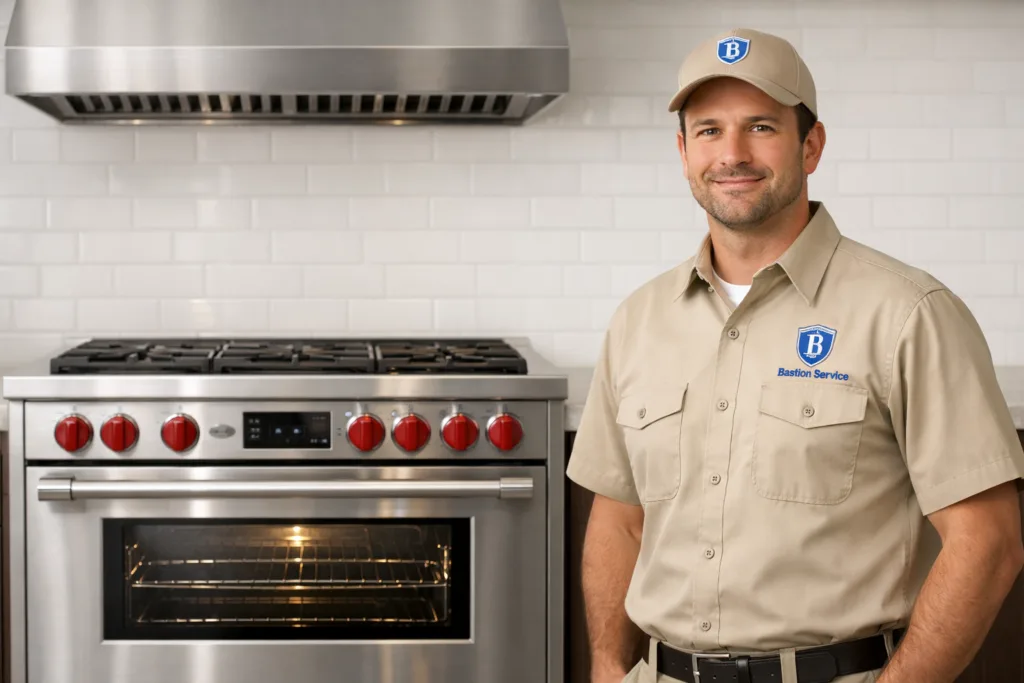




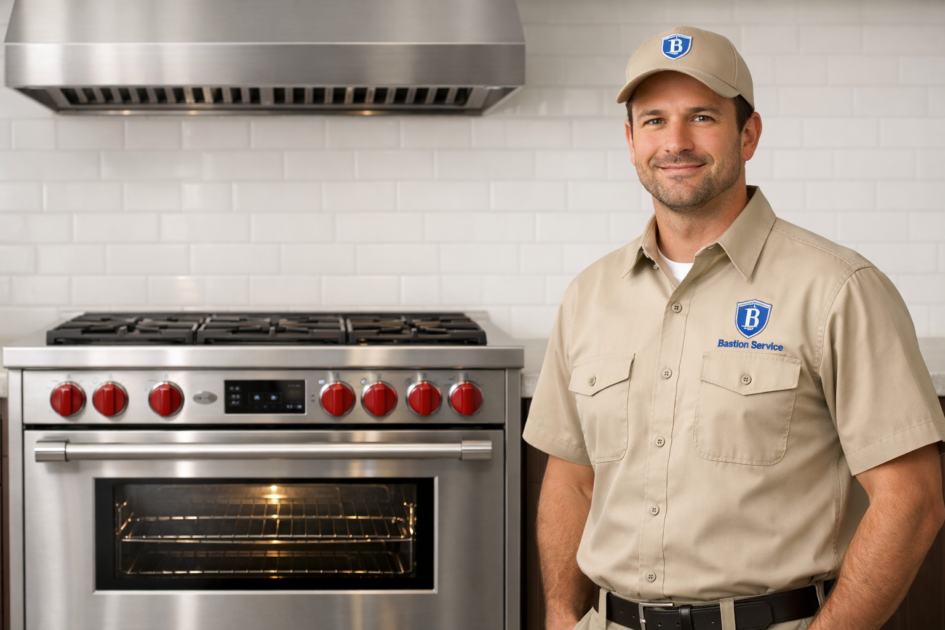
Cooking problems often start with small changes: a burner that clicks longer than usual, an oven that needs extra time to preheat, or controls that respond inconsistently. Those early symptoms matter because they usually point to a specific system beginning to fail, and the right repair path depends on which part of the appliance is actually causing the trouble.
For specific Wolf appliance paths in Hawthorne, review Wolf Oven Repair in Hawthorne, Wolf Wall Oven Repair in Hawthorne, and Wolf Range Repair in Hawthorne.
How Wolf cooking appliance problems usually show up
Wolf appliances are designed for steady heat and precise control, so homeowners in Hawthorne tend to notice performance changes quickly. In many cases, the symptom is more important than the appliance label at first. Ignition trouble, drifting temperature, uneven cooking, and intermittent electronics can appear across cooktops, ovens, ranges, and wall ovens, but the underlying cause may differ from one unit to another.
A useful diagnosis looks at patterns such as whether the problem is constant or intermittent, whether it affects one function or several, and whether the appliance still works partially. That helps separate issues related to ignition, sensors, control boards, switches, wiring, heating elements, or normal wear.
Cooktop symptoms and what they may mean
Burners that click repeatedly
One of the most common cooktop complaints is continuous clicking. Sometimes the cause is simple, such as moisture after cleaning, food residue around the igniter, or a burner cap that is not seated correctly. In other cases, the clicking points to a worn igniter, switch problem, or another ignition system fault. If the clicking continues after the cooktop is dry and properly assembled, it is usually a sign the unit should be checked.
Burners that do not light reliably
When a burner lights only after several tries, lights unevenly, or fails completely, the issue may involve blocked ports, ignition weakness, or an internal gas-flow or switch problem. If only one burner is affected, the fault is often more localized. If several burners begin acting the same way, the diagnosis may shift toward a broader ignition-related problem within the appliance.
Weak flame or poor heat output
A noticeable drop in heat can make everyday cooking frustrating even when the burner still turns on. Poor flame quality may come from buildup, incorrect burner assembly, or component wear that affects normal operation. This type of problem often gets worse gradually, which can make it easy to overlook until cooking times become noticeably longer.
Oven performance problems that deserve attention
Slow preheating or no heat
If a Wolf oven takes much longer than normal to heat, warms only slightly, or does not heat at all, the cause may involve a heating component, sensor, relay, or control failure. In some cases the display appears normal even though the oven is not reaching the selected temperature, which is why symptom-based testing matters more than appearances alone.
Uneven baking and temperature swings
Inconsistent cooking results often show up before a complete breakdown. Food may brown too quickly on one side, remain undercooked in the center, or come out differently from rack to rack. These symptoms can point to sensor drift, calibration issues, airflow problems, or a fault in the way the oven cycles heat during cooking.
Keypad or display issues
When controls stop responding, settings do not register, or the display cuts in and out, the appliance becomes harder to trust. Electronic symptoms can involve the control interface, internal wiring, or a failing board. Even if the oven still heats sometimes, intermittent control problems usually do not improve on their own.
Range issues that involve more than one system
A range combines surface cooking and oven functions in one appliance, so mixed symptoms are common. In Hawthorne homes, one section may still work while the other fails, which can make the problem seem confusing when it is actually helping narrow the diagnosis.
Cooktop works but oven does not
If the burners perform normally but the oven cannot preheat or hold temperature, the fault is more likely tied to the oven side of the range. That may include heating, sensor, control, or door-related issues rather than a whole-appliance failure.
Oven works but burners do not
When the oven continues to heat but the cooktop develops ignition problems, attention usually shifts to burner switches, spark-related parts, or cooktop connections. Separating those systems helps avoid replacing parts that are not related to the actual complaint.
Several functions acting unpredictably
If the range has long preheats, clicking burners, random shutdowns, or recurring error messages at the same time, the issue may go beyond routine wear. Multiple symptoms do not always mean replacement is necessary, but they do make a proper inspection more important before the appliance is used heavily again.
Wall oven problems that can affect daily use
Wall ovens are often built into the kitchen in a way that makes consistent performance especially important. When they begin to misread temperature or stop mid-cycle, meal planning gets disrupted quickly.
Not reaching the set temperature
A wall oven that starts normally but never reaches the chosen setting may have a sensor problem, heating issue, or control fault. Homeowners often notice this through longer cook times, poor baking results, or repeated need to raise the temperature to compensate.
Heat loss at the door
If the door does not close firmly or the gasket is worn, heat can escape and make the oven work harder than it should. That can affect cooking consistency and put extra strain on components over time.
Error codes or intermittent shutoffs
Repeated fault codes or unexpected shutdowns are usually signs that the appliance needs more than a reset. Electrical and control-related problems often become more frequent once they start, especially when the oven is used regularly.
Signs you should schedule service sooner
Some kitchen appliance issues remain minor for a while, but many become more disruptive with continued use. It is usually worth arranging service sooner when the symptom affects safety, temperature accuracy, or normal operation.
- Burners fail to ignite consistently
- The oven overheats, underheats, or cannot maintain temperature
- Controls stop responding or work only intermittently
- The appliance shuts off in the middle of cooking
- Error codes repeat instead of clearing
- Performance changes suddenly rather than gradually
If there is a persistent or strong gas smell, stop using the appliance right away and address the safety issue before planning repair.
Repair or replace: what usually helps make the decision
For many Wolf appliances, repair makes sense when the problem is limited to a specific system and the rest of the unit is in good condition. A burner ignition issue, a temperature sensor fault, or a control-related problem can be very different from a situation where several major failures are happening at once.
Replacement becomes a more serious consideration when repair costs begin stacking up, reliability has declined over time, or the appliance has multiple overlapping issues. The main value of diagnosis is that it turns a vague symptom into a clearer decision about what the household is actually dealing with.
What Hawthorne homeowners should look for before booking service
Before scheduling an appointment, it helps to note exactly what the appliance is doing. Useful details include whether the problem happens every time or only occasionally, whether one burner or all burners are affected, how long preheat now takes, whether error codes appear, and whether the issue started after cleaning, a power interruption, or a sudden performance change. Those details often make it easier to match the symptom to the likely source of failure.
For homeowners in Hawthorne, the most helpful next step is usually to focus on the appliance behavior itself: a cooktop with unreliable ignition, an oven that no longer cooks evenly, a range with split performance, or a wall oven that cannot be trusted to finish a cycle. Once the symptom pattern is understood, the repair decision becomes much more straightforward.


