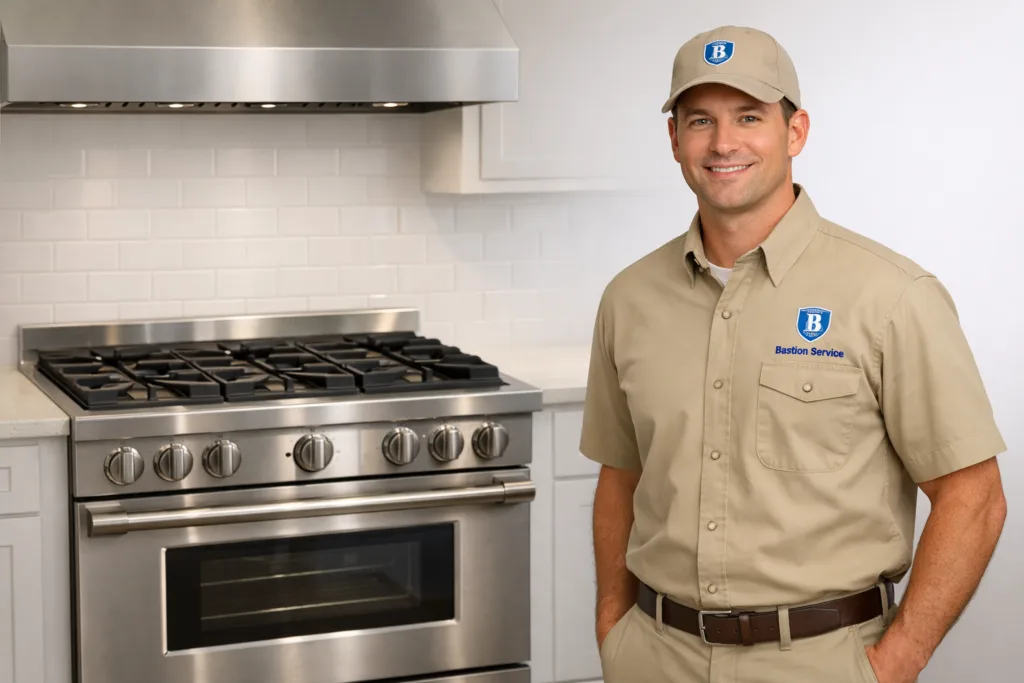
Range problems often start with a small change in behavior: a burner that needs several tries to light, an oven that takes noticeably longer to preheat, or heat that no longer matches the setting on the knob. On a Wolf range, those symptoms can point to ignition, temperature sensing, gas flow, control, or wiring issues, so it helps to look at the exact pattern before deciding on a repair.
Symptoms that usually mean the range needs attention
Some issues are clearly disruptive, while others build gradually and become easier to ignore than they should be. If your range is affecting everyday cooking results, it is usually worth having the problem checked before it spreads to related parts or turns into a recurring workaround.
- Burners click repeatedly but do not ignite
- One burner lights slower than the others
- Flame looks weak, uneven, or unstable
- Oven preheats slowly or never reaches the selected temperature
- Food cooks too fast, too slow, or unevenly from rack to rack
- Display, knobs, or controls behave inconsistently
- Heating stops during use or returns intermittently
What common Wolf range symptoms can indicate
Clicking ignition with no flame
When a burner clicks but will not light, the cause may be as simple as moisture near the igniter or a burner cap that is out of position. In other cases, the problem involves blocked burner ports, a worn ignition component, a spark module issue, or a fault in the switch system. If the clicking continues after the burner should already be lit, that can also point to ignition system trouble that needs service.
Burner lights, but the flame is weak or uneven
An uneven flame can make daily cooking frustrating, especially when simmering or using low heat. This symptom may come from debris in the burner openings, improper burner assembly fit, or an issue affecting gas delivery to that burner. If one burner performs differently from the others, that difference is useful when narrowing down whether the fault is local to the burner or part of a larger system problem.
Oven not heating or heating too slowly
If the oven seems stuck below the set temperature or takes far longer than normal to preheat, the issue may involve the igniter, a heating component, the temperature sensor, or the electronic control system. Sometimes the oven appears to be working, but the real complaint is that baking times have stretched and results are inconsistent. That is often a sign that the oven is heating, but not correctly.
Oven temperature is off
When food repeatedly burns on the outside while staying underdone inside, or when recipes that used to work suddenly fail, the oven may be running too hot, too cool, or cycling unevenly. Sensor drift, calibration problems, airflow issues, and control faults can all create this kind of symptom. A premium range is expected to cook consistently, so repeated temperature misses are usually a repair issue rather than normal variation.
Display or controls act erratically
Unresponsive buttons, inconsistent settings, flickering displays, or controls that stop mid-use can point to failing interface parts, wiring concerns, or a main control problem. Electrical symptoms may seem minor at first, but they often become more disruptive with time. If the range resets itself, loses input, or behaves unpredictably, it is a good time to stop guessing and have it evaluated.
Why the exact symptom pattern matters
Two ranges can show the same general complaint and still need completely different repairs. For example, “oven not heating” could mean no ignition, weak ignition, inaccurate sensing, or a control issue. “Burner won’t light” could be a burner-head problem, an ignition problem, or a switch fault. That is why the details matter:
- Which burner or oven function is affected
- Whether the problem happens every time or only occasionally
- Whether the symptom started suddenly or worsened gradually
- Whether the oven eventually reaches temperature
- Whether there are unusual sounds, smells, or error behavior
For homeowners in Hawthorne, writing down those details before service can make the visit more efficient and help separate a single failing part from a broader performance issue.
When continued use can make things worse
Not every issue is urgent, but some are hard on the appliance when ignored. Repeated failed ignition can put extra wear on ignition components. Temperature problems can lead to poor cooking results and sometimes strain related parts if the range keeps trying to compensate. Electrical irregularities can become more frequent and more disruptive over time.
If the range is still usable but clearly not operating normally, reducing use until it is checked is often the better choice. If you notice a strong or persistent gas odor, stop using the appliance and handle safety first before arranging appliance service.
Repair or replace?
Many Wolf range problems are worth repairing when the issue is limited to a specific part and the rest of the appliance is in good condition. The decision becomes more complicated when there are multiple major failures, long-standing control problems, or signs of repeated unresolved issues. What matters most is whether the repair restores consistent day-to-day cooking rather than only improving the symptom for a short time.
In Hawthorne homes, that usually comes down to a few practical questions:
- Is the problem isolated or part of a longer pattern?
- Has performance been stable until recently?
- Are one or several functions affected?
- Will the repair return normal burner and oven use without ongoing workarounds?
What to check before scheduling service
A few observations can make diagnosis more straightforward. Before the appointment, note whether the problem affects one burner or several, whether the oven reaches temperature at all, how long preheat now takes compared with normal, and whether the issue changes from day to day. If the controls flash, reset, or fail at certain settings, that is worth noting too.
This kind of symptom-based information is often more helpful than trying to guess which part has failed. For Hawthorne households relying on the range every day, the goal is to identify the actual fault and choose the repair path that makes sense for the appliance’s overall condition.
Household cooking issues that should not be brushed off
Some problems seem small because the range still partly works, but they can still affect safety, convenience, and cooking reliability. It is smart to pay attention when:
- You have to relight or retry a burner regularly
- Cooking times have changed without any recipe changes
- The oven needs constant temperature adjustments to get usable results
- Controls only respond intermittently
- The appliance behaves differently from one day to the next
Those are signs the range is no longer operating predictably. A targeted diagnosis can show whether the problem is a straightforward component repair or a larger reliability concern that should factor into your next decision.