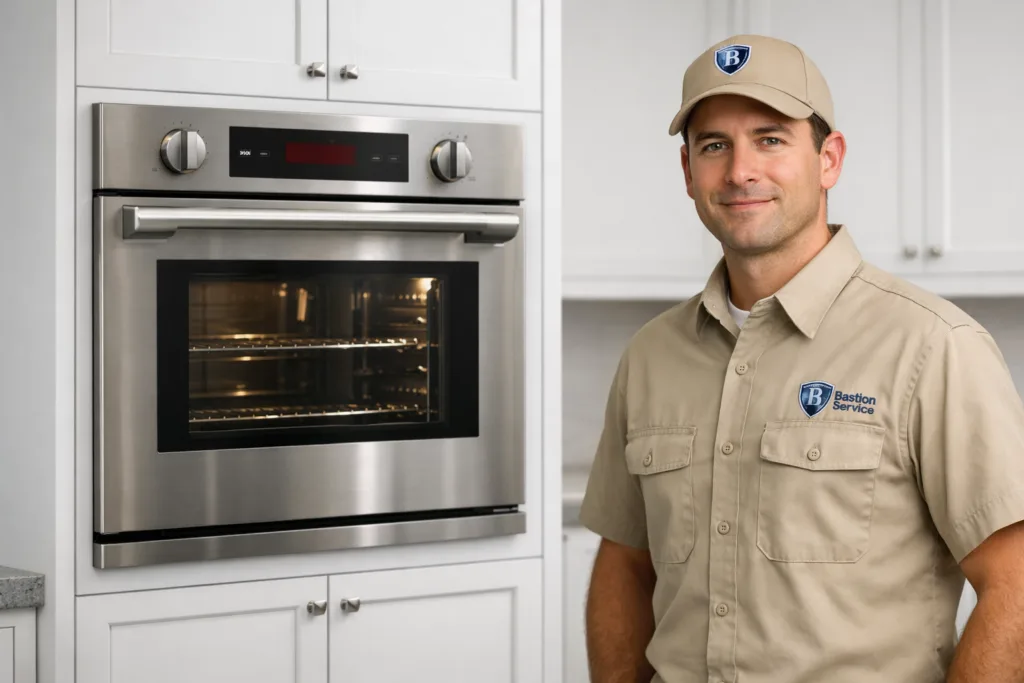
Temperature problems in a wall oven rarely have just one possible cause. A unit that runs cool, overheats, or takes too long to preheat may be dealing with a weak heating circuit, a sensor reading issue, a control problem, or heat loss at the door. Looking at the full symptom pattern helps narrow down what is actually failing and whether the repair is likely to hold up well over time.
Common Wolf wall oven symptoms homeowners notice first
Most service calls start with a cooking result that feels off rather than a complete breakdown. Meals take longer than expected, baking becomes inconsistent, or the display begins acting strangely. Those early signs are useful because they often point to the system that needs attention.
Not heating or only partially heating
If the oven powers on but never reaches the selected temperature, the problem may involve the bake element, broil circuit, temperature sensor, relay, or electronic control. In some cases the oven still gets warm, which can make the issue seem minor even though cooking performance is already compromised.
Homeowners often describe this as:
- Preheat that never completes
- Food staying pale or undercooked
- The broil function working better than bake
- Heat stopping partway through a cycle
Uneven baking and hot spots
When one rack browns faster than another, the back of a dish cooks faster than the front, or results change from one use to the next, the issue may be tied to temperature sensing, convection performance, or an element that is no longer heating evenly. This is often noticed with cookies, casseroles, and roasts that used to come out predictably.
Slow preheat
A long preheat does not always mean the oven is simply aging. It can point to a heating component that is weakening, a control that is not energizing the circuit correctly, or a sensor that is misreporting cavity temperature. Slow preheat usually gets worse gradually, so many homeowners in Century City only notice it after comparing current cooking times to how the oven performed before.
Temperature swings during cooking
If the oven overshoots temperature and then cools too far before reheating, food quality can suffer even when the display appears normal. Cakes may collapse, baked dishes may dry out around the edges, and roasting times can become unreliable. These symptoms often suggest a control, sensor, or relay-related issue rather than a simple calibration complaint.
Error codes, beeping, or touchpad trouble
A flashing code or unresponsive control panel may indicate a communication fault, overheating condition, stuck key input, or board failure. Power-cycling the unit can sometimes clear a temporary glitch, but a code that returns after reset usually means the underlying fault is still present.
Door not closing properly
A wall oven door that sags, pops open, or leaks heat around the frame can affect temperature stability and increase strain on heating and control components. Hinges, latch parts, alignment, and gasket condition all matter. A door problem may look mechanical on the surface but can contribute directly to poor cooking performance.
What these symptoms can point to
Several different parts can create similar cooking problems, which is why symptom-by-symptom testing matters. A temperature complaint, for example, may involve one or more of the following:
- Weak or failed bake or broil element
- Out-of-range temperature sensor
- Faulty relay or control board output
- Convection fan or related airflow issue
- Door gasket wear or hinge misalignment
- Electrical supply problems affecting oven operation
This is one reason guessing at parts can become expensive. Two ovens can show the same symptom while needing completely different repairs.
When the problem is more urgent
Some issues are inconvenient but manageable for a short time. Others are signs to stop using the oven until it is checked. You should discontinue use if you notice:
- Burning smells that seem electrical rather than food-related
- Sparking or visible arcing
- Repeated shutdowns during heating
- A breaker tripping when the oven starts or cycles
- An oven that overheats far beyond the set temperature
- A door that will not stay shut securely
Problems in those categories can lead to additional component damage and are not good candidates for trial-and-error use.
Helpful checks to make before service
You do not need to disassemble anything to gather useful information. A few observations can make the appointment more efficient and help identify whether the problem is isolated or system-wide.
- Note whether the issue affects bake, broil, convection, or every mode
- Write down any error code exactly as shown
- Pay attention to whether the issue begins during preheat or later in the cycle
- Check whether the display, interior light, and controls respond normally
- Notice whether the door closes firmly and evenly
- If safe to do so, compare actual cooking results to the set temperature over more than one cycle
These details are often more helpful than a general description like “it’s not working right.”
Repair or replacement?
For many households in Century City, repair makes sense when the oven has a specific failed component and the rest of the appliance is in good shape. That is often the case with isolated sensor issues, certain heating failures, door hardware problems, and some control-related faults.
Replacement becomes a more serious consideration when there are multiple failing systems, recurring electronic problems, severe interior or door damage, or repair costs that climb close to the value of the unit. The decision usually comes down to the exact failure, the overall condition of the oven, parts availability, and how reliably it has performed up to this point.
Why performance changes should not be ignored
Wall ovens rarely jump straight from perfect operation to total failure. More often, they drift. Preheat stretches longer, cooking becomes less even, or the display starts showing intermittent issues. Acting earlier can help limit secondary wear on boards, relays, heating components, and door parts.
For homeowners scheduling Wolf Wall Oven Repair in Century City, the goal is not just to restore heat but to restore consistent cooking behavior. A repair that addresses the actual source of the problem is far more useful than one that only masks symptoms for a short time.