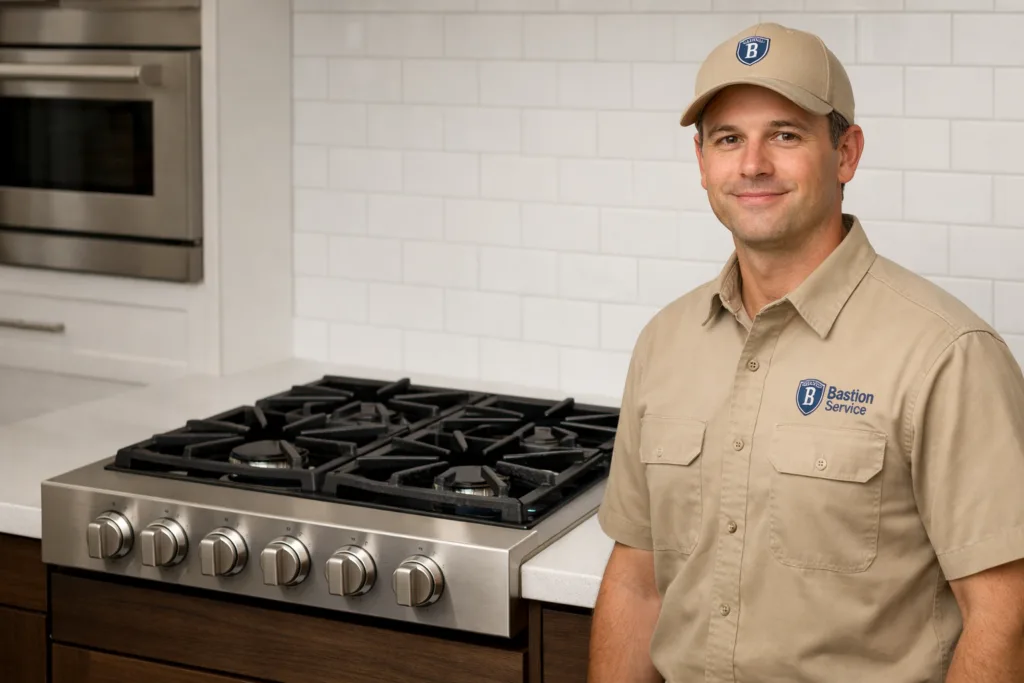
Cooktop problems are easiest to solve when the symptoms are described exactly as they happen. A burner that clicks every time but lights after a delay points to a different issue than a burner that sparks once and does nothing. On Wolf units, that distinction matters because ignition components, burner assemblies, switches, valves, and control parts can produce similar everyday complaints while requiring very different repair paths.
Common Wolf cooktop symptoms and what they often mean
Most service calls start with a short list of repeating problems. Paying attention to what happens before, during, and after you try to cook can make the repair process faster and more accurate.
Burner will not ignite
If one burner refuses to light while the others work normally, the issue is often limited to that burner area. Common causes include a misaligned burner cap, clogged burner ports, a worn igniter, or an electrode that is dirty or damaged. If none of the burners ignite, the problem may involve power supply, the ignition system, wiring, or a shared control component.
It also helps to note whether you hear clicking. Clicking without flame usually means the unit is trying to ignite but gas flow, spark delivery, or burner alignment is not right. No clicking at all can suggest a switch, harness, or electrical fault.
Constant clicking after the flame is on
A Wolf cooktop that keeps clicking after the burner lights often has moisture, residue, or a failing spark switch somewhere in the ignition circuit. This can happen after routine cleaning, a boil-over, or gradual buildup around the electrode. In some cases the clicking is intermittent and only appears on one burner; in others it affects multiple burners and points to a broader ignition issue.
Because repeated sparking adds wear, this is one of the symptoms worth addressing before it becomes a daily nuisance.
Weak flame or slow heating
When a gas burner lights but does not heat properly, the flame pattern usually tells part of the story. Uneven flame, low flame, or hot spots can come from blocked ports, burner head problems, regulator-related issues, or poor flame distribution. Homeowners often notice it first when water takes unusually long to boil or simmer settings become hard to control.
On electric or induction-style cooktop configurations, weak heating may show up as long preheat times, inconsistent cycling, or a zone that turns on but never reaches normal cooking temperature.
Burner heats unevenly
Uneven heating is especially frustrating because the cooktop may appear to be working, just not well. On gas models, this can happen when flame is not distributed evenly around the burner. On electric and induction configurations, the issue may involve the heating element, temperature sensing, cookware recognition, or a control fault that interrupts normal operation.
If the problem is consistent on the same cooking zone, that usually suggests a localized component problem rather than general user error.
Knobs or controls do not respond normally
Loose knobs, stiff controls, burners that do not change output when adjusted, or zones that shut off unexpectedly can all point to wear in valves, switches, control interfaces, or internal electronic parts. These symptoms can start subtly, with a burner that feels slightly harder to control than before, then progress to unreliable operation.
When control behavior changes, it is smart to have it checked early rather than continue using the cooktop until the problem becomes harder to isolate.
Cracked glass or visible surface damage
If a glass cooktop surface is cracked, use should usually stop until the unit is inspected. Surface damage can affect both safety and performance, especially if it exposes internal components to spills, heat stress, or further breakage. Even when the damage seems cosmetic, the repair decision depends on the crack location, depth, and the condition of the surrounding cooktop structure.
Why the exact symptom pattern matters
Small details often separate a straightforward repair from a more involved one. Try to notice:
- Whether the problem affects one burner or several
- Whether the issue happens all the time or only occasionally
- Whether the symptom appears when the cooktop is cold, hot, or after cleaning
- Whether there is clicking, delayed ignition, uneven flame, or no response at all
- Whether the problem started suddenly or became worse over time
That information helps identify whether the likely cause is isolated to a burner assembly, tied to ignition hardware, or related to a larger control or power problem.
When to stop using the cooktop and schedule service
Some problems are inconvenient but manageable for a short time. Others should prompt you to stop normal use right away. Arrange service promptly if you notice:
- A burner that clicks repeatedly without lighting
- Flame that looks irregular, unstable, or weaker than normal
- Controls that do not respond consistently
- A cooking zone that shuts off unexpectedly
- Visible cracking or surface damage
- Performance that makes cooking results unpredictable
For households in Century City, the main concern is not only convenience but also whether the cooktop can still be used safely and consistently for everyday meals.
What can happen if the issue is ignored
Cooktop faults rarely improve on their own. Repeated ignition attempts can wear out spark-related parts faster. Ongoing clicking may put added stress on switches and ignition components. Burners operating with poor flame patterns can make cooking uneven and may lead to more buildup around the affected area. Electrical and control issues that begin intermittently can spread into broader operating failures over time.
Addressing the problem while it is still limited to one symptom often gives you more repair options than waiting until multiple functions are affected.
Repair or replacement: how homeowners usually decide
In many cases, repair makes sense when the problem is tied to a specific burner, igniter, switch, sensor, valve, or control component and the rest of the cooktop is in good condition. Replacement becomes a more serious consideration when the appliance has multiple major faults, a cracked surface with additional internal issues, or a repair history that suggests repeated breakdowns.
The decision usually comes down to a few practical factors:
- Age and overall condition of the cooktop
- Whether the current problem is isolated or part of a larger pattern
- Condition of the cooktop surface and burner assemblies
- Parts availability for the specific Wolf model
- Whether the expected repair cost restores reliable day-to-day use
A good service visit should leave you with enough information to compare those factors clearly instead of guessing based on one visible symptom.
What to expect from a service visit
A proper Wolf cooktop repair appointment in Century City should do more than confirm that a burner is not working. The goal is to verify the failed part, check for related wear or secondary issues, and determine whether the repair is likely to hold up under normal household use. Depending on the complaint, that may include ignition testing, burner inspection, control response checks, power verification, or evaluation of glass and surface condition.
For homeowners, the most useful outcome is a clear explanation of what failed, what needs to be repaired now, and whether there are any signs of a broader issue that could affect the cooktop again soon.
Simple observations that help before service
You do not need to diagnose the appliance yourself, but a few observations can be helpful when booking repair:
- Note which burner or zone is affected
- Write down whether the problem is constant or intermittent
- Pay attention to sounds like clicking or buzzing
- Notice if the issue started after cleaning, a spill, or a power interruption
- Check whether other burners still operate normally
Those details can help narrow the likely repair path and make the visit more efficient.
Residential Wolf cooktop repair focused on everyday use
Most households simply want the cooktop to light reliably, heat evenly, and respond normally every time dinner needs to be made. Whether the issue is a burner that will not ignite, ongoing clicking, weak heat, uneven cooking, control trouble, or surface damage, symptom-based evaluation is the fastest way to understand what is repairable and what the next step should be.
For Century City homeowners, that means looking beyond the obvious complaint and making sure the repair addresses the actual cause of the problem, not just the part that seems most visible.