
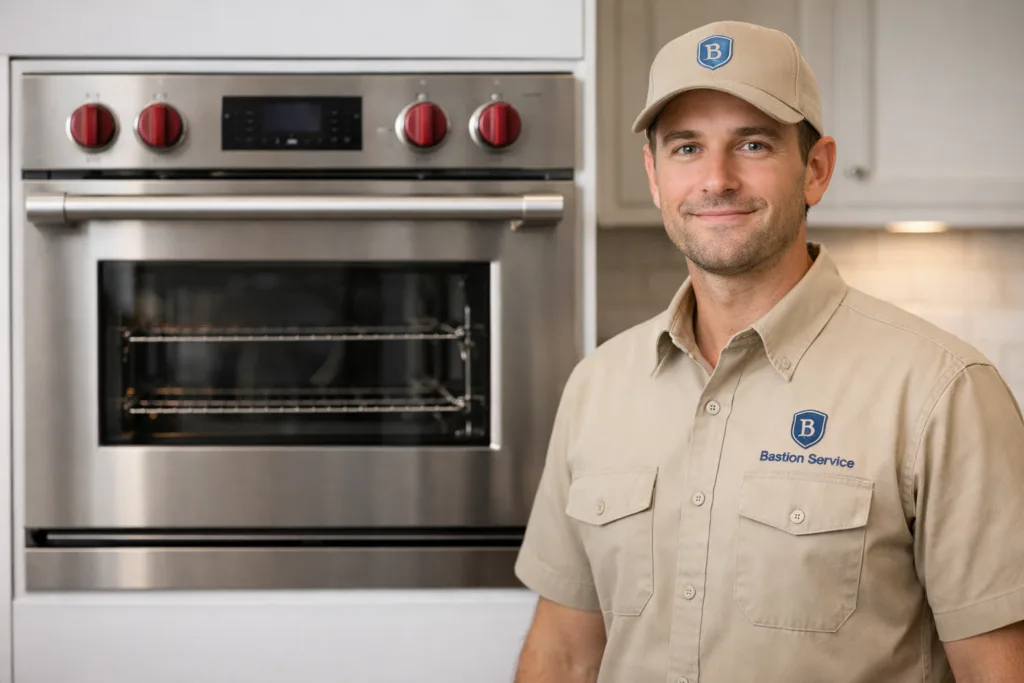




Cooking problems are easier to solve when you look at the pattern instead of focusing on a single frustrating moment. A Wolf burner that clicks once and lights is very different from one that keeps clicking, lights late, or produces an uneven flame. The same goes for an oven that seems a little slow one day versus one that regularly misses temperature, shuts off mid-use, or browns unevenly. In Century City homes, those details help separate a minor issue from a failure that needs attention before regular cooking continues.
For specific Wolf appliance paths in Century City, review Wolf Oven Repair in Century City, Wolf Wall Oven Repair in Century City, and Wolf Range Repair in Century City.
Start with the symptom you can clearly describe
Homeowners often notice the result before they notice the cause: dinner takes longer, baking becomes unreliable, or a control does not respond the way it used to. That is normal. What helps most is narrowing the issue into a specific symptom group:
- Ignition trouble, delayed lighting, or repeated clicking
- Weak flame, uneven flame, or burners that do not heat consistently
- Slow preheating, underheating, overheating, or temperature swings
- Displays or controls that respond inconsistently
- Appliances that work intermittently and then fail again
Once the symptom group is clear, the repair path becomes much more realistic. Several different parts can create the same user-facing complaint, so guessing at a fix usually leads to wasted time.
Wolf cooktop problems homeowners notice first
Cooktops tend to announce trouble quickly because the issue is visible and immediate. You may hear unusual clicking, see a flame that looks smaller than normal, or find that one burner behaves differently from the others. On some units, the problem appears only after cleaning, after a spill, or after the appliance has not been used for a few days.
Repeated clicking or delayed ignition
If a gas burner keeps clicking or takes too long to light, the fault may involve the igniter, burner cap alignment, residue in the burner path, moisture, or another ignition-related component. Because several causes can produce nearly identical symptoms, the important question is not just whether it lights, but how it lights and whether the behavior is getting worse.
Weak or uneven flame
A burner that ignites but does not heat well may have a flame distribution problem rather than a full ignition failure. Uneven heat across cookware, flames that look irregular, or burners that struggle at certain settings can point to a burner assembly issue, obstruction, or a problem affecting normal gas flow and control.
Controls that feel inconsistent
When settings do not respond normally, or a cooktop seems to cycle or heat unpredictably, the issue may be deeper than the visible surface hardware. That is especially true when the problem comes and goes, since intermittent electrical faults often worsen over time.
When to stop using the cooktop
It is best to pause use if a burner will not ignite correctly, if ignition is delayed every time, if flame appearance is obviously abnormal, or if controls behave unpredictably. Repeated attempts to force normal operation can create extra wear and add confusion when the appliance is finally inspected.
Wolf oven issues that affect everyday cooking
Oven problems are often noticed through food quality before the appliance appears fully broken. A roast that takes too long, cookies that brown unevenly, or dishes that come out inconsistent from one rack to another often signal that the oven is no longer regulating heat the way it should.
Slow preheat or failure to reach temperature
If preheating drags on or the oven never seems to get hot enough, the issue may involve a heating element, igniter, sensor, control, or airflow-related fault. What matters is whether the oven eventually stabilizes or continues missing the target temperature throughout the cooking cycle.
Overheating and temperature drift
An oven that runs hotter than the selected setting can be just as disruptive as one that underheats. Burning on the outside while food remains undercooked inside, sudden browning differences, or recurring temperature swings often point to a sensing or regulation problem rather than a simple user setting issue.
Uneven cooking patterns
When one side cooks faster than the other, or top and bottom results are noticeably different, the cause may involve heat distribution, convection performance, door sealing, or internal temperature management. These are useful clues because they help distinguish a general heating complaint from a more specific performance fault.
Signs oven service should not be delayed
If the oven shuts off unexpectedly, does not heat at all, overheats, or shows repeated error behavior, it is wise to stop treating it like a routine inconvenience. Continuing to use an unstable oven can strain other components and make the final repair more involved.
Wolf range problems can involve more than one system
A range combines surface burners and oven functions in one appliance, which can make troubleshooting less obvious. Some issues are isolated to the top burners. Others affect only the oven. In other cases, the complaint sounds broad because multiple systems have started drifting away from normal performance at the same time.
Top burner symptoms on a range
If range burners click without lighting, light late, or heat unevenly, the cause may be limited to the surface ignition or burner system. That distinction matters because a range should not automatically be treated as one large failure when the problem may be confined to a specific function.
Oven symptoms within the range
When the oven compartment bakes unevenly, misses temperature, or preheats slowly, the same considerations that apply to a standalone oven still matter. Sensor, heating, ignition, airflow, and control-related faults can all show up as poor cooking performance long before a complete shutdown happens.
Mixed symptoms across the appliance
If a range has both burner complaints and oven complaints, that does not always mean every internal system is failing. It may indicate separate issues, an electrical or control problem affecting multiple functions, or one fault that is creating confusing symptoms in different parts of the unit.
Wolf wall oven problems often show up as inconsistency
Wall ovens are frequently used for regular family meals, baking, and holiday cooking, so even moderate performance changes become noticeable fast. A Wolf wall oven may still power on and appear normal while producing results that are clearly off.
Temperature accuracy problems
If the wall oven seems cooler than the set temperature, hotter than expected, or inconsistent from one use to the next, the issue may involve sensing, heating, or electronic regulation. A display that looks normal does not guarantee the internal temperature is being controlled correctly.
Door and heat-retention issues
Heat loss around the door, a poor seal, or a door that does not close the way it should can lead to slow preheat and uneven cooking. These symptoms are easy to overlook because the oven may still function, just not efficiently or predictably.
Control panel and response issues
Unresponsive buttons, inconsistent selections, or functions that stop mid-cycle often suggest more than a simple cosmetic problem. If the interface is erratic, cooking performance can become unreliable even before the appliance fully fails.
Why intermittent faults are important
One of the most misleading appliance patterns is intermittent operation. A cooktop that works after several tries or an oven that behaves normally only some of the time can tempt homeowners to postpone service. The problem is that intermittent faults rarely stay stable. They usually become easier to trigger, harder to ignore, and more disruptive at the worst possible time.
From a repair planning standpoint, intermittent symptoms are still meaningful symptoms. Noting when they occur, whether they affect one function or all functions, and whether they appear during preheat, ignition, or normal cooking can make diagnosis much more efficient.
Repair versus replacement: how to think about the decision
Most homeowners are not trying to memorize parts or technical systems. They want to know whether the appliance is likely worth repairing. In many cases, repair makes sense when the unit is otherwise in good condition, the problem is isolated, and the correction is likely to restore reliable operation without turning into repeated visits for unrelated issues.
Replacement becomes a more serious consideration when several major symptoms are happening at once, reliability has been declining across multiple functions, or the expected repair is unusually extensive. The key point is that symptom severity and repair scope matter more than assumptions based only on age.
What to note before scheduling service
If your Wolf cooktop, oven, range, or wall oven is acting up in Century City, a few observations can help speed up the next step:
- Does the problem happen every time or only occasionally?
- Is it affecting one burner, one oven mode, or the whole appliance?
- Did the issue begin suddenly or gradually?
- Are there visible signs such as delayed ignition, uneven flame, slow preheat, or erratic control response?
- Have you stopped using the appliance because performance seems unsafe or unusually unstable?
Those details help turn a vague complaint into something actionable.
A smarter way to approach Wolf appliance problems
Wolf cooking appliances are designed for precision, so even a relatively small fault can show up in a noticeable way. When the appliance starts missing temperatures, struggling to ignite, or responding unpredictably, the most useful next step is to match the repair decision to the actual behavior of the unit. That approach gives Century City homeowners a better basis for deciding whether the issue is limited, urgent, repairable, or a sign that larger replacement discussions are warranted.


