
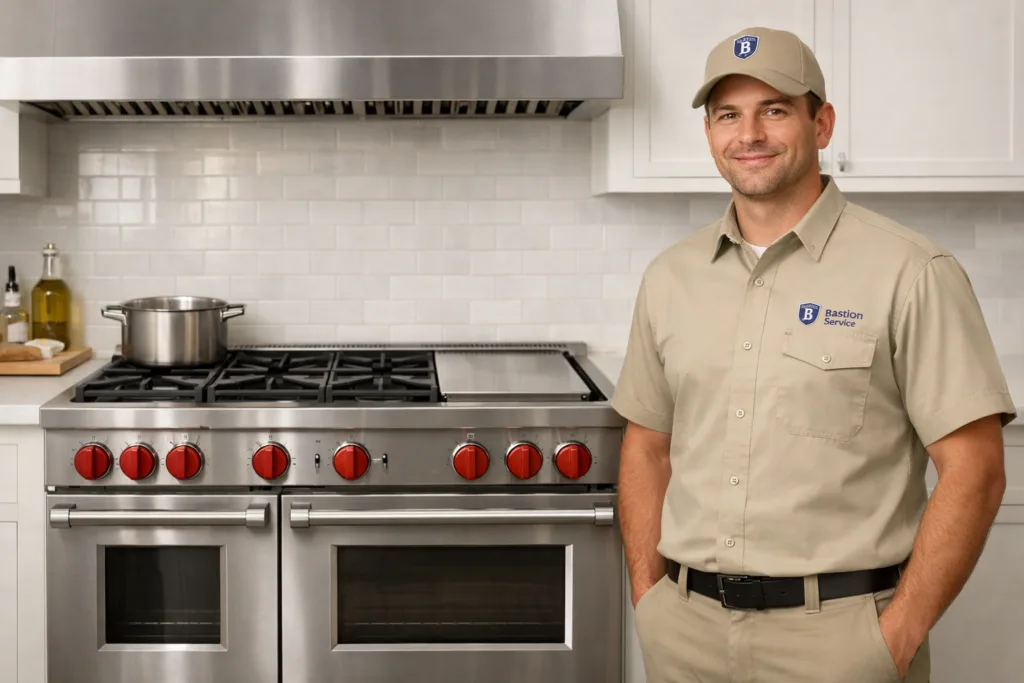




Wolf appliance problems often show up as performance changes before a full breakdown
A Wolf cooking appliance does not have to stop working completely to need attention. In many Beverly Hills homes, the first sign is a shift in everyday results: an oven that suddenly cooks unevenly, a cooktop burner that clicks longer than usual, or a range that no longer matches the temperature setting. Those early symptoms are important because they usually point to a specific system that needs inspection rather than a general loss of performance.
For specific Wolf appliance paths in Beverly Hills, review Wolf Oven Repair in Beverly Hills, Wolf Wall Oven Repair in Beverly Hills, and Wolf Range Repair in Beverly Hills.
That is why symptom tracking matters. When the issue started, whether it happens every time, and whether it affects one burner or the entire appliance can all help narrow the problem. A wall oven that preheats slowly is different from one that reaches temperature and then drops off. A burner that sparks but does not light is different from one that lights and then struggles to hold a steady flame. Small distinctions like these can change the repair approach.
How common Wolf cooking issues usually present
Cooktop ignition and flame problems
Wolf cooktops commonly develop issues that are easy to notice during daily use. Burners may click repeatedly, fail to ignite on the first try, produce uneven flame, or heat less efficiently than before. Sometimes the problem is isolated to one burner. In other cases, several burners begin acting inconsistently, which can suggest a broader ignition or control-related fault.
Repeated clicking is one of the most common complaints. Moisture, residue around the burner assembly, worn ignition components, or switch problems can all contribute. If the burner eventually lights but keeps clicking, the appliance may still be usable in a limited way, but it is a sign that something is no longer operating normally. If flame size is noticeably irregular or cooking times are changing on the same setting, that also points to a burner system that should be evaluated.
Oven heating and temperature complaints
Wolf ovens are expected to hold temperature accurately, so even modest drift can affect baking and roasting. Homeowners often notice that dishes take longer than usual, brown unevenly, or come out overdone on one rack and underdone on another. In some cases the oven appears to preheat correctly, but actual cooking performance says otherwise.
These symptoms can come from sensor issues, heating component problems, calibration drift, or control faults. An oven that does not heat at all is obvious, but an oven that heats inconsistently can be just as disruptive. If recipes you know well are no longer reliable, the appliance is giving useful evidence that something has changed internally.
Range issues that affect more than one function
A Wolf range combines surface cooking and oven performance in one appliance, so problems may appear in one area or in several at the same time. A homeowner might notice a front burner clicking while the oven section also runs hotter than the selected setting. That does not always mean one single defect is causing everything, but it does mean the range should be assessed by symptom rather than by assumption.
Ranges also tend to reveal problems through cooking inconsistency. If boiling takes longer on a familiar burner, roasting results are uneven, or controls respond unpredictably, those are signs the appliance is not delivering the precision expected from normal operation. Because ranges are often used heavily, waiting too long can allow a manageable issue to turn into a more involved repair.
Wall oven symptoms worth taking seriously
Wolf wall ovens often show trouble through incomplete preheat, inaccurate temperature, interrupted cycles, or control response problems. Some units will power on normally and still fail to deliver consistent cooking results. Others may shut off during use or display behavior that feels intermittent and difficult to predict.
Built-in appliances can be easy to work around for a short time, especially if the problem comes and goes. But if the oven regularly underheats, overheats, or stops mid-cycle, continued use can make meal planning more frustrating and may place extra strain on the system. A wall oven that behaves differently from week to week usually needs more than a reset or a settings check.
What homeowners should note before scheduling service
A few details can make diagnosis much more efficient. Try to note whether the problem is constant or intermittent, whether it affects one cooking function or several, and whether performance changed suddenly or gradually. If an oven is inaccurate, think about whether it consistently runs hot, consistently runs cool, or swings both ways. If a burner is acting up, note whether it sparks, lights partially, or fails after ignition.
- Does the issue happen every time or only occasionally?
- Is one burner or section affected, or the whole appliance?
- Did the problem begin after cleaning, heavy use, or a power interruption?
- Are cooking times, browning, or heat levels noticeably different from normal?
- Is the control panel showing errors, delays, or inconsistent response?
This kind of information helps separate a surface symptom from the underlying fault. It also helps determine whether the appliance should stay out of use until it is inspected.
When continued use is more likely to make things worse
Some issues are mostly inconvenient at first. Others can lead to more wear, unreliable operation, or safety concerns. If a burner keeps clicking, if oven temperature is clearly off, if a range heats unpredictably, or if a wall oven shuts down during cooking, it is usually better to stop testing it through daily use and have it checked.
Gas-related symptoms deserve extra caution. If there is a persistent or strong gas smell, stop using the appliance and address the safety issue immediately before arranging repair. If there is no gas odor but ignition is inconsistent, that still warrants prompt service because ignition problems rarely improve on their own.
Why symptom-based diagnosis is more useful than guessing at parts
Two appliances can show the same outward symptom and need very different repairs. A burner that will not light may involve ignition components, a switch problem, or another issue affecting normal operation. An oven that seems too cool may have a different underlying fault than one that overshoots temperature, even though both cause poor cooking results.
For that reason, replacing parts based only on the most visible symptom can waste time and money. A better approach is to identify the failed system first, then decide whether the repair scope makes sense for the appliance. That is especially important with premium cooking appliances, where precision matters and small performance changes can point to meaningful internal issues.
Repair or replacement depends on the condition of the specific appliance
Most homeowners are not deciding in the abstract whether a Wolf appliance is worth repairing. They are deciding whether their cooktop, oven, range, or wall oven is a good repair candidate based on present condition. If the issue is limited to a defined component and the appliance is otherwise performing well, repair is often the logical next step.
Replacement becomes a more serious consideration when problems are repeated, multiple systems are beginning to fail, or the appliance has developed a pattern of unreliable operation. The best decision usually comes from comparing the current symptom, the likely scope of work, and how the appliance has been performing overall in the home.
What Beverly Hills homeowners usually want from the repair process
In Beverly Hills, most homeowners are not looking for guesswork. They want to know what symptom matters, whether the appliance is safe to keep using, and whether the problem appears limited or more widespread. That is particularly true with cooking appliances, where reliability affects everyday routines as much as special occasions.
Whether the issue involves a cooktop, oven, range, or wall oven, the most helpful next step is an evaluation based on how the appliance is actually behaving now. Once the symptom pattern is clear, repair planning becomes more straightforward and the path forward is easier to judge with confidence.


