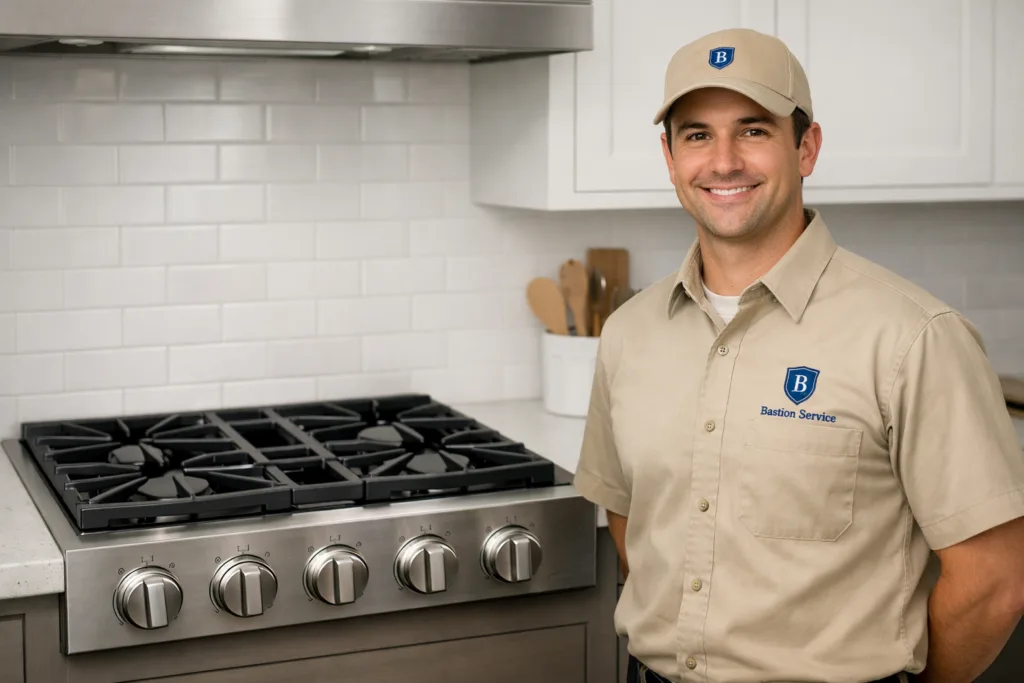
Common Wolf cooktop issues in Playa Vista homes

Cooktop problems usually follow a pattern, and that pattern often points to the part or system that needs attention. With Wolf units, symptoms can involve ignition, burner hardware, controls, surface damage, or electrical components depending on whether the cooktop is gas or electric.
Burners that click but do not light
One of the most common complaints is a burner that keeps clicking without ignition, lights only occasionally, or takes several attempts to catch. In many cases, the issue may involve a dirty or blocked burner port, a burner cap that is not seated correctly, moisture near the igniter, a worn spark component, or a switch problem behind the knob.
If the clicking continues after cleaning and drying the area, the problem is usually beyond routine maintenance. A burner that does not light reliably should not be ignored, especially if normal meal prep depends on fast and predictable ignition.
Burners with weak or uneven flame
A Wolf gas cooktop should produce a steady flame pattern. If the flame looks patchy, too low, noisy, or unstable, cooking performance can drop quickly. Pots may heat slowly, simmering may become inconsistent, and the flame may even go out under normal use.
This symptom can be caused by burner blockage, alignment problems, wear in the burner assembly, or gas-flow related issues. Even when the burner technically lights, poor flame quality usually means the cooktop is not operating the way it should.
Electric burners that overheat or stay too cool
On electric models, heat problems often show up as burners that lag, cycle strangely, run hotter than the selected setting, or fail to maintain temperature. That can point to a bad element, failed switch, control issue, or a wiring fault beneath the surface.
Because these symptoms can overlap, replacing one visible part without testing the system may not solve the problem. If the cooktop is no longer matching the selected heat level, service is usually the better next step.
Continuous clicking or intermittent ignition
Sometimes a burner lights, but the igniter keeps clicking. In other cases, clicking starts on its own or affects more than one burner. That can indicate a switch issue, moisture intrusion, contamination around the ignition area, or a fault in the spark system.
Intermittent behavior is worth addressing early. What starts as an occasional nuisance can become a repeat failure that affects everyday cooking.
Cracked glass or surface damage
If the cooktop has a cracked glass surface, chipped edge, or visible damage near an active burner, stop using it until the condition is assessed. Surface damage is not just cosmetic. It can affect safe operation, heat distribution, and the stability of cookware placement.
Any crack that spreads, catches debris, or appears after an impact should be evaluated before continued use.
Knobs or controls that do not respond properly
Loose knobs, inconsistent heat response, or controls that no longer feel accurate can make a premium cooktop frustrating to use. In some cases the knob is the issue. In others, the problem is deeper in the switch, control, or connection behind it.
If a burner does not respond to adjustment, turns on unpredictably, or no longer matches the setting selected, the cooktop needs more than cosmetic attention.
How to tell whether the issue is minor or repair-worthy
Some cooktop problems are caused by basic conditions that homeowners can spot right away. A burner cap that shifted out of place, food debris blocking flame ports, or moisture after cleaning can sometimes interrupt ignition. If the symptom clears once the burner is dry, clean, and correctly assembled, no further action may be needed.
Service becomes more likely when the same issue returns, spreads to more than one burner, or affects cooking performance in a consistent way. Repeated clicking, unreliable flame, erratic temperature control, and nonresponsive controls usually point to a repairable fault rather than a one-time interruption.
Signs you should stop using the cooktop
Some symptoms move beyond inconvenience and into a safety concern. It is best to stop using the appliance and arrange service if you notice any of the following:
- A strong or persistent gas smell
- A burner that will not ignite but continues releasing gas
- Clicking that will not stop
- A cracked glass cooking surface
- Sparking, tripped breakers, or signs of electrical damage
- Heat settings that behave unpredictably
These conditions can worsen with continued use and should be addressed before the cooktop is used again.
Why symptom-based repair matters on a Wolf cooktop
High-end cooking equipment is designed for precise control, so a small failure can show up as a larger performance problem. A burner that appears dead may still have power but no ignition. A burner that lights may still have airflow or flame-spread issues. A heat complaint on an electric unit may come from the control rather than the element itself.
That is why the most effective service starts with the exact symptom pattern instead of assumptions. For households in Playa Vista, this approach helps avoid unnecessary parts replacement and gives a more realistic picture of whether the problem is isolated or part of broader wear.
When repair is usually the practical choice
Many Wolf cooktop issues are worth repairing when the fault is limited to one burner, one control, one ignition component, or another serviceable part of the unit. If the appliance is otherwise performing well, targeted repair often restores normal use without the disruption of replacement.
Repair tends to make the most sense when:
- Only one or two functions are affected
- The symptom is consistent and identifiable
- The cooktop surface and main structure are still in good condition
- The rest of the appliance continues to operate normally
When replacement may be worth considering
Replacement becomes a more realistic discussion when the cooktop has extensive surface damage, multiple major failures, recurring problems across several systems, or repair costs that no longer match the appliance condition. That does not apply to most single-symptom service calls, but it can matter if the unit has been declining in more than one area.
In those cases, the key question is not just whether the cooktop can be repaired, but whether the repair path makes sense for the age, condition, and overall reliability of the appliance.
What homeowners in Playa Vista can do before scheduling service
Before arranging repair, it helps to note exactly what the cooktop is doing. Useful details include which burner is affected, whether the problem is constant or intermittent, whether cleaning changed anything, and whether the issue started suddenly or developed over time.
You can also check for obvious burner-cap misalignment, visible debris, or moisture around the ignition area. On electric models, note whether the problem appears on one element or multiple cooking zones. These observations can make diagnosis faster and more accurate once service begins.
What a service visit should clarify
A worthwhile visit should identify the failed function, confirm whether the issue is isolated or system-wide, and determine whether repair is a sensible next step. For a Wolf cooktop, that usually means narrowing the problem to ignition, burner performance, control response, electrical operation, or surface condition.
For homeowners in Playa Vista, that leads to a simpler decision: repair the specific fault, pause use for safety, or consider replacement if the overall condition no longer supports a practical fix.