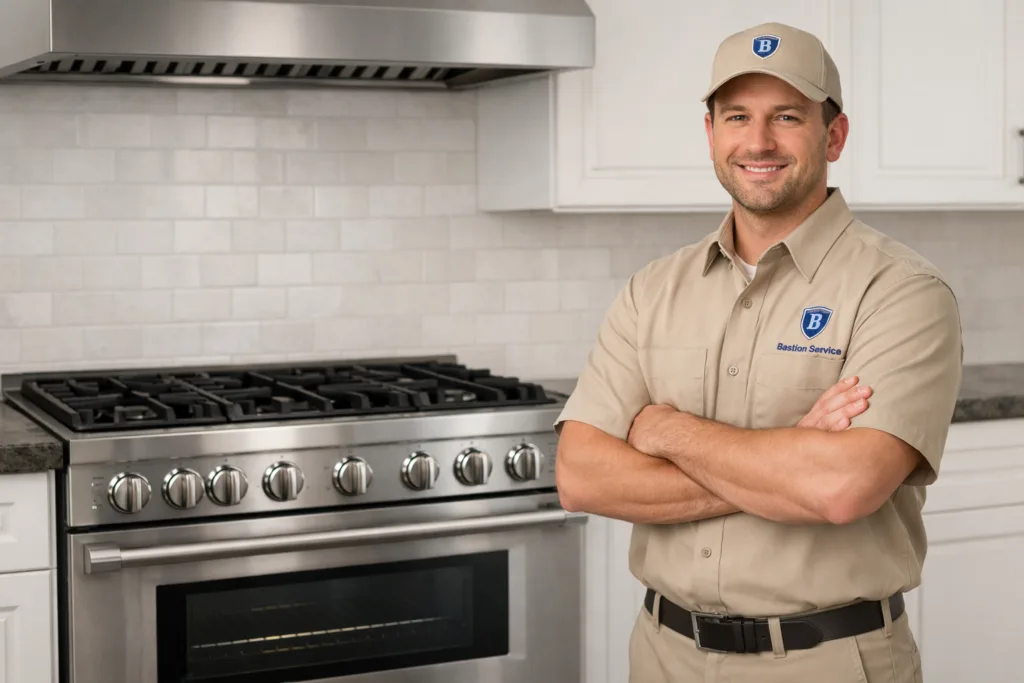
Common Wolf range problems homeowners notice

Wolf ranges are built for high performance, but they can still develop issues that show up in everyday cooking long before a complete failure happens. In Hermosa Beach homes, the first signs are often subtle: a burner that clicks longer than usual, an oven that needs extra time to preheat, or cooking results that become less consistent from one meal to the next. Paying attention to those early symptoms can help prevent a smaller repair from turning into a larger one.
Most range problems fall into a few main categories: ignition trouble, burner performance issues, oven heating complaints, and control-related malfunctions. While the symptom may seem obvious, the failed part is not always the one you can see. That is why symptom-based testing matters on a premium appliance.
Burners that click, spark, or fail to light
One of the most common complaints is a surface burner that clicks repeatedly without lighting, lights only after several tries, or stops sparking altogether. This can point to a dirty or misaligned burner cap, moisture around the ignition area, a worn electrode, wiring trouble, or a fault affecting gas ignition at that burner.
If the clicking continues after the flame appears, that can also signal an ignition-related problem rather than a simple nuisance. In many cases, homeowners first notice this issue when a burner becomes less reliable over time instead of failing all at once.
Weak, uneven, or unstable burner flames
A Wolf range should provide steady, controlled flame performance. If a burner is producing a weak flame, heating unevenly, or struggling to stay consistent at different settings, the cause may involve blockage, burner wear, valve-related problems, or another issue affecting normal fuel delivery and flame distribution.
These symptoms often show up as pans heating unevenly, slow boiling, poor simmer control, or one side of cookware cooking faster than the other. Even when the burner still works, reduced performance can make daily cooking frustrating and less predictable.
Oven not heating properly
Oven complaints are another frequent reason for service. A Wolf range oven may preheat slowly, fail to reach the selected temperature, cycle incorrectly, or stop heating altogether. Depending on the symptom pattern, the issue may involve the igniter, temperature sensor, control response, or the bake or broil heating function.
Homeowners often notice this first through cooking results rather than the appliance itself. Food may take longer than expected, baked dishes may come out unevenly cooked, or recipes that normally work well may suddenly start failing.
Temperature drifting during cooking
If the oven runs too hot, too cool, or swings noticeably during a cooking cycle, the problem may not be obvious from the control panel alone. Temperature complaints can be tied to sensing issues, ignition weakness, calibration-related faults, or uneven heat delivery inside the oven cavity.
Common signs include burned bottoms, pale tops, undercooked centers, and the need to rotate dishes more often than usual. When this kind of drift continues, it usually does not improve on its own.
Display or control problems
Some Wolf range issues come from the way the appliance receives and carries out commands. A display that behaves erratically, settings that do not respond properly, or operating modes that do not match the selected function can all affect burner or oven performance. In these cases, the appliance may appear to have a heating problem when the underlying fault is actually in the control system.
Symptoms that should not be ignored
Some problems are inconvenient but manageable for a short time. Others are a sign that continued use may create a bigger repair or a safety concern. It is a good idea to stop and have the range evaluated if you notice:
- Repeated clicking that does not stop normally
- Burners that light unpredictably or not at all
- Gas odor during attempted ignition or operation
- Oven heating that suddenly becomes erratic
- Controls that fail to respond consistently
- Signs of overheating, scorching, or abnormal operation
Intermittent failures are especially important to address early. A burner that works only sometimes or an oven that misses temperature occasionally is often moving toward a complete failure, not recovering from a temporary glitch.
How symptom-based diagnosis helps
Accurate range repair starts with how the appliance is actually failing in the home. Does the issue affect one burner or several? Does the oven fail during preheat, while maintaining temperature, or only in certain modes? Is the problem constant, or does it happen after the range has been running for a while? Those details help narrow the repair path and reduce unnecessary parts replacement.
This approach is especially important with Wolf appliances because similar symptoms can come from different causes. For example, poor oven performance may be linked to ignition weakness, temperature sensing, or control behavior. Repeated burner clicking might be caused by the ignition system, but it can also be related to alignment, contamination, or component wear in the burner area.
When repair makes sense
For many Hermosa Beach homeowners, repair is the better option when the range is otherwise in good condition and the problem is limited to one system. Premium cooking appliances are often worth repairing when the fault is identifiable and the overall unit still has strong long-term value.
Replacement becomes a more serious consideration when multiple major functions are failing at once, the appliance shows broad wear across several systems, or the cost of restoring performance no longer makes sense for the condition of the range. The important part is evaluating that decision based on actual testing rather than assumptions.
What homeowners can note before service
Before scheduling Wolf range service, it helps to pay attention to the exact pattern of the problem. A few simple observations can make the visit more productive:
- Which burner or oven function is affected
- Whether the problem is constant or intermittent
- How long the issue has been happening
- Whether the symptom appears during ignition, preheating, or ongoing cooking
- Any recent change in sounds, smells, or control behavior
You do not need to diagnose the appliance yourself. Even a short description of what changed and when it happens can help identify whether the problem involves ignition, heating, controls, or another cooking component.
Service focused on restoring everyday cooking
The goal of Wolf range repair is not just to make the appliance turn on again. It is to restore safe, steady burner operation, reliable oven performance, and cooking results you can trust day to day. Whether the issue involves ignition trouble, uneven flame, poor temperature control, or an unresponsive interface, the most helpful service is centered on the actual symptom pattern and the overall condition of the appliance.
For households in Hermosa Beach, that means getting practical repair guidance based on what the range is doing now, what parts of the appliance are affected, and whether repair is the sensible next step for the way you use your kitchen.