
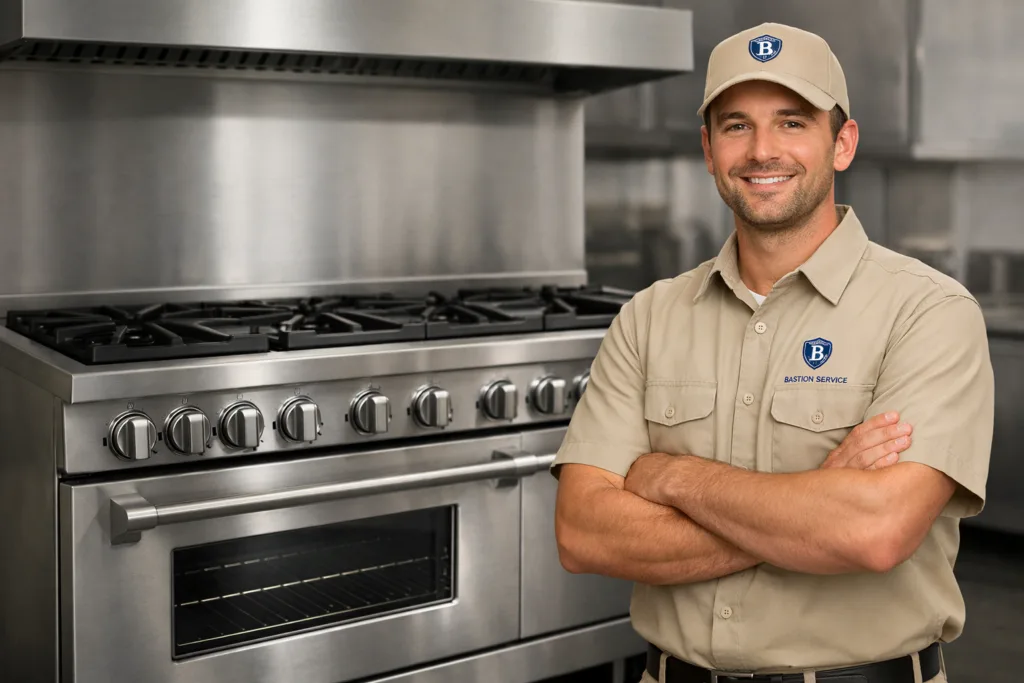




Range problems can slow prep, disrupt service timing, and force staff to work around equipment that should be dependable. For businesses in Westwood, the right next step is service that identifies whether the issue is tied to ignition, gas flow, heat regulation, controls, or component wear so repairs can be scheduled with minimal disruption. Bastion Service handles Wolf range repair for businesses that need a symptom-based diagnosis, realistic repair recommendations, and a clear path back to normal kitchen performance.
Related commercial service paths in Westwood include Wolf Commercial Repair in Westwood, Wolf Oven Repair in Westwood, and Wolf Fryer Repair in Westwood.
What a Wolf range diagnosis should confirm before repair begins
A range may appear to have one obvious problem while the actual fault sits elsewhere in the system. A burner that will not light, for example, may be related to the igniter, clogged burner ports, wiring, switch failure, gas delivery, or a control issue. An oven that runs hot or cold may involve a sensor, thermostat, igniter, calibration problem, door sealing issue, or uneven heat circulation.
That is why service should account for how the problem appears during real use. Some ranges fail on startup. Others struggle only after the unit has been hot for a while or when multiple burners are running at once. In busy kitchens, those details matter because they help determine whether the repair is isolated or whether the range is showing broader signs of wear that could affect future reliability.
Common Wolf range symptoms and what they often mean
Burners click but do not ignite
Repeated clicking without ignition often points to ignition component wear, moisture or contamination around the burner, wiring faults, or problems with spark generation. If the clicking continues but flame does not establish normally, the range should be inspected rather than used as-is. Delayed or inconsistent lighting can create operating issues that are easy to overlook until they interrupt a busy shift.
Burners light inconsistently or only after several tries
Intermittent ignition can come from partially blocked burner ports, weak spark output, switch issues, unstable gas delivery, or wear that becomes more noticeable as the unit heats up. Staff may begin relighting burners repeatedly or avoiding certain positions on the cooktop, which is usually a sign that the problem has moved beyond routine cleaning and into repair territory.
Weak flame or uneven top cooking performance
If flame strength looks low, uneven, or slow to respond, the cause may involve burner blockage, valve problems, regulation issues, or fuel-delivery faults. In day-to-day operation, this often shows up as pans heating slower than expected, inconsistent sauté performance, or difficulty keeping line timing steady during peak production.
Oven not reaching temperature
When the oven section runs cool or takes too long to preheat, likely causes include igniter weakness, sensor problems, thermostat or control faults, or heat loss from sealing issues. Businesses usually notice this first through extended cook times, slower recovery between loads, or food finishing later than expected.
Oven temperature swings or poor temperature hold
If the oven overshoots, drops below the set point, or cycles unevenly, the issue may involve the temperature sensor, control board, thermostat calibration, or related heating components. Temperature drift can affect product consistency, especially when kitchen staff start adjusting cook times or rotating items more than normal to compensate.
Controls respond unpredictably
Ranges with intermittent controls, inconsistent settings, or unexplained shutdowns may have electrical connection problems, failing control components, heat-related faults, or safety interruptions. These symptoms can be hard to reproduce on demand, so it helps when staff can describe whether the issue happens during startup, after extended use, or under heavier cooking loads.
Why is my Wolf range not lighting, heating, or holding temperature?
That symptom pattern usually means the problem is not just with one visible part. Lighting issues can stem from ignition components, burner contamination, switches, wiring, or gas-delivery faults. Heating problems may point to weak ignition, failing valves, sensor drift, thermostat issues, or controls that are no longer regulating correctly. Temperature-hold complaints often trace back to sensing and control problems, but they can also be affected by door sealing, airflow, or burner performance.
Because several different faults can create nearly identical symptoms, the most efficient repair approach is to test the system based on the exact complaint rather than assume a single failed part. That helps avoid unnecessary replacement and gives businesses a better idea of whether they are dealing with a straightforward repair or a more involved reliability issue.
Signs the range should be serviced soon
- Ignition delays or repeated failed light-offs
- Clicking that continues longer than normal
- Burners with weak, uneven, or unstable flame
- Oven heat that feels slow, inconsistent, or inaccurate
- Controls that cut out, reset, or respond unpredictably
- Staff avoiding certain burners or changing cooking routines to compensate
Once kitchen staff start adapting their workflow around a range problem, the equipment is already affecting productivity. Scheduling service at that stage can help prevent a partial failure from becoming a complete outage during operating hours.
When continued use can make the problem worse
Some range issues should not be treated as minor. Delayed ignition, repeated misfires, unstable flame, and major temperature inconsistency can place added stress on ignition and control components while also creating broader performance problems across the unit. What starts as one difficult burner or one unreliable oven cycle can gradually lead to more extensive service needs if the range remains in heavy use without inspection.
If there is a strong or persistent gas smell, stop using the appliance and address the gas concern first through the appropriate utility or emergency channel before arranging repair. Once immediate safety concerns are resolved, appliance diagnosis can follow.
Repair or replace?
For many businesses in Westwood, the decision comes down to fault pattern, parts value, overall equipment condition, and how much downtime the range is causing. Repair is often the better option when the issue is limited to one system and the range can reasonably return to stable daily use. Replacement becomes more relevant when there are repeated breakdowns across multiple systems, extensive wear, or a repair outlook that does not support reliable operation.
A service visit should help clarify that decision by looking at the current symptom, the condition of the unit overall, the likelihood of recurrence, and the operational impact of waiting. That gives managers a more useful basis for deciding what to fix now and what may no longer make financial sense to keep in service.
How to prepare for a service visit
Before the appointment, it helps to note which burners are affected, whether the problem is constant or intermittent, and what staff observe during startup or cooking. Useful details include clicking behavior, delayed ignition, weak flame, temperature drift, shutdown timing, and whether the issue appears more often after the unit has been running for a while.
If possible, be ready to share how the range is affecting production. That may include slower ticket times, uneven cooking results, reduced burner availability, or oven recovery issues during busy periods. Those details help connect the mechanical fault to the operating impact, which makes scheduling and repair planning more efficient.
If your Wolf range is no longer lighting reliably, heating evenly, or holding the temperatures your kitchen depends on, scheduling service promptly is the best way to limit downtime and keep the problem from spreading. For businesses in Westwood, a focused repair visit can identify the source of the failure, outline the repair path, and help restore predictable performance before the issue affects more of the workday.


