
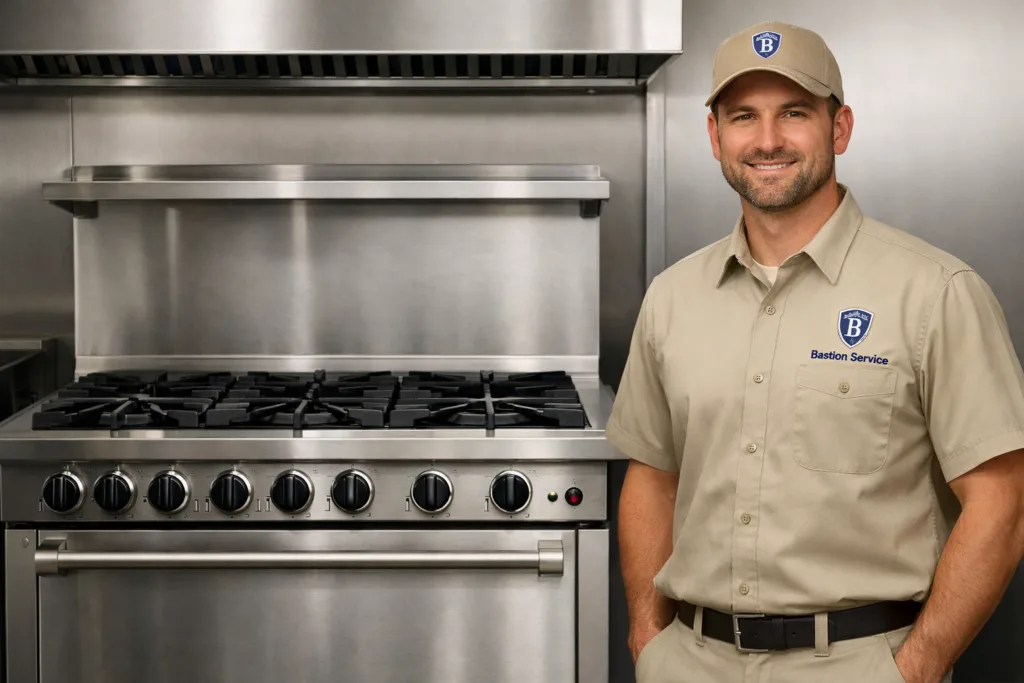




Range problems can disrupt the line quickly when burners stop lighting cleanly, oven sections lag behind set temperature, or heat output changes from one shift to the next. In Westwood, businesses using Southbend equipment usually need service that starts with the actual symptom pattern, how the range is being used, and whether the issue is isolated to one section or affecting the whole unit. Bastion Service provides repair support built around diagnosis, scheduling, and the practical goal of getting the range back into reliable daily operation.
Related commercial service paths in Westwood include Southbend Commercial Repair in Westwood, Southbend Oven Repair in Westwood, and Vulcan Range Repair in Westwood.
Southbend range issues that deserve prompt service
Some problems are obvious right away, while others build gradually until staff are adjusting workflow around the equipment. If a range is no longer performing the way it should, the most useful next step is to identify whether the fault involves ignition, gas flow, burner assemblies, controls, temperature regulation, or multiple worn components working together.
- Burners that click, spark, or fail to light consistently
- Weak flame, uneven flame, or reduced heat output
- Oven sections that run hot, cold, or recover too slowly
- Controls, knobs, or valves that feel loose, stiff, or unresponsive
- Intermittent shutdowns or performance changes during busy periods
- Temperature swings that affect food consistency and timing
These symptoms often overlap, which is why part replacement without testing can lead to extra downtime and unnecessary cost.
Why a Southbend range may stop lighting, heating, or holding temperature
Ignition trouble at the burners
When a burner does not light on the first try, lights late, or keeps clicking, the problem may be tied to ignition components, wiring, clogged burner ports, switch issues, contamination around the electrode, or gas delivery problems. Delayed ignition is more than an inconvenience. It can interfere with workflow and should be checked before repeated relighting causes more wear.
Weak or uneven burner flame
If one burner feels noticeably slower than the others, or if pans are no longer heating evenly, the cause may involve restricted ports, regulator concerns, valve wear, pressure issues, or buildup affecting combustion. In a working kitchen, this often shows up as slower cook times, inconsistent searing, and staff moving product to different stations just to keep tickets moving.
Oven heating problems and temperature drift
Southbend ranges with oven sections can develop heating complaints that seem inconsistent at first. The oven may preheat slowly, overshoot, fall short, or struggle to recover after the door is opened. Possible causes include sensor issues, thermostat or control faults, burner problems, ignition failure, or wear affecting normal heat distribution. When temperature control is unstable, food quality and timing usually suffer before the source of the fault is fully obvious.
Controls that no longer respond normally
Knobs that slip, valves that do not modulate correctly, or settings that no longer match actual heat output usually point to wear in the control system. Operators may compensate by overcorrecting flame settings or avoiding certain sections of the range. That workaround can keep production moving for a while, but it usually means service is overdue.
Intermittent performance during service
If the range works at startup but acts up later in the shift, that pattern matters. Heat-related electrical faults, failing ignition parts, unstable gas regulation, and internal component breakdown can all create intermittent symptoms. A useful service call pays attention to when the problem happens, how often it happens, and whether it appears under heavier cooking loads.
How symptom patterns help narrow the diagnosis
Two ranges can show the same outward problem for very different reasons. A burner that will not light may be caused by ignition failure, but it can also point to gas flow restriction or burner contamination. An oven that will not hold temperature may appear to have a heating problem when the root issue is actually control-related. That is why the best repair decisions come from testing the affected functions instead of guessing from one symptom alone.
For businesses in Westwood, that approach helps answer important questions early:
- Can the range stay in limited use until repair is completed?
- Is the problem isolated to one burner, one oven section, or the full unit?
- Is the fault likely to worsen with continued operation?
- Does the issue point to a targeted repair or broader equipment decline?
When continued use can make the problem worse
Some range issues are manageable for a short period, but others should not be pushed through repeated shifts. Burners that light late, controls that drift, and overheating components can all place extra stress on surrounding parts. What starts as a single ignition or burner problem may turn into a larger repair if the equipment keeps being forced through normal production without correction.
Service should move up the priority list when staff are relighting burners repeatedly, avoiding parts of the range, changing cook times to compensate for heat loss, or noticing that output is no longer predictable. Those are strong signs that the unit is affecting consistency as well as uptime.
Repair versus replacement considerations
Many Southbend range problems are repairable when the failure is limited to serviceable components such as burners, valves, controls, ignition parts, or temperature-related components. Repair is often the better path when the equipment is otherwise in solid condition and still fits the kitchen’s production needs.
Replacement becomes a more serious consideration when the range has multiple active faults, repeated breakdown history, major deterioration, or performance instability that extends beyond a single repair. The right call usually depends on what testing shows about the current fault, the condition of the surrounding systems, and whether the unit is likely to return to dependable operation after service.
What to have ready before a repair visit
A little preparation can make diagnosis faster and more accurate. If possible, have the following information ready before service is scheduled:
- Which burner, oven section, or control is affected
- Whether the issue is constant or intermittent
- Any recent changes in flame quality, preheat time, or temperature behavior
- Whether the problem started suddenly or developed over time
- Any unusual clicking, gas odor, shutdown, or relight patterns
Even a simple description from the kitchen team can help narrow the likely fault and improve repair planning.
Service-focused next steps for businesses in Westwood
When a Southbend range is slowing production, affecting food quality, or creating repeated ignition and heating issues, the smartest next step is to schedule repair before the problem spreads into longer downtime. A service visit should confirm the failed component or system, explain the operational impact, and outline whether the range can remain in partial use or should be taken offline. For businesses in Westwood, timely repair based on real symptom testing is the most practical way to restore performance and make informed decisions about the equipment in service.


