
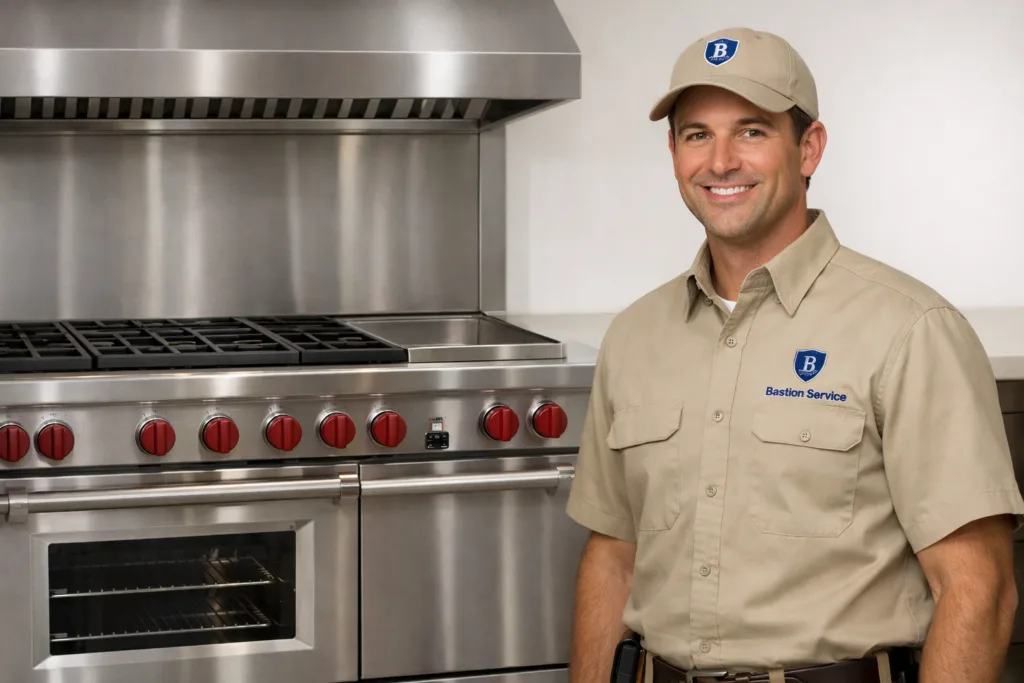




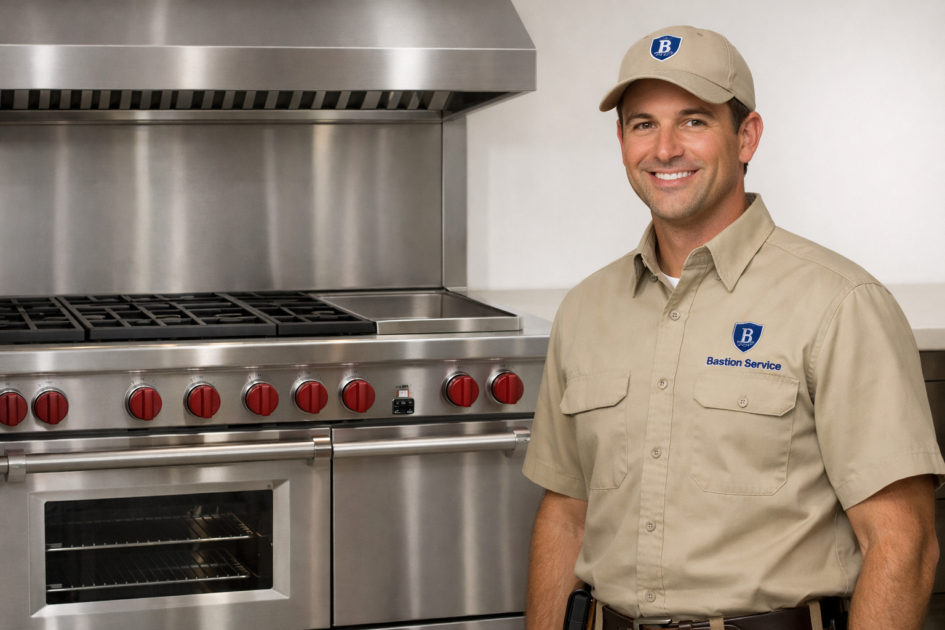
When Wolf cooking equipment starts slowing production or creating inconsistency in the kitchen, the most useful next step is service that ties the symptom to an actual repair decision. For businesses in Westwood, that means looking beyond the surface complaint and determining whether the problem is tied to ignition, heat output, temperature regulation, controls, gas flow, or a safety-related shutdown. Bastion Service provides repair support for Wolf ovens, ranges, and fryers with scheduling and downtime impact in mind, so managers can make informed decisions about continued use, urgent repair, or temporarily pulling a unit from service.
For specific equipment paths in Westwood, review Wolf Oven Repair in Westwood, Wolf Range Repair in Westwood, and Wolf Fryer Repair in Westwood.
What Wolf cooking equipment problems do you troubleshoot?
Most service calls begin with a pattern that affects daily output: slow preheat, uneven heating, burners that do not light correctly, fryer recovery problems, temperature drift, intermittent operation, or complete shutdowns. On Wolf cooking equipment, these issues often trace back to igniters, sensors, thermostatic controls, burner assemblies, gas valves, switches, wiring, or control components.
Because ovens, ranges, and fryers are used differently throughout the day, the same symptom can have different operational consequences. An oven that runs cool may delay prep and create inconsistent results. A range with weak or unstable flame can disrupt line timing. A fryer that recovers heat too slowly can affect batch consistency and service pace. The goal of diagnosis is to determine what is failing, whether related wear is present, and what repair path makes the most sense for the equipment’s role in your kitchen.
Oven performance issues
Wolf ovens often come up for service when they stop reaching set temperature, overshoot and then cool off, cook unevenly, or take longer than normal to recover heat between cycles. These symptoms may involve the igniter, temperature sensor, thermostat circuit, burner performance, control response, or gas delivery. If staff starts rotating pans differently, extending cook times, or avoiding certain settings to compensate, that usually points to a problem worth evaluating before production quality slips further.
Range burner and top-heat problems
Ranges can show service needs through delayed ignition, repeated clicking, low flame, uneven burner output, flame instability, or burners that stop working after heating up. In some cases the issue is isolated to one burner assembly. In others, the fault may involve ignition components, valve response, clogged burner paths, or a broader control issue. If the range can no longer deliver predictable heat across stations, the disruption tends to spread quickly through prep and service.
Fryer heating and recovery concerns
Fryers often become a repair priority when oil temperature drifts, the unit struggles to recover between batches, heats too slowly, or shuts down mid-use. These symptoms can affect food quality, timing, and overall throughput. Causes may include heating system faults, sensor issues, temperature control failures, high-limit interruptions, or component wear that appears only once the fryer is under load. When recovery time starts increasing, it is usually better to inspect the unit early rather than wait for a full interruption during a busy shift.
Symptoms that usually mean service should be scheduled soon
Some issues are inconvenient but manageable for a short time. Others tend to get worse quickly. In general, scheduling service becomes more urgent when you notice:
- Longer preheat times than normal
- Temperature inconsistency from one cycle or batch to the next
- Burners that click repeatedly or fail to light reliably
- Weak, uneven, or unstable flame
- Slow heat recovery during active use
- Equipment that needs resets to keep running
- Mid-cycle shutdowns or intermittent operation once the unit gets hot
- Output problems that staff is trying to work around manually
These signs matter because they affect more than one meal period. They often create waste, slow ticket flow, increase pressure on other equipment, and raise the chance of a complete outage at the wrong time.
Heating and temperature issues are often more than calibration problems
It is easy to assume a heating complaint means the unit simply needs an adjustment, but recurring temperature problems often involve a part failure or a system response issue. An oven that is too cool one hour and too hot the next may have a sensor or control problem rather than a simple setting error. A range burner that lights but does not maintain proper flame may be dealing with burner wear, gas flow restriction, or ignition trouble. A fryer that cannot hold stable temperature may be experiencing a control or sensing fault that affects both consistency and safety response.
That is why service should focus on the full operating pattern: startup behavior, heat-up time, recovery speed, shutdown history, and whether the problem appears continuously or only after the unit has been running. The more clearly those symptoms are identified, the easier it is to decide whether the equipment can stay in limited use or needs immediate attention.
Ignition faults and shutdowns should not be brushed off
Ignition trouble is one of the most disruptive issues on cooking equipment because it can appear without warning and quickly interrupt workflow. Delayed lighting, repeated clicking, burners that partially light, or units that ignite and then drop out all point to a fault that deserves inspection. Sometimes the repair is focused and straightforward. Sometimes the issue reaches deeper into the gas or control side of the equipment.
Unexpected shutdowns deserve the same attention. If a Wolf oven, range, or fryer runs for a period and then stops, the cause may involve overheating protection, failing controls, valve problems, connection issues, or components that break down under heat. Intermittent faults are especially important to address because they can be hard for staff to predict and impossible to plan around during active service.
If there is a persistent gas odor, stop using the equipment and address safety conditions before arranging repair. Once the area is safe, diagnosis can determine whether the issue is isolated or part of a larger operating problem.
How service decisions affect downtime
For many businesses in Westwood, the biggest repair question is not just what failed, but how the timing of repair will affect production. A unit that still powers on may not be reliable enough for peak use. A fryer that technically heats may still be creating batch delays that strain the rest of the kitchen. A range with one unstable burner may force staff to shift work unevenly and slow service overall.
A service visit helps clarify practical next steps such as:
- Whether the equipment should be removed from use immediately
- Whether limited operation is reasonable until parts are available
- Whether the symptom points to a single failed component or multiple issues
- How likely the problem is to worsen under continued daily use
- Whether repair is the best short-term and long-term decision for that unit
This kind of evaluation is often what keeps a manageable issue from turning into an unplanned outage.
When repair may make more sense than replacement
Not every problem signals the end of the equipment’s useful life. Many Wolf units remain good repair candidates when the issue is limited to ignition components, controls, sensors, burner parts, or other serviceable failures. Replacement discussions usually become more relevant when there are multiple active faults, repeated breakdowns across major systems, or a pattern of reliability problems that no longer fits the kitchen’s workload.
In many cases, though, a targeted repair restores stable operation and extends the usefulness of equipment that is still structurally sound and operationally important. The key is understanding whether the current symptom is isolated, recurring, or part of a larger decline in performance.
What to have ready when scheduling service
When calling for repair, it helps to note how the problem shows up during actual use. Useful details include whether the unit fails at startup or after warming up, whether the problem affects every cycle or only some, whether the burner lights at all, whether temperature is running high or low, and whether staff has noticed slower recovery or random shutdowns. That information can help narrow the likely fault pattern and support more efficient scheduling.
If your Wolf oven, range, or fryer is creating temperature problems, ignition trouble, weak burner performance, slow recovery, or repeated shutdowns in Westwood, scheduling service promptly is the best way to reduce disruption and protect kitchen output before the issue grows into a longer outage.


