
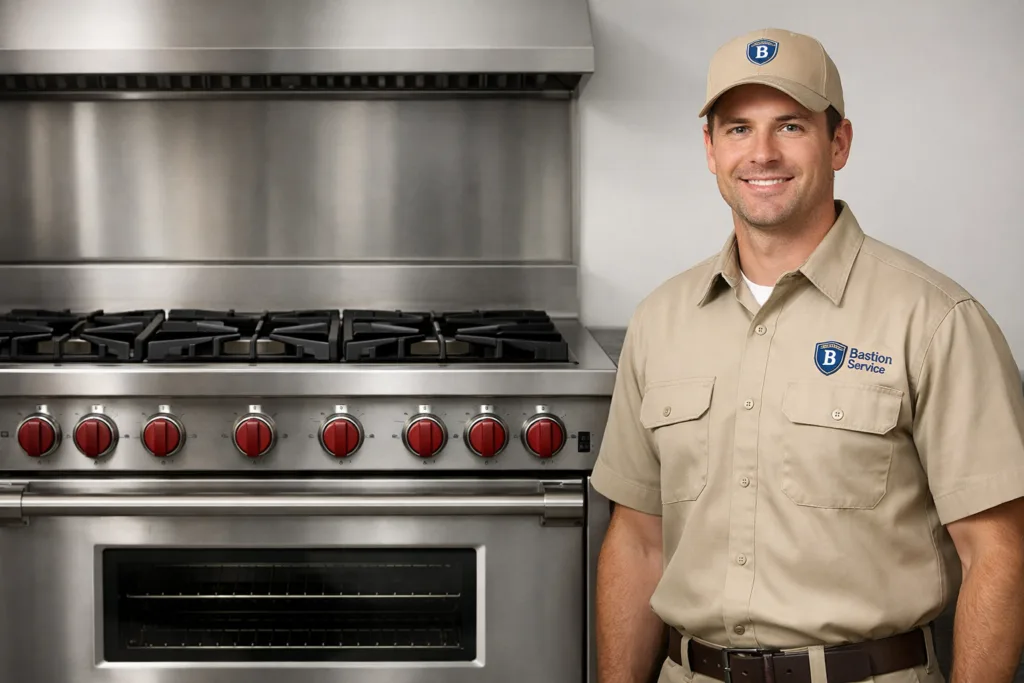




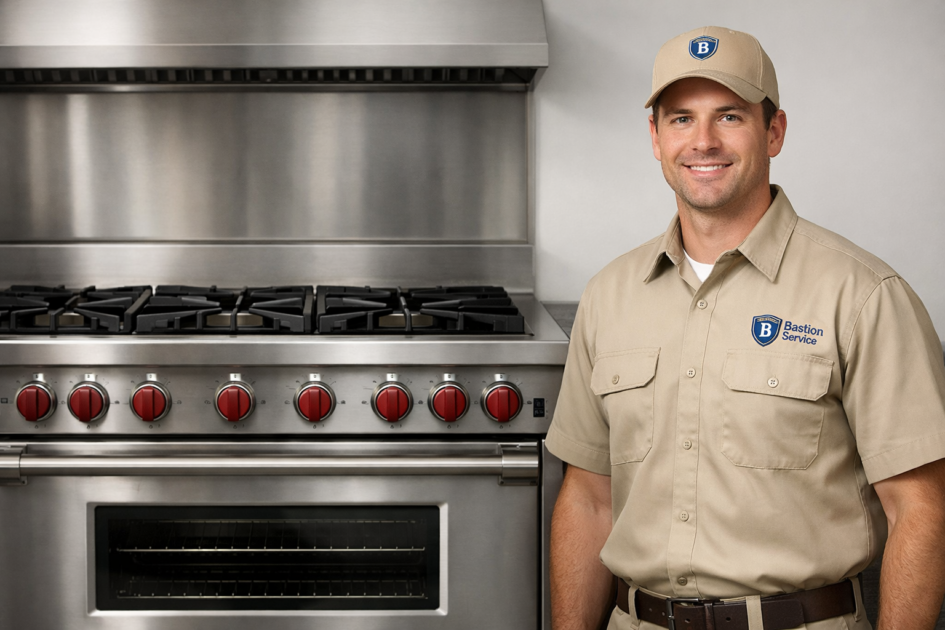
Range problems can interrupt prep, slow service, and create inconsistency at the exact point where kitchens need steady heat and responsive controls. For businesses in West Hollywood, the most useful next step is service that starts with symptom-based testing so the repair decision matches the actual failure. Bastion Service works on Wolf range issues with attention to burner performance, ignition reliability, oven heat behavior, controls, and the operating demands that make downtime expensive.
Related commercial service paths in West Hollywood include Wolf Commercial Repair in West Hollywood, Wolf Oven Repair in West Hollywood, and Wolf Fryer Repair in West Hollywood.
Because the same range can show different symptoms from one shift to the next, it helps to look at the full pattern before parts are replaced. A burner that clicks but does not light, an oven that drifts off set temperature, or a top section that loses output under load may involve more than one system. Good service begins by narrowing down whether the fault is tied to ignition, gas delivery, sensing, switching, wiring, or control response.
Why a Wolf Range Stops Lighting, Heating, or Holding Temperature
Most range failures do not start as a complete shutdown. They begin with small signs that the unit is no longer performing normally during daily use. In a busy kitchen, those signs often show up as delayed flame, uneven heat, slower recovery, or controls that no longer respond consistently.
Ignition problems that delay startup
If a burner clicks repeatedly, lights only after several tries, or fails to ignite unless it is retried, the cause may involve the igniter, spark system, switch, burner alignment, moisture, or a gas-flow issue. Intermittent ignition matters because it can waste time during service and may point to a condition that worsens with repeated use.
Burners with weak flame or uneven output
When one burner runs lower than usual, produces an irregular flame pattern, or struggles to respond to adjustment, the problem may be related to blockage, valve wear, regulator behavior, or burner assembly issues. Even if the range still turns on, weak output can affect cook times, pan performance, and consistency across stations.
Oven heat that drifts or recovers too slowly
If the oven section overheats, undershoots, cycles unpredictably, or takes too long to recover between loads, likely causes can include sensor faults, thermostat or control issues, relay problems, or calibration drift. Temperature-related complaints are especially important to diagnose correctly because symptom overlap is common, and replacing the wrong part does not solve production problems.
Control and electrical faults that come and go
Ranges that cut out intermittently, show erratic control behavior, or lose function on one section may have wiring, connection, interface, or power-related issues. These faults can be difficult to trace without testing under operating conditions, especially when the problem appears only after the unit has heated up.
Symptoms That Usually Mean Service Should Be Scheduled Soon
Businesses in West Hollywood should not wait for total failure if the range is already showing repeat performance issues. Early service often helps prevent a smaller fault from becoming a larger shutdown.
- Burners click constantly or take too long to light
- Flame looks uneven, weak, or unstable
- Oven temperature runs hotter or cooler than expected
- Heat recovery slows during active use
- Controls fail to respond or behave inconsistently
- The unit shuts off unexpectedly or trips electrical protection
- One section works while another shows reduced performance
These symptoms are not just annoyances. They can affect food quality, staff timing, and safe operation. If the range is overheating, failing to ignite properly, or shutting down unpredictably, continued use may increase the chance of added damage or a more disruptive outage.
What Technicians Look At During Wolf Range Diagnosis
Symptom-based service is useful because a visible complaint does not always identify the failed part. A burner that will not stay lit may be tied to ignition or gas delivery. An oven that seems slow may actually be cycling incorrectly. A control issue may trace back to wiring stress rather than the interface itself.
During diagnosis, technicians typically evaluate the operating chain that matches the complaint, which may include:
- Ignition components and spark behavior
- Burner condition, alignment, and flame pattern
- Gas valves, pressure-related behavior, and regulator performance
- Sensors, thermostatic controls, and temperature response
- Electrical connections, harnesses, and switches
- Control boards or user-interface faults when symptoms support that direction
This approach helps reduce trial-and-error repairs and gives operators a better understanding of what is causing the interruption, how urgent the issue is, and whether the range can remain in limited use until repair is completed.
How Range Problems Affect Daily Kitchen Operations
A Wolf range does not need to be completely down to create serious workflow issues. Reduced burner output can slow pans and sauté stations. Inconsistent oven temperature can affect batch timing and product consistency. Ignition trouble can force staff to stop and retry equipment during rush periods. Intermittent electrical faults can make a line unreliable even when the unit appears to recover.
For kitchens in West Hollywood, these issues often show up first as operational drag rather than a dramatic breakdown. That is why documenting when the problem happens can be helpful. If the symptom appears only during peak use, after preheat, or on specific burners, that detail can make service more targeted and reduce unnecessary delays.
Repair or Replace: How to Evaluate the Next Step
Repair is often the better option when the range has an isolated failure, the structure and major systems remain in good condition, and the unit still fits the kitchen’s workflow. Replacement becomes more likely when the equipment has recurring issues across multiple systems, poor overall condition, or repair costs that no longer make sense compared with expected service life.
Useful decision points include:
- Whether the failure is limited to one system or spread across several
- How often the range has needed service recently
- Whether parts wear reflects age and heavy use across the unit
- How much downtime another interruption would cause
- Whether the current range still meets production needs
In many cases, a proper diagnosis makes that decision much easier. It shows whether the problem is a focused repair or a sign of broader decline.
How to Prepare for a Wolf Range Service Visit
Before service is scheduled, it helps to note exactly what the range is doing. Small details can speed up diagnosis and make the visit more productive.
- Identify which burners or oven sections are affected
- Note whether the issue is constant or intermittent
- Record when the problem appears, such as startup, preheat, or heavy service
- Describe whether the symptom involves clicking, weak flame, slow heat, or control failure
- Mention any recent change in performance, not just complete shutdowns
That information helps connect the symptom pattern to the likely cause, which can improve scheduling decisions and reduce guesswork once the unit is inspected.
Service Support for Wolf Range Problems in West Hollywood
When a range begins losing ignition reliability, heat consistency, or control response, waiting for a total breakdown can make the disruption worse. Businesses in West Hollywood usually benefit most from timely inspection, accurate fault isolation, and repair scheduling that reflects how important the unit is to daily output. If your Wolf range is not lighting, heating, or holding temperature the way it should, the smartest next move is to have the symptom pattern evaluated so the repair plan fits the equipment condition and the urgency of your operation.


