
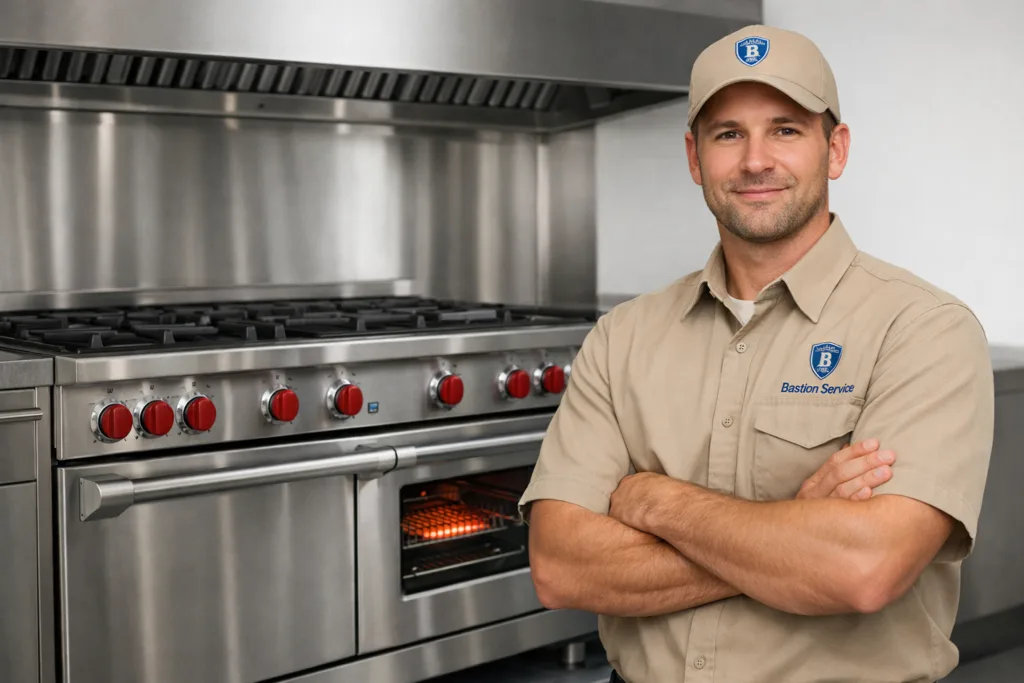




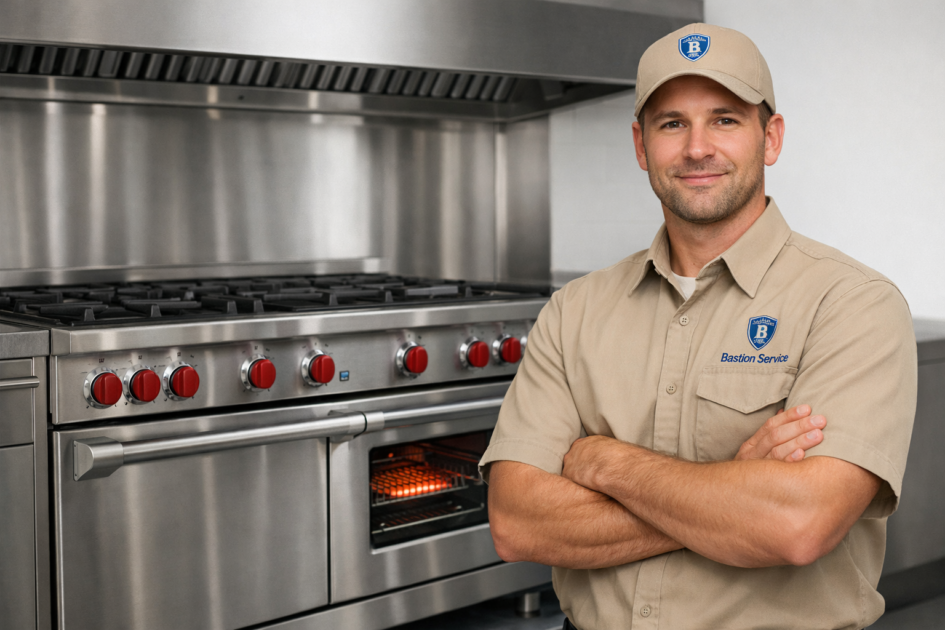
When Wolf cooking equipment starts missing temperature, failing to ignite, or shutting down during service, the immediate priority is protecting production while identifying whether the problem is limited, escalating, or unsafe to continue using. For businesses in West Hollywood, repair scheduling is less about reacting to a single symptom and more about understanding how the fault affects throughput, food quality, staff workflow, and the risk of a wider outage. Bastion Service provides repair support focused on fault isolation, repair planning, and the next step needed to get ovens, ranges, and fryers back into dependable operation.
For specific equipment paths in West Hollywood, review Wolf Oven Repair in West Hollywood, Wolf Range Repair in West Hollywood, and Wolf Fryer Repair in West Hollywood.
Wolf cooking equipment problems that disrupt daily operations
Cooking equipment issues rarely stay isolated to one task. A slow-heating oven can push prep behind schedule. An unreliable range burner can bottleneck the line. A fryer that cannot recover temperature between batches can affect both output speed and product consistency. In busy kitchens, those problems create extra labor, force staff to shift work to other stations, and increase the chance of delayed service.
Wolf equipment is built for demanding use, so when performance changes show up, they usually need more than guesswork. A service visit should determine whether the issue involves heat generation, ignition, sensing, gas flow, electrical controls, safety circuits, or wear affecting multiple systems at once. That distinction matters because symptoms that look similar from the outside can lead to very different repair decisions.
What Wolf cooking equipment problems do you troubleshoot?
Typical service calls involve symptom patterns such as:
- Units that do not heat or take too long to reach operating temperature
- Uneven cooking, drifting temperature, or poor heat recovery
- Ignition failure, repeated clicking, delayed lighting, or loss of flame
- Burners that run weak, cycle unpredictably, or do not respond correctly to controls
- Fryers that cannot hold set temperature or recover too slowly between loads
- Ovens or ranges that stop mid-use, reset unexpectedly, or show control faults
- Displays, knobs, or control inputs that do not match actual equipment behavior
- Intermittent shutdowns that force staff intervention during service
These faults can stem from failed ignition components, temperature sensors, thermostatic controls, gas valves, heating elements, safety cutoffs, wiring issues, or electronic control problems. The important point is not just naming a possible part, but confirming the actual source of failure before more downtime is created by trial-and-error repairs.
Symptom-based repair guidance for ovens, ranges, and fryers
Heating loss, slow preheat, or poor recovery
If an oven takes too long to preheat, a range produces inconsistent heat, or a fryer struggles to recover after each batch, the equipment may still appear usable while already affecting output. In practice, these are the kinds of issues that lead to longer ticket times, uneven results, and repeated adjustments by staff. Heating problems may involve the heat source itself, but they can also be caused by sensing errors or control faults that keep the unit from cycling correctly.
Service is usually warranted once cook times start changing, operators begin rotating work away from one unit, or staff no longer trust the displayed temperature. Those are strong signs the problem has moved beyond normal variation and is now affecting production decisions.
Ignition problems and burner performance issues
Repeated startup failure, weak flame, delayed ignition, or burners that cut out during use should be evaluated promptly. On a range or fryer, intermittent ignition often gets worse before it gets better, and what begins as a nuisance can turn into an unavailable station at a busy point in the day. Common causes include ignition components, flame sensing issues, gas delivery faults, contaminated burner assemblies, or control problems that interrupt normal startup.
If staff notice repeated clicking, hesitation, or unreliable lighting, it is a good time to schedule service before the fault becomes a complete outage. If there is a strong or persistent gas smell, stop using the equipment and address the immediate safety concern first before arranging appliance repair.
Temperature drift and inconsistent cooking results
When food is coming out differently from one batch to the next, the equipment may be cycling outside its intended range even if it still appears to be working. Ovens may run hot or cold, fryers may overshoot or lag, and ranges may not deliver stable heat from one setting to another. These issues often trace back to sensing, calibration, controls, or components that are no longer responding consistently under load.
For businesses in West Hollywood, this kind of instability is costly because it creates waste, retraining at the station, and uncertainty about timing. A proper diagnosis helps determine whether the issue is isolated and repairable or whether several related components are contributing to the inconsistency.
Shutdowns, resets, and erratic controls
Unexpected shutdowns are often more disruptive than a total no-start condition because they create uncertainty. Equipment may appear normal during part of the shift, then stop, reset, or fail to respond when production depends on it. Control failures can involve user interface problems, safety lockouts, wiring faults, failing boards, or inputs that no longer read accurately.
When staff have to restart a unit repeatedly, work around error conditions, or monitor controls more than the cooking process itself, it is usually time to take the symptom seriously. These are not efficiency issues alone; they often point to problems that can worsen into longer downtime if ignored.
Equipment-specific considerations
Wolf oven repair
Oven service commonly centers on preheat delays, uneven cooking, temperature drift, door-related heat loss, control issues, or shutdowns during operation. Because ovens are often tied to scheduled prep and repeatable results, even moderate temperature inconsistency can ripple through the kitchen. Diagnosis should confirm whether the problem is related to heat generation, sensing, controls, airflow, or sealing components, and whether limited operation is reasonable until repair is completed.
Wolf range repair
Range problems become urgent quickly because a single weak or unreliable burner can slow an entire line. Typical complaints include burners that do not ignite properly, unstable flame, poor heat response, or controls that do not correspond to actual output. The key repair question is whether the issue is isolated to one burner assembly or tied to a broader ignition, valve, or control-system fault that affects safe and consistent operation.
Wolf fryer repair
Fryer issues often show up as slow recovery, poor temperature hold, ignition trouble, safety shutdowns, or inconsistent results between batches. Since fryer performance affects both speed and product quality, small changes in recovery time or heat control can create immediate pressure on service flow. A technician should determine whether the problem involves the heating system, temperature regulation, controls, or protective shutoff behavior before the unit is returned to normal use.
When repair should be scheduled right away
It is usually time to schedule service when the equipment is still operating but requires staff to compensate for it. Common examples include extending cook times, relighting burners, avoiding certain settings, reducing batch size, or shifting work to another station. Those workarounds may keep the kitchen moving temporarily, but they also show that the equipment is no longer performing predictably.
Prompt repair is especially important when you notice:
- repeat shutdowns during active use
- burners or heating systems that work only intermittently
- temperature behavior that changes from shift to shift
- control response that does not match the selected setting
- declining output that is already affecting ticket timing or product consistency
Early service can prevent a partial fault from becoming a full outage and gives operators better information for labor planning, station coverage, and short-term menu adjustments.
Repair versus replacement considerations
Not every major symptom means the equipment should be replaced. In many cases, a contained failure in an otherwise solid oven, range, or fryer makes repair the more practical choice. At the same time, repeated breakdowns, multiple failing systems, or heavy overall wear can change the calculation. The best decision depends on failure history, part scope, labor involved, age of the unit, and how critical that equipment is to daily production.
A useful service assessment should help decision-makers understand not only what failed, but what condition the surrounding systems are in and whether additional downtime risk is likely after the immediate repair. That is often the difference between a short-term fix and a repair plan that actually supports stable operation.
What to expect from a service-oriented diagnosis
A productive visit should do more than confirm that the unit has a problem. It should identify the affected system, verify the operating failure, determine whether the equipment can remain in limited use, and outline the next repair step clearly. Depending on the fault, that may mean completing the repair, recommending the unit stay offline, or scheduling return service once parts and labor scope are confirmed.
If a Wolf oven, range, or fryer is slowing output, creating inconsistency, or forcing staff to work around repeated faults, scheduling repair sooner usually leads to better decisions and less disruption. For businesses in West Hollywood, the practical next step is to have the symptom pattern evaluated so the cause can be confirmed and the most efficient path back to reliable cooking equipment can be put in place.


