
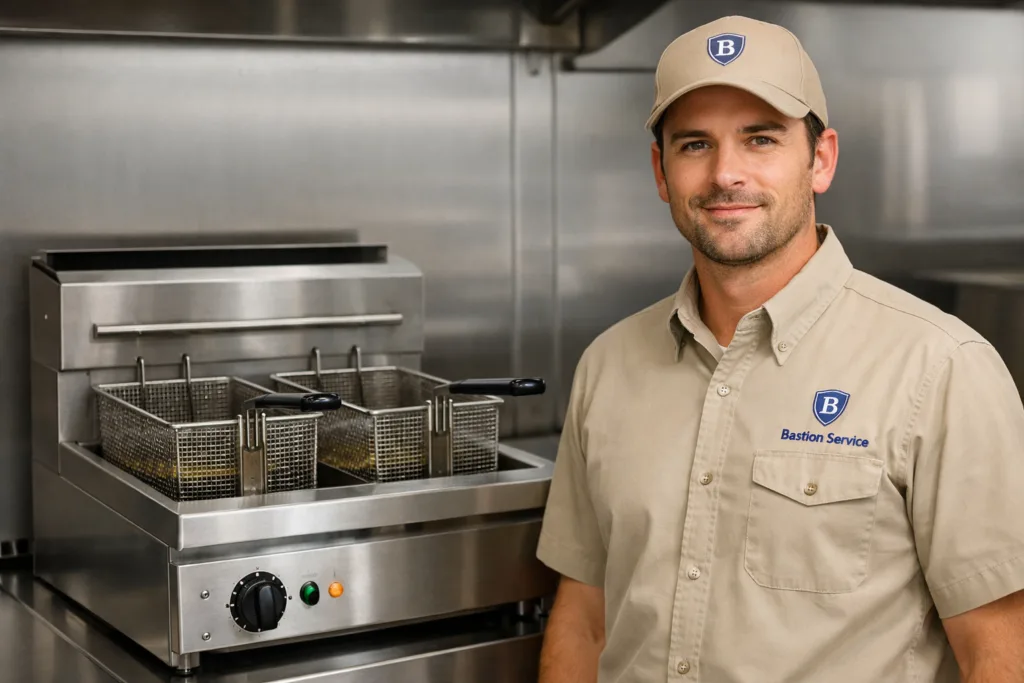





When a Wolf fryer stops holding temperature, recovers too slowly, or shuts down during service, production issues usually show up right away. Fry station delays can affect ticket times, product consistency, labor flow, and oil management across the line. For businesses in Mar Vista, the best next step is service that identifies the actual fault before parts are ordered, because similar fryer symptoms can come from very different causes such as ignition failure, sensor inaccuracy, high-limit trips, burner problems, wiring faults, or control issues.
Related commercial service paths in Mar Vista include Wolf Commercial Repair in Mar Vista, Commercial Fryer Repair in Mar Vista, and Wolf Oven Repair in Mar Vista.
Wolf fryer service focused on the actual operating fault
Fryer repair should start with how the unit is failing in real use, not with a guess based on one symptom. A fryer that seems like it has a thermostat problem may actually be dealing with a weak ignition sequence, unstable gas flow, a failing temperature sensor, or a safety control that is opening at the wrong time. Bastion Service helps Mar Vista businesses narrow that down so repair decisions are based on equipment behavior, downtime risk, and whether the unit can return to stable daily use.
That service approach matters when one unreliable fryer starts shifting load onto the rest of the kitchen. If staff are extending cook times, reducing batch size, rotating around one vat, or resetting the unit during busy periods, the equipment is already affecting output in ways that usually justify repair scheduling.
Common Wolf fryer symptoms and what they may indicate
No heat or failure to ignite
If the fryer does not heat at all, possible causes include ignition component failure, a tripped high-limit, electrical supply problems, control faults, or interruption in gas delivery on gas-fired models. In some cases, the fryer may power on normally but never move into a full heating cycle. That distinction matters because it helps separate supply, safety, and control-related problems from a basic burner issue.
No-heat conditions are usually worth addressing quickly. Repeated reset attempts can waste time during service and may delay identification of the root cause.
Slow heat-up and weak recovery between batches
When oil takes too long to reach set temperature or struggles to recover after a basket drop, the problem may be related to burner performance, temperature sensing, calibration drift, airflow issues, or internal buildup affecting normal heat transfer. This symptom often appears first as slower cook times, inconsistent color, or the need to space out batches more than usual.
Weak recovery is especially disruptive in high-output kitchens because it may not look like a full breakdown at first. Instead, the fryer keeps running but no longer supports normal pace.
Oil temperature swings or overheating
A Wolf fryer that runs too hot, too cool, or cycles unpredictably may have a thermostat, sensor, or control problem. Overheating can shorten oil life, affect food quality, and place extra stress on internal components. Temperature swings in the opposite direction can lead to underperformance, poor crisping, and inconsistent cook results that staff may try to correct with longer times or smaller loads.
When temperature control becomes unreliable, the issue is no longer just about product consistency. It also becomes a repair and safety concern.
Intermittent shutdowns during operation
If the fryer heats normally and then drops out during use, common possibilities include overheating protection, ignition interruption, failing controls, loose electrical connections, or unstable operating conditions that trigger a protective shutdown. Intermittent faults are frustrating because the fryer may appear normal between failures, which can make the problem seem random when it is actually repeatable under load.
Shutdowns that happen during busy periods are a strong sign that the unit should be checked before it creates a larger workflow problem.
Burner irregularities, odors, or unusual operation
Changes in flame behavior, unusual noises, unexpected odors, or operating patterns that do not match normal fryer performance should be taken seriously. These symptoms can point to combustion issues, control faults, or other developing problems that tend to become more expensive when the unit stays in service without inspection.
Why is my Wolf fryer not heating or recovering temperature properly?
This problem usually comes down to one of a few categories: the fryer is not producing enough heat, it is not sensing temperature correctly, or a control or safety component is interrupting the heating cycle. Weak burner output, ignition failure, sensor drift, a tripping high-limit, airflow problems, or control board faults can all lead to poor heat-up and recovery.
What matters most is how the fryer behaves from startup through active cooking. If it heats slowly from a cold start, the issue may be different from a fryer that reaches temperature but falls behind only during consecutive batches. If it overshoots and then shuts down, the concern may involve regulation or safety controls rather than simple underheating. Looking at that full pattern helps determine whether the repair is likely to be isolated and straightforward or part of a broader performance problem.
When to schedule fryer repair
Schedule service when the fryer shows recurring temperature errors, delayed heating, unreliable recovery, repeated shutdowns, or signs that staff are compensating for the machine instead of using it normally. A one-time interruption does not always mean a major repair is needed, but repeat symptoms usually indicate a fault that will continue affecting output until it is addressed.
It is also smart to book service when the fryer remains technically operational but is no longer supporting normal kitchen pace. Equipment does not have to fail completely to justify a repair call. In many cases, reduced performance is already costing time, oil, and consistency.
When continued use can make the problem worse
Running a fryer with unstable temperatures, repeated resets, ignition issues, or overheating can add stress to controls, safety components, and related systems. It can also increase oil waste and create uneven cooking results that affect the rest of the line. If the fryer cannot maintain normal behavior throughout service, continued use may turn a manageable repair into a larger outage.
This is especially true when staff have started building workarounds around the problem. Once operations depend on temporary adjustments, the risk of a more disruptive failure usually rises.
Repair or replace?
Not every Wolf fryer issue points to replacement. Many problems are repairable when the main structure of the unit is still sound and the fault is limited to ignition components, controls, sensing, or other serviceable parts. Replacement becomes more likely when the fryer has a history of repeated major failures, extensive wear, or downtime costs that no longer make another repair cycle worthwhile.
For businesses in Mar Vista, the practical decision often comes down to whether the failure is isolated, whether repair is likely to restore reliable day-to-day performance, and whether the investment makes sense for the unit’s overall condition. A proper diagnosis gives management a better basis for that decision than symptoms alone.
What to expect from a useful service visit
A worthwhile fryer repair visit should do more than identify one failed part. It should clarify the cause of the complaint, check whether related components are contributing to the issue, and explain whether the unit can reasonably be returned to dependable operation. That kind of service helps reduce repeat downtime and gives kitchen managers a clearer plan for scheduling, parts approval, and next steps.
If your Wolf fryer is affecting output, slowing recovery, or becoming unreliable during service in Mar Vista, scheduling repair based on the specific symptom pattern is the most practical way to protect uptime and decide quickly whether the unit should be repaired, taken offline, or evaluated for replacement.


