
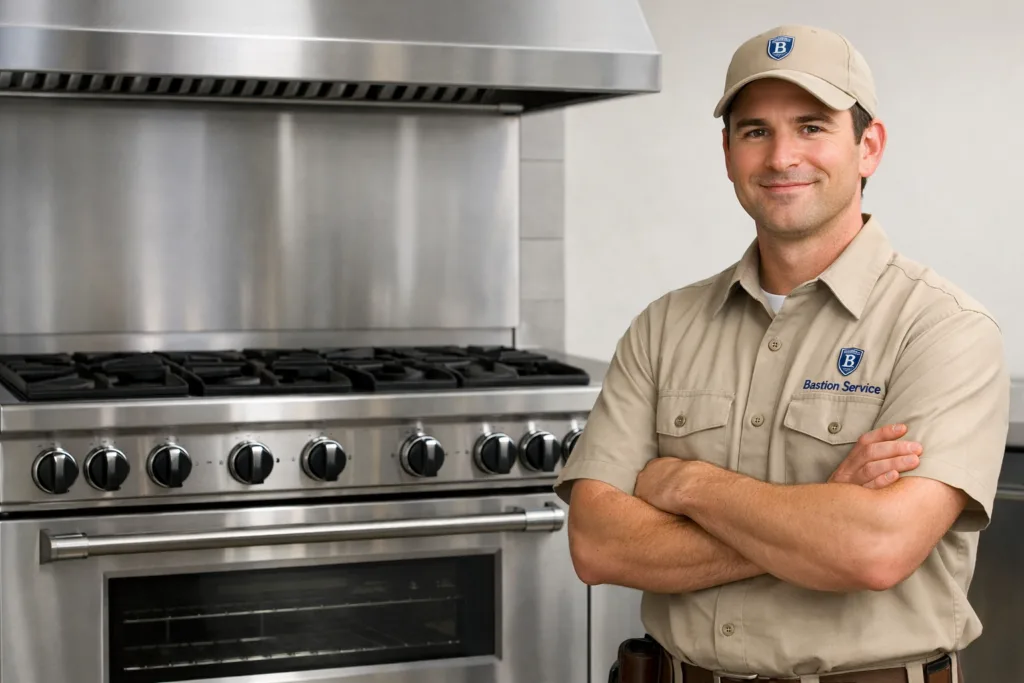




Range problems tend to escalate quickly in a working kitchen. A burner that clicks without lighting, an oven section that lags behind set temperature, or controls that respond inconsistently can slow production, affect food quality, and create unnecessary strain during busy service. For businesses in Culver City, the right next step is to schedule an inspection that identifies the actual fault, confirms how the unit is performing under load, and outlines the repair options before downtime spreads to the rest of the line.
Related commercial service paths in Culver City include Wolf Commercial Repair in Culver City, Wolf Oven Repair in Culver City, and Wolf Fryer Repair in Culver City.
Bastion Service handles Wolf range repair for businesses in Culver City that need stable heat, reliable ignition, and safe operation from equipment used every day. Service is centered on symptom-based testing so the repair plan matches the way the range is failing, not just the first visible complaint.
Why a Wolf range stops lighting, heating, or holding temperature
Most range failures begin with one of three patterns: ignition trouble, heat production issues, or temperature control drift. On a Wolf unit, those symptoms can come from worn ignition parts, burner assembly problems, gas flow restrictions, sensor faults, valve issues, control failures, or electrical connection problems. Because several different components can create similar symptoms, the most useful repair visit is one that separates the primary fault from secondary effects.
For example, a unit that appears to have an oven temperature problem may actually be struggling with ignition strength or uneven burner performance. A burner that seems slow to light may have an ignition issue, a flow issue, or contamination affecting flame quality. Symptom pattern matters because it changes what should be tested first and what can be ruled out.
Common Wolf range symptoms that call for service
Burner will not ignite or lights inconsistently
If a burner clicks repeatedly, lights late, or fails to ignite at all, the issue may involve the igniter, switch, burner components, gas delivery, or related wiring. Delayed ignition should not be ignored in a busy kitchen because repeated attempts to light the burner can increase wear and make the station less predictable during service.
Weak, uneven, or unstable flame
A flame that looks smaller than normal, burns unevenly, or fluctuates during use can affect pan response and cooking consistency. This kind of issue may point to burner obstruction, valve concerns, pressure-related problems, or component wear that is preventing proper operation. Even when the range still produces heat, uneven flame behavior is a sign that performance has already dropped below normal.
Oven section runs hot, cold, or drifts off set temperature
Temperature swings often show up as uneven cooking results, slow finishing times, or the need for staff to adjust settings repeatedly just to maintain output. Possible causes include sensor issues, thermostat or control faults, igniter weakness, or burner-related heating problems inside the oven section. A proper diagnosis helps determine whether the issue is isolated to temperature feedback or tied to a broader heating problem.
Slow preheat or poor temperature recovery
When the oven takes too long to come up to temperature or struggles to recover after the door is opened, the range may still appear usable while service quality steadily declines. This usually points to a heating system issue rather than normal variation. In kitchens that rely on repeatable output, slow recovery can create ticket delays and inconsistent results across shifts.
Clicking continues after ignition
Continuous clicking can indicate ignition system faults, switch issues, moisture contamination, or control-related problems. While some operators try to work around this symptom, ongoing clicking is a sign the range is not functioning normally and should be inspected before the condition worsens.
Controls behave unpredictably or the unit shuts down during use
Intermittent faults are especially disruptive because the range may seem normal one moment and fail the next. If controls do not respond correctly, the unit loses heat unexpectedly, or sections stop operating mid-use, the cause may involve electrical connections, safety components, or failing control parts. Intermittent issues rarely stay intermittent for long in high-use environments.
What symptom patterns often reveal
The way a Wolf range fails can tell a technician a great deal before any parts are removed. A burner that fails mostly at startup points in a different direction than one that lights but cannot maintain a steady flame. An oven that misses temperature only during heavy use suggests a different problem than one that is consistently inaccurate from the first cycle of the day.
- Startup-only ignition trouble often suggests wear in ignition components or burner-related problems.
- Heat loss during prolonged use can point to parts that weaken as the range gets hot.
- Uneven cooking results may reflect poor heat distribution, sensor issues, or burner imbalance.
- On-and-off performance often indicates wiring, switch, or control faults rather than a simple one-time misfire.
Looking at these patterns helps determine whether the problem is isolated, whether continued use risks added damage, and whether repair is likely to restore dependable operation.
When the problem is affecting more than one station
Range issues are not always confined to a single burner or oven section. In some cases, what starts as one weak point begins to affect broader workflow. Staff may shift production to other burners, rotate product to compensate for uneven heating, or avoid using the oven section altogether. Those workarounds can keep service moving for a short time, but they usually indicate the equipment is already hurting efficiency.
If multiple symptoms are happening at once, such as ignition trouble combined with temperature inconsistency or control problems paired with intermittent shutdown, the repair decision should be based on a full evaluation of the unit rather than one isolated complaint.
Why continued use can increase repair scope
Running a range that is not operating normally can turn a contained issue into a broader repair. Repeated failed ignition attempts can add wear to ignition components. Uneven heating can stress internal parts and reduce cooking consistency. Electrical irregularities can become harder to trace if the unit is kept in service while the fault is progressing.
That does not mean every symptom requires immediate shutdown, but it does mean unexplained performance changes should be assessed before they create a bigger interruption. Early service often preserves more repair options and helps avoid a more disruptive failure during production hours.
Repair planning for Wolf ranges in Culver City
Good repair planning starts with how the range is used day to day. A business that relies heavily on open burners may notice ignition and flame issues first, while a kitchen using the oven section continuously may see preheat delays or recovery problems sooner. The service approach should reflect the actual use pattern, the severity of the symptoms, and whether the problem is isolated to one function or affecting the whole unit.
During evaluation, it helps to note:
- Which burners or sections are affected
- Whether the problem happens constantly or only at certain times
- If the issue appears after the unit heats up
- Whether staff have noticed clicking, delayed ignition, weak flame, or temperature drift
- If the problem has been getting worse over time
That information can speed up diagnosis and lead to a more targeted repair recommendation.
Repair or replacement: how businesses usually decide
Repair is often the better choice when the failure is limited to specific serviceable parts and the range is otherwise structurally sound. Ignition components, burner-related parts, sensors, valves, and controls can often be addressed effectively when the rest of the unit remains in solid working condition.
Replacement becomes more likely when there are multiple recurring failures, extensive wear, long-running reliability problems, or repair costs that no longer make sense for the condition of the equipment. The key is to base that decision on tested findings, not guesswork. One symptom does not always mean the unit is near the end of service life, but a pattern of repeated breakdowns may point in that direction.
What businesses should expect from a service visit
A productive range service call should do more than confirm that something is wrong. It should identify the source of the problem, explain how it is affecting performance, and clarify the next step. For businesses in Culver City, that means getting a repair recommendation tied to actual operating symptoms, whether the issue involves burners, ignition, oven heat, controls, or a combination of faults.
If your Wolf range is no longer lighting reliably, producing steady heat, or maintaining consistent temperature, scheduling service before the next major disruption is the practical move. Addressing the issue early can reduce avoidable downtime, help protect workflow, and put the unit back into dependable daily operation with a repair plan that fits the condition of the equipment.


