
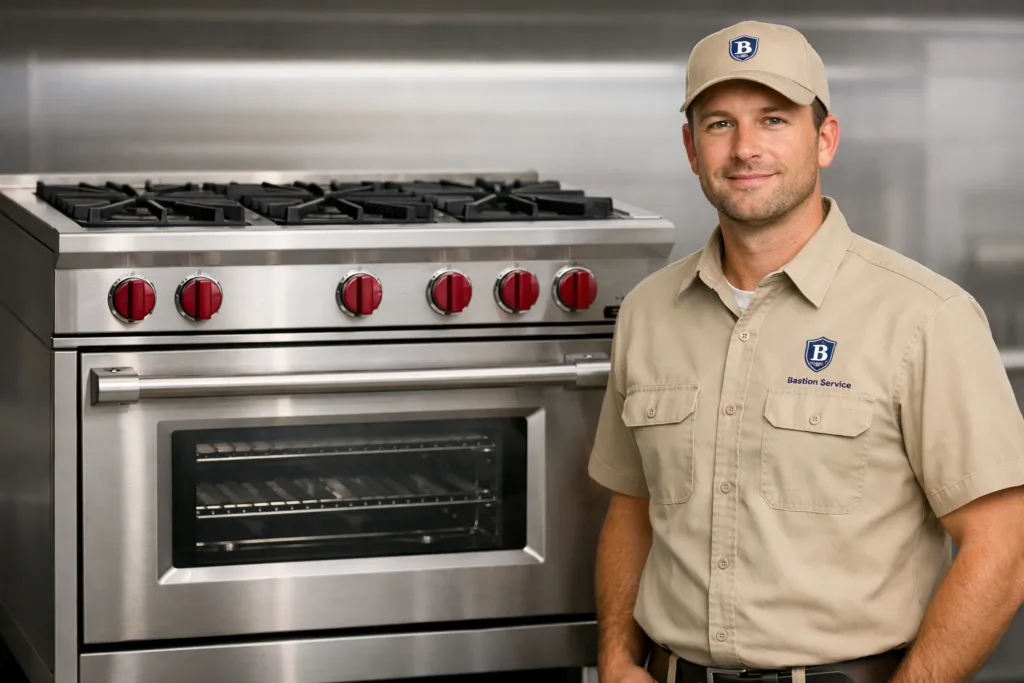




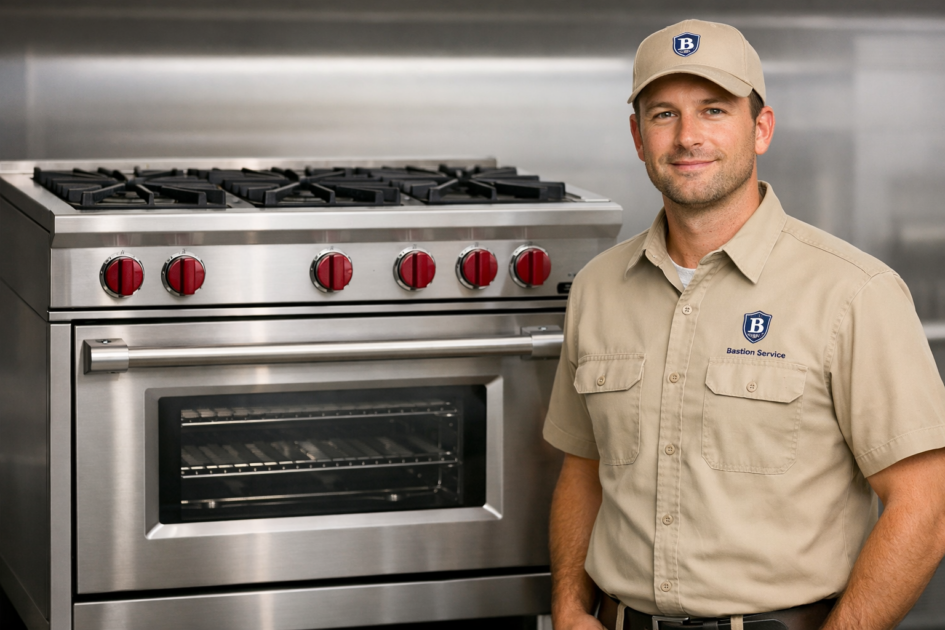
When a Wolf oven starts affecting output, consistency, or line timing, the priority is to identify the exact fault and schedule repair based on how the unit is failing in real use. For businesses in Culver City, oven problems often begin as slower preheat, uneven results, intermittent ignition, or controls that do not respond correctly, then grow into lost production and harder scheduling decisions. Bastion Service works with symptom-based diagnosis so the repair path matches the actual failure instead of guesswork.
Related commercial service paths in Culver City include Wolf Commercial Repair in Culver City, Commercial Oven Repair in Culver City, and Wolf Range Repair in Culver City.
How Wolf oven problems usually show up in daily operation
Oven issues are not always immediate total failures. In many kitchens, the first warning signs are subtle: a batch that colors unevenly, longer recovery between loads, temperatures that do not match the set point, or startup that becomes less reliable over time. These changes matter because they affect food quality, staff pacing, and confidence in the equipment during active service.
With Wolf ovens, similar symptoms can come from very different causes. A temperature complaint may trace back to a sensor problem, a control fault, airflow disruption, a weak heating component, ignition trouble, or heat loss at the door. That is why fault isolation matters before parts are ordered or the unit is returned to full use.
Why an oven may not heat evenly or reach set temperature
When a Wolf oven is not heating evenly or struggles to reach the selected temperature, the problem often involves one or more of the systems responsible for creating, sensing, and retaining heat. The most common possibilities include:
- Temperature sensor drift or inaccurate temperature feedback
- Failing igniter or ignition sequence problems
- Heating element or burner performance issues
- Control board or relay faults affecting heat cycling
- Fan or airflow problems that prevent even heat distribution
- Door gasket wear or poor door closure causing heat loss
In a business setting, this symptom should not be treated as a minor inconvenience. Uneven heat can create rework, waste, inconsistent product, and service delays long before the oven stops operating altogether.
Common Wolf oven symptoms and what they often indicate
Slow preheat or weak heat output
If preheat takes longer than normal or the oven appears to stall below the set point, possible causes include a weak igniter, partially failed heating component, sensor inaccuracy, voltage issues, or a control that is not commanding heat correctly. A unit in this condition may still run, but it often cannot keep up during heavier use.
Temperature swings during cooking
Wide fluctuations above or below the set temperature can point to sensor problems, relay or control cycling faults, calibration drift, or intermittent component failure. Operators usually notice this as inconsistent browning, changing cook times, or a unit that behaves differently from one cycle to the next.
Hot spots or uneven baking across racks
When one section cooks faster than another, airflow and circulation should be checked along with heat-source performance and door sealing. Fan-related issues, internal obstructions, warped components, or partial heating failure can all contribute to uneven results.
Ignition delays or failure to start
If the oven hesitates before lighting, starts inconsistently, or locks out, the issue may involve the igniter, flame sensing, gas-valve response, safety circuits, or the control sequence. These symptoms deserve prompt service because repeated failed starts can interrupt workflow and make the oven unreliable during peak hours.
Unexpected shutdowns during operation
An oven that stops during a cook cycle may be dealing with overheating protection, unstable electrical connections, failing controls, ignition loss, or sensor communication problems. Shutdowns are especially disruptive because they interrupt active production and create uncertainty about product quality.
Display, keypad, or programming issues
Unresponsive controls, error messages, blank displays, or settings that do not save properly can make a Wolf oven difficult to use consistently across shifts. In many cases, the root cause is a failing interface, damaged wiring, moisture-related stress, or a larger control-board problem.
Door, hinge, and gasket wear
If the door will not close tightly, opens unevenly, or leaks heat, the oven may show longer cook times, poor recovery, and unstable cavity temperature. Worn gaskets and hinge problems are easy to overlook, but they can reduce performance and increase strain on heat-producing components.
When continued use starts creating bigger repair risk
Some ovens continue operating well enough to stay in rotation, but that does not always mean they should. Service should be scheduled when the oven shows repeated temperature variance, delayed ignition, error conditions, control instability, or visible door-seal failure. Continued use in an unstable state can increase wear on related parts and turn a contained repair into a more expensive one.
A practical rule for businesses in Culver City is simple: if the oven can no longer produce repeatable results or cannot be trusted during active service, it is time to stop treating the issue as routine drift and move toward repair planning.
What a focused diagnosis should cover
A useful service visit should do more than confirm that the oven is underperforming. It should narrow the fault to the specific system involved and determine whether the problem affects heating, ignition, control response, airflow, or safe operation. Depending on the reported symptom, diagnosis may include:
- Verifying actual heat performance against the set temperature
- Checking startup and ignition behavior
- Inspecting sensors, relays, controls, and wiring
- Reviewing fan operation and heat distribution
- Evaluating door seal condition and heat retention
- Confirming whether the unit is suitable for continued limited use before repair
This approach helps avoid unnecessary part replacement and gives operators a better basis for scheduling downtime, approving repair, and deciding whether the oven can remain in service safely until work is completed.
Repair or replace?
Many Wolf oven problems are repairable when the fault is isolated and the overall unit remains in solid condition. Sensors, igniters, relays, control components, fans, switches, wiring issues, and door-related wear are all common repair categories. If the oven still fits the operation and the issue is confined to a manageable failure point, repair is often the sensible path.
Replacement becomes a stronger consideration when the oven has repeated major failures, broad control-system instability, severe internal wear, or multiple overlapping issues that keep returning. The best decision usually comes from the condition of the specific unit rather than from age alone.
How to prepare before scheduling Wolf oven service
Before repair is scheduled, it helps to note the exact symptom pattern. Useful details include whether the issue happens during preheat or mid-cycle, whether it affects all modes or only one function, whether there are error codes, and whether the problem is constant or intermittent. It is also helpful to note if product quality changed before the oven showed an obvious failure.
The more clearly the symptom is described, the easier it is to connect the complaint to the most likely systems involved. That speeds up diagnosis and reduces the chance of repeated interruptions.
Service-focused next steps for Culver City businesses
If a Wolf oven is heating unevenly, falling short of temperature, shutting down, or creating uncertainty in production, the right next step is to schedule service before the problem disrupts more of the workday. Early diagnosis can clarify whether the issue is limited to a sensor, igniter, control, seal, or another repairable component, and whether the oven should stay offline until corrected. For businesses in Culver City, timely repair helps protect output, consistency, and scheduling when the oven is part of daily operations.


