
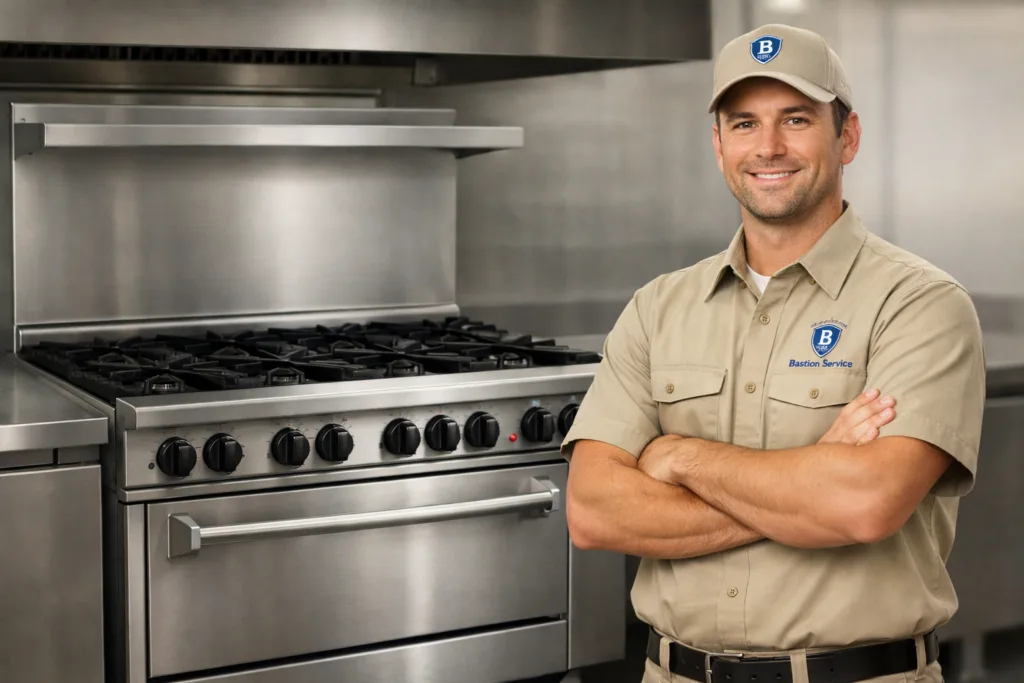





When a Southbend range begins missing ignitions, losing heat output, or drifting off temperature, the problem usually reaches beyond one burner or one shift. In kitchens that rely on steady line performance, the right response is service that starts with symptom testing, fault isolation, and a repair plan built around how the unit is actually failing. Bastion Service helps businesses in Culver City identify whether the issue is tied to ignition components, gas flow, burner assemblies, oven controls, or wear that has built up under daily use.
Related commercial service paths in Culver City include Southbend Commercial Repair in Culver City, Southbend Oven Repair in Culver City, and Vulcan Range Repair in Culver City.
Common Southbend Range Problems in Culver City Kitchens
Burners that do not light reliably
If a burner clicks without lighting, lights only after several tries, or fails completely, the cause may involve the ignitor, switch, wiring, burner head condition, clogged ports, or a gas delivery issue. Because several faults can create the same lighting problem, replacing parts too early often adds delay without fixing the real cause. A proper repair visit focuses on which part of the ignition sequence is failing and whether the problem is isolated or affecting the range more broadly.
Weak flame or inconsistent burner output
A burner that looks low, uneven, or unstable can slow cooking times and make it harder for staff to hold quality during peak periods. This may point to blockage in the burner assembly, regulator trouble, valve wear, pressure problems, or heat-related deterioration in components that no longer respond consistently. When one section underperforms, the issue can also affect how the rest of the line is staffed and timed.
Oven not heating properly or recovering too slowly
Southbend ranges with oven sections can develop heat complaints that show up as long preheat times, slow recovery after the door opens, or food taking longer than expected to finish. These symptoms may come from weak ignition, thermostat or sensor issues, control faults, internal heat loss, or combustion problems. The useful question is not only whether the oven gets hot, but whether it reaches and maintains the right temperature under normal kitchen use.
Temperature swings and uneven results
If the oven runs hot one cycle and cool the next, or produces inconsistent results from rack to rack, the problem may involve temperature regulation, sensor accuracy, burner performance, or door sealing. Staff often work around this by changing cook times or rotating product more aggressively, but that usually masks a repair issue rather than solving it. When the range stops producing repeatable results, service should be scheduled before food quality and throughput are affected further.
Delayed startup or growing performance changes
Many range failures start as intermittent issues: a burner that takes a little longer to light, an oven that seems slightly off, or a section that recovers more slowly than it used to. Those changes often signal parts wearing out under heat and volume, not random one-off behavior. Catching them early can help prevent a broader outage during service hours.
Why Diagnosis Matters Before Parts Are Ordered
One visible symptom does not always point to one failed part. A Southbend range may appear to have a burner issue when the root cause is in the ignition circuit, gas regulation, thermostat system, or control response. That is why accurate testing matters before authorizing repair work.
Good range service should answer a few practical questions:
- Which function is failing: ignition, flame stability, temperature control, or recovery?
- Is the problem isolated to one section or showing up in multiple sections?
- Has continued use created secondary wear or additional faults?
- Will the repair restore consistent day-to-day operation, not just temporary startup?
That process helps kitchen managers make a better decision on timing, cost, and whether the unit should stay in use while repair is being arranged.
Signs It Is Time to Schedule Service
Range problems are easier to manage when they are handled before the unit drops out completely. Scheduling service makes sense when you notice any of the following:
- Burners fail to light on the first attempt
- Clicking continues after ignition or without ignition
- Flame appearance changes from normal operation
- Heat output drops during active use
- The oven overshoots, undershoots, or drifts from set temperature
- Preheat or recovery times are noticeably longer
- Staff have started adjusting around the equipment to keep production moving
For businesses in Culver City, these are not minor annoyances when the range is part of daily prep and service. Even a partial loss of performance can affect ticket flow, consistency, and labor efficiency across the kitchen.
When Continued Use Can Increase Downtime
Some range issues get more expensive when the unit stays in rotation without inspection. Repeated failed ignition can put additional strain on ignition-related components. Inconsistent burner operation can hide a gas or valve problem. Oven temperature drift can lead staff to overcompensate, which makes it harder to identify the original fault and may increase wear over time.
If the range shows delayed ignition, unstable heating, erratic controls, or any operating behavior that is no longer predictable, it is worth having the unit evaluated promptly. Service can determine whether the equipment is safe for limited use, should be taken offline, or needs more extensive repair planning.
Repair or Replace?
Repair is often the better option when the problem is contained, the core structure of the unit is still sound, and the range continues to fit the kitchen’s production needs. Replacement becomes a more serious consideration when the equipment has repeated breakdowns, multiple major faults at once, or wear severe enough that each new repair only addresses the latest failure.
For a business in Culver City, the real decision usually comes down to uptime. If a repair resolves the root cause and returns the range to stable performance, it can make strong operational sense. If the unit has become unpredictable across several functions, replacement may offer a better long-term outcome. That decision is easier to make after inspection has identified the actual condition of the range.
How to Prepare for a Southbend Range Service Visit
A little preparation can make diagnosis faster and more useful. Before service is scheduled, it helps to note:
- Which burners or oven sections are affected
- Whether the problem is constant or intermittent
- What staff see first: clicking, weak flame, no heat, slow recovery, or temperature drift
- Whether the issue appears more often during heavy use
- Any recent change in cooking performance, timing, or startup behavior
These details help narrow the fault pattern and reduce guesswork, especially when the unit still works part of the time.
Service Focused on Restoring Kitchen Performance
Southbend range repair should do more than get the equipment to light once and leave. The goal is to restore dependable burner performance, steady oven heat, and normal response so the kitchen can operate without constant workarounds. If your range is not lighting, heating, or holding temperature the way it should, scheduling repair in Culver City is the most practical next step to limit downtime and get the unit back into reliable daily service.


