
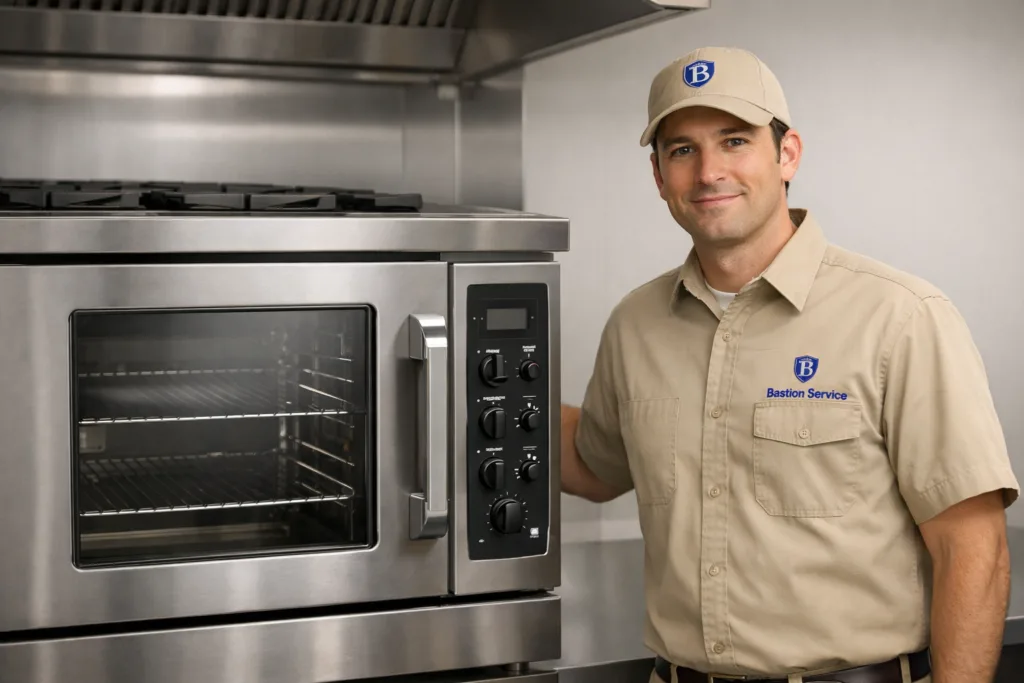




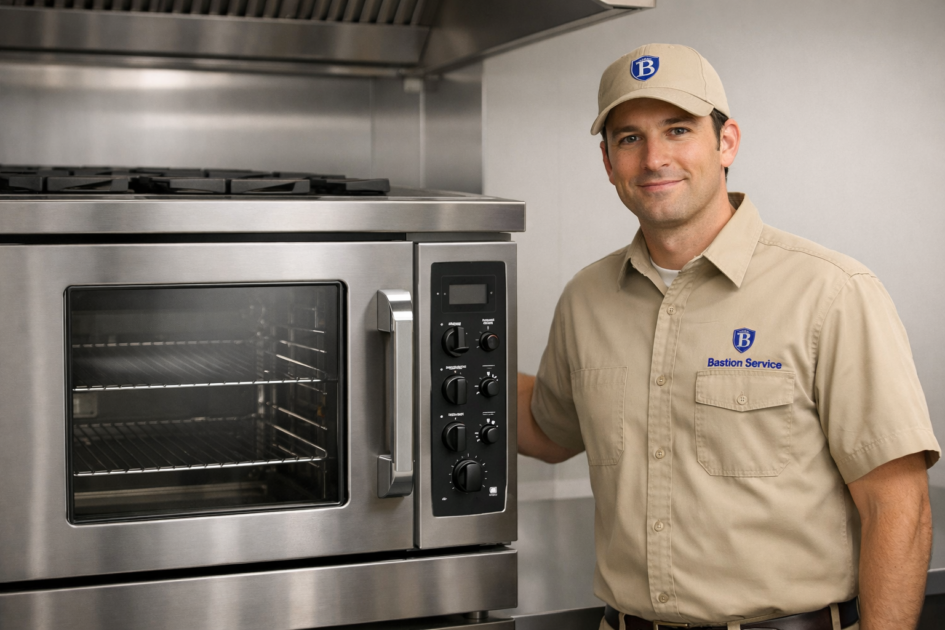
Southbend ovens that start missing temperature, cycling unpredictably, or failing during active production can slow the entire kitchen. For restaurants and food-service businesses in Rancho Palos Verdes, service is usually most effective when the symptom pattern is documented early and the repair visit is scheduled before a minor performance issue turns into a full shutdown. Bastion Service works with businesses that need the oven evaluated around real operating conditions, repair priorities, and downtime impact.
Related commercial service paths in Rancho Palos Verdes include Southbend Repair in Rancho Palos Verdes, Commercial Oven Repair in Rancho Palos Verdes, and Southbend Range Repair in Rancho Palos Verdes.
Common Southbend oven symptoms that need service
Most oven failures do not begin as total breakdowns. They often show up first as slower preheat, uneven results, intermittent ignition, or temperature recovery problems after the door is opened. Those symptoms can point to different underlying faults, so the best repair path depends on what the oven is doing consistently, what it does only under load, and whether the problem is getting worse.
Uneven baking or inconsistent temperature
If product is coming out too dark on one side, undercooked on another, or changing from batch to batch, the issue may involve temperature sensing, calibration drift, burner performance, airflow problems, fan-related faults, or control response. In daily operations, this usually appears as tray rotation becoming necessary, cook times stretching longer than normal, or staff compensating with manual adjustments that were not needed before.
Slow preheat or failure to reach set temperature
An oven that powers on but never reaches the selected temperature may have an ignition problem, a weak heating circuit, burner trouble, a failing control component, or a sensor reading issue. This symptom matters because even partial heat can disrupt production. The oven may seem usable at first, but slow warm-up and poor recovery often create a bottleneck during busy service.
Ignition delay or intermittent startup
When the oven starts only after repeated attempts, lights inconsistently, or shuts down after appearing to fire normally, the problem should be checked promptly. Intermittent ignition issues can come from ignitors, flame sensing, gas valve response, safety circuits, or related controls. What begins as an occasional restart can become a no-start condition with little warning.
Hot spots, poor circulation, or weak convection performance
On convection-equipped Southbend ovens, airflow is a major part of cooking consistency. If fans are weak, failing, obstructed, or not being controlled properly, the oven may develop hot spots and poor rack-to-rack performance. Operators often notice this first when they need to rotate pans more often or when the same recipe starts producing uneven browning.
Control errors, shutdowns, or unstable operation
Random shutoffs, display problems, nonresponsive settings, or erratic cycling can indicate a control-side issue rather than a simple heating failure. In some cases, the oven may appear normal until it is under sustained use, which is why diagnosis should look at behavior during actual operating conditions rather than only at idle startup.
Why a Southbend oven may not heat evenly or reach set temperature
This is one of the most common service complaints because several different failures can create the same result. A temperature complaint may come from a bad sensor, thermostat or controller drift, poor ignition, weak burner output, airflow imbalance, relay failure, or electrical supply issues depending on the model and configuration. Without testing, it is easy to replace the wrong part and still have the same production problem.
For businesses in Rancho Palos Verdes, the practical concern is not just whether the oven gets warm, but whether it reaches target heat on time, holds that temperature through the cycle, and recovers reliably between loads. If those three functions are not stable, the oven is already affecting consistency and throughput even before it stops working completely.
What a symptom-based diagnosis should confirm
Good oven repair starts by narrowing the complaint to a repeatable condition. That usually means identifying whether the fault happens at startup, only after the oven has been running for a while, only at higher temperatures, or only during heavier production periods. Symptoms that look similar from the outside can come from very different causes internally.
- Whether the oven actually reaches the set temperature or stalls below it
- Whether heat is consistent across the cavity or uneven from side to side
- Whether ignition is immediate, delayed, or unreliable
- Whether convection airflow is normal and stable
- Whether controls, sensors, and safety circuits are responding correctly
- Whether the issue is isolated to one failed component or reflects broader wear
This kind of troubleshooting helps businesses decide whether a straightforward repair is likely to restore dependable operation or whether the unit is showing a larger pattern of decline.
When to schedule repair instead of working around the problem
Many kitchens keep an oven in use longer than they should by changing cook times, rotating product more often, or relying on another piece of equipment to make up the difference. That can work temporarily, but it usually increases labor pressure and product inconsistency while allowing the original fault to progress.
Scheduling service is the better next step when you notice:
- Repeated temperature swings
- Longer-than-normal preheat times
- Unreliable ignition
- Mid-cycle shutdowns
- Control errors or unresponsive settings
- Uneven browning or baking across racks
- Slower recovery after door openings
- Abnormal fan or operating noise
These are not just performance annoyances. In a busy kitchen, they affect output, timing, food quality, and staff workflow.
Repair or replacement: how businesses usually decide
Repair is often the sensible option when the fault is clearly identified, the oven remains structurally sound, and restoring proper operation will return the unit to reliable daily use. Replacement becomes a stronger consideration when breakdowns are recurring, multiple systems are worn, or recent service history suggests that solving one issue will not stabilize the oven for long.
The most useful decision is based on overall condition rather than the immediate failed part alone. If the cabinet, core components, and production fit are still strong, repair can make good business sense. If the oven has become a repeated source of downtime, the service conversation should include whether continued investment is likely to improve reliability in a meaningful way.
How to prepare for a Southbend oven service visit
A few details from staff can shorten diagnosis time and make the visit more productive. It helps to note when the problem happens, whether it affects every cycle or only some cycles, and whether the issue began suddenly or worsened over time.
- The set temperature and the approximate actual temperature reached
- Whether the problem occurs during preheat, cooking, or recovery
- If ignition is delayed, inconsistent, or absent
- Whether one side, rack position, or batch is affected more than another
- Any recent shutdowns, error displays, or unusual noises
- Whether staff have already changed procedures to compensate
That information helps connect the symptom to the likely system involved and keeps the repair process focused on the fastest path back to stable operation.
Service-focused support for Southbend oven problems in Rancho Palos Verdes
When a Southbend oven starts affecting production, waiting for a complete failure usually makes scheduling more urgent and downtime harder to manage. For businesses in Rancho Palos Verdes, the most practical next step is to arrange service while the symptoms are still identifiable and before inconsistent heat, ignition trouble, or control faults disrupt the kitchen further. A targeted repair visit can clarify the cause, define the repair scope, and help you decide how to move forward with less guesswork.


