
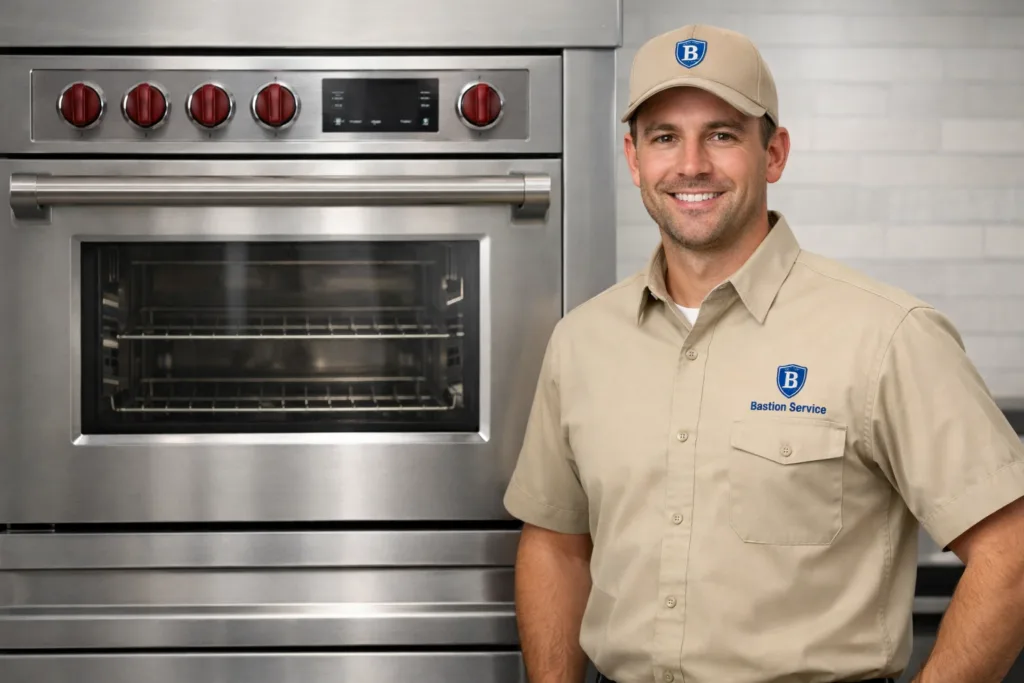




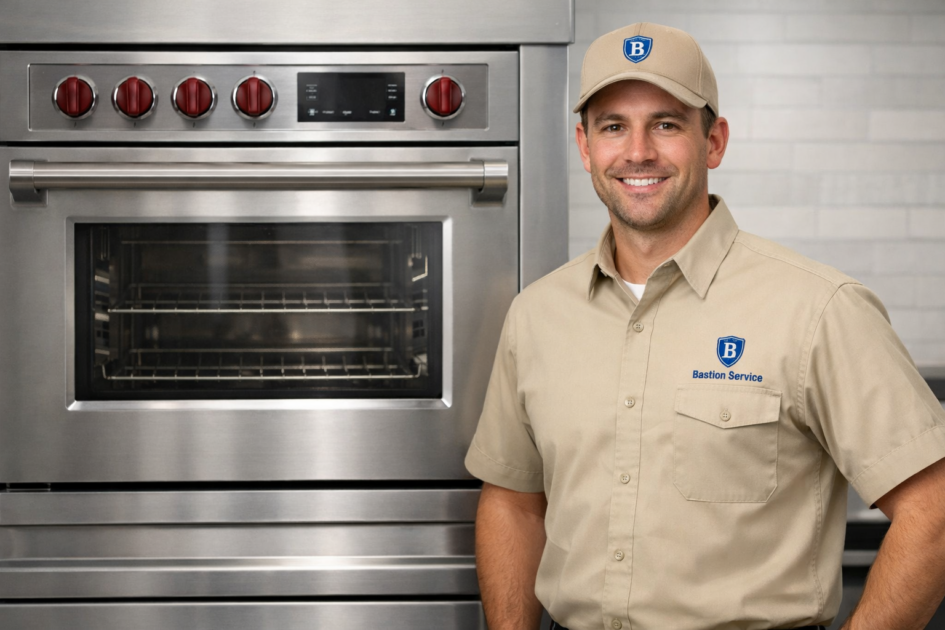
When a Wolf oven starts missing temperature, delaying preheat, or shutting down during production, the next step should be service based on the actual symptom pattern, not a parts guess. For businesses in Mid-Wilshire, oven problems can affect batch timing, food quality, staffing flow, and whether service stays on schedule. Bastion Service works with businesses in Mid-Wilshire to diagnose Wolf oven faults, identify what is causing the performance change, and schedule repair based on the urgency of the issue and the unit’s role in daily operations.
Related commercial service paths in Mid-Wilshire include Wolf Commercial Repair in Mid-Wilshire, Commercial Oven Repair in Mid-Wilshire, and Wolf Range Repair in Mid-Wilshire.
Common Wolf oven problems and what they usually point to
Not heating or taking too long to preheat
If the oven powers on but struggles to build heat, the problem may involve the igniter, heating element, sensor, relay, control board, or a gas-side component on applicable models. Slow preheat is often treated like a minor annoyance at first, but in a working kitchen it can delay prep, reduce output, and create inconsistency from one cycle to the next.
When the oven eventually heats but takes much longer than normal, that often suggests a component that is weakening rather than fully failed. Catching that condition early can help prevent a no-heat breakdown during a busy shift.
Uneven heat, hot spots, or inconsistent results
Uneven cooking is commonly tied to airflow issues, convection fan problems, worn door seals, sensor inaccuracy, or control-related cycling faults. If one rack runs hotter than another or product color changes from batch to batch, the oven may still appear usable while quietly creating waste and slowing production.
In a business setting, uneven heat matters because staff often compensate without realizing how much the problem is costing. Extra pan rotation, longer cook times, and repeated checking are all signs that the oven is no longer operating normally.
Temperature swings or failure to hold set temperature
When the display setting and actual cavity temperature do not match, the issue may involve calibration drift, a faulty sensor, relay problems, control failure, or heat loss through the door area. Some ovens overshoot and then drop too far, while others never fully recover after the door opens. Both patterns affect consistency and can make production timing unreliable.
This is one of the most important symptoms to evaluate correctly because the visible complaint can come from several different causes. Replacing one part without confirming the source of the temperature loss often leads to repeat service calls.
Ignition delays, startup trouble, or weak burner performance
On gas-equipped units, delayed ignition or unreliable startup may point to an igniter issue, burner assembly problem, control sequencing fault, gas valve behavior, or restricted fuel flow. Repeated ignition attempts are not something to ignore, especially when startup changes suddenly from the oven’s normal pattern.
If the oven lights inconsistently, takes multiple attempts to start, or the burner performance seems weak, service should be scheduled before the unit is relied on for full production again.
Error codes, intermittent shutdowns, or controls that stop responding
An oven that shuts off mid-cycle, drops into fault mode, or responds inconsistently to controls may have an overheating issue, electrical fault, failing board, loose connection, or component that breaks down after reaching operating temperature. Intermittent failures are often more disruptive than complete failure because they create uncertainty around every batch.
These problems can also be difficult to identify without testing under realistic operating conditions. A unit that appears normal when cold may fail only after sustained heat exposure.
Why is my Wolf oven not heating evenly or reaching set temperature?
This usually comes down to one of a few root causes: inaccurate temperature sensing, weak heat generation, poor airflow, door seal loss, or a control system issue that is not cycling heat correctly. In practice, several of those conditions can look similar from the outside. The oven may seem to run continuously, recover too slowly, or produce uneven results even though the display appears normal.
That is why symptom details matter. Whether the problem shows up during preheat, after loading product, only at higher temperatures, or only during long cooking cycles can help narrow the diagnosis. The more specific the operating pattern, the easier it is to identify whether the fault is tied to sensing, heat delivery, circulation, or controls.
Signs the oven should be serviced sooner rather than later
Some issues are obvious, such as a complete no-heat condition. Others develop gradually and are easy to work around until they begin affecting output. It is usually time to schedule service when you notice:
- Longer-than-normal preheat times
- Food finishing unevenly from front to back or rack to rack
- Temperature recovery that feels slower after opening the door
- Frequent error messages or resets
- Intermittent shutdown during operation
- Ignition that is delayed or inconsistent
- Staff adjusting cook times to compensate for changing performance
Those workarounds often indicate that the oven is no longer stable enough for predictable daily use. Scheduling repair before a full failure can reduce disruption and make planning easier for the kitchen.
How diagnosis supports a better repair decision
Oven complaints often start with a broad description such as “not heating right” or “running hot and cold.” The repair decision becomes much better once the failure pattern is narrowed down. A proper evaluation helps determine whether the issue is isolated to one serviceable part, whether multiple systems are involved, and whether continued use is likely to make the problem worse.
That matters for businesses in Mid-Wilshire because downtime is rarely just about the appliance itself. It affects labor coordination, product consistency, prep timelines, and how much production has to be shifted to other equipment. A useful service visit should help management understand the fault, the likely repair scope, and the practical next step for getting the oven back into reliable operation.
When continued use creates more risk
Running a Wolf oven with unstable heat, ignition trouble, or repeated shutdown behavior can increase wear on related components. A unit that struggles to light, overheats, or cycles abnormally may place extra stress on controls, sensors, and heating components over time. What starts as a contained repair can become a broader problem if the oven stays in service too long without attention.
If there is a persistent gas smell, stop using the oven and address the safety concern immediately through the appropriate emergency channel before arranging appliance repair. If there is no gas odor but ignition has become unreliable, the unit should still be evaluated before normal production continues.
Repair or replacement: what businesses usually consider
In many cases, repair makes sense when the problem is limited to specific serviceable components and the oven is otherwise in solid condition. Replacement becomes more likely when there are repeated control issues, extensive wear across multiple systems, chronic performance problems, or repair costs that no longer align with the expected remaining life of the equipment.
The right choice depends on more than age alone. Condition, failure history, parts involved, and the role of the oven in day-to-day production all matter. A symptom-based inspection helps clarify whether the unit is a good repair candidate or whether the business should start planning for replacement instead of investing in another major service cycle.
What to have ready before scheduling service
To move the process along, it helps to note what the oven is doing and when it happens. Useful details include whether the issue occurs during preheat or while cooking, whether the problem is constant or intermittent, any fault codes shown on the display, and whether the oven is gas or electric. If staff have noticed unusual noises, delayed ignition, uneven browning, or longer cook times, that information can also help narrow the fault faster.
Even a short description of the symptom pattern can make diagnosis more efficient and help determine how urgent the repair is for your operation.
Service-focused next steps for Wolf oven issues in Mid-Wilshire
When a Wolf oven begins affecting throughput, consistency, or safe operation, early repair planning is usually the best way to limit downtime. For businesses in Mid-Wilshire, the most useful approach is to schedule service based on the exact symptoms, confirm what has actually failed, and decide quickly whether the unit should stay in limited use, be taken out of production, or be repaired right away. That keeps the focus where it belongs: restoring stable oven performance with the least possible disruption to daily operations.


