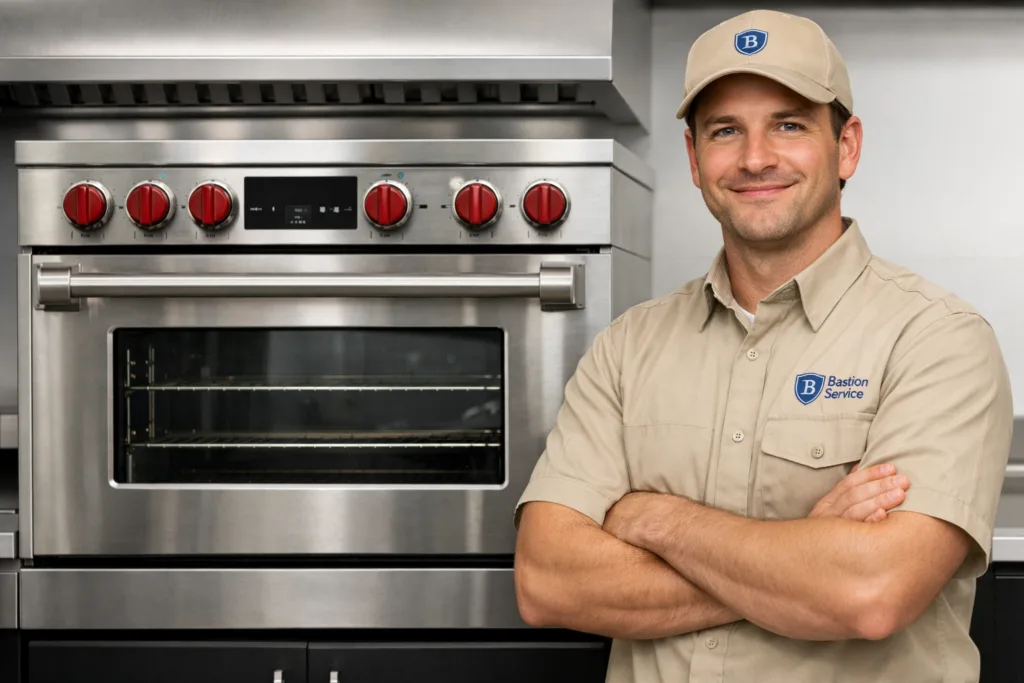




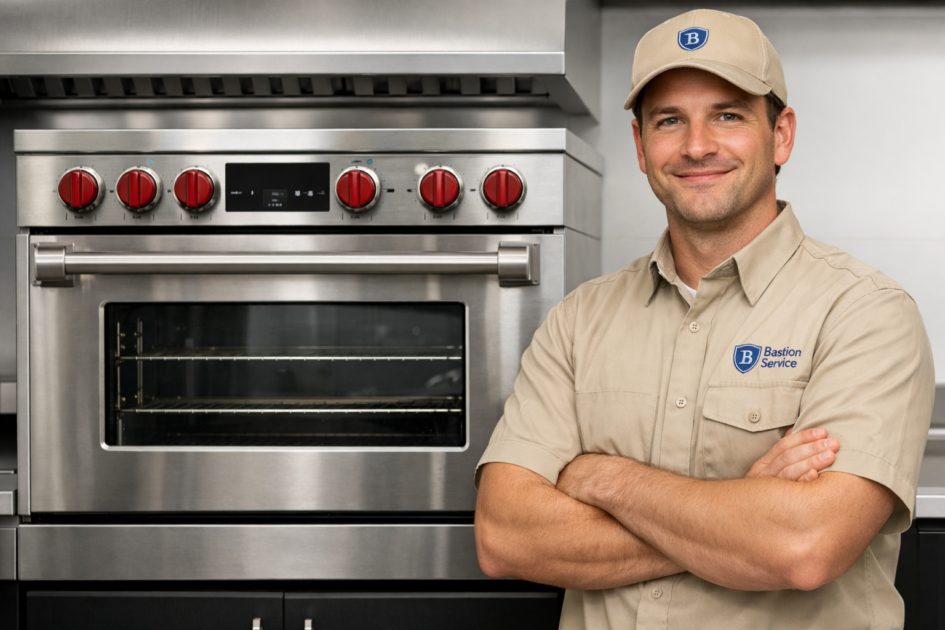
Oven problems can slow production long before a unit stops working completely. When a Wolf oven begins baking unevenly, running below set temperature, shutting off during use, or taking too long to recover between cycles, the issue needs to be evaluated in terms of downtime, food quality, and workflow disruption. For businesses in Brentwood, the most effective repair visit starts by matching the exact symptom pattern to the heating, ignition, sensing, airflow, or control system most likely causing the failure.
Related commercial service paths in Brentwood include Wolf Commercial Repair in Brentwood, Commercial Oven Repair in Brentwood, and Wolf Range Repair in Brentwood.
Service starts with the symptom, not a guessed part
A Wolf oven can still power on and look normal while producing inconsistent results. Staff may notice longer ticket times, uneven browning, slow preheat, or batches that need to be re-run. Those symptoms matter because they often point to a specific subsystem rather than a general decline in performance.
Bastion Service works with Brentwood businesses to identify whether the problem is isolated to one component or connected to a larger operating issue. That helps with repair scheduling, parts planning, and deciding whether the oven should remain in limited use or be taken out of rotation until service is completed.
Why ovens stop heating evenly or reaching set temperature
If a Wolf oven is not heating evenly or reaching the selected temperature, the cause is often tied to one of a few common failure points:
- Weak or failed heating components: When heat output drops, preheat slows down and cavity temperature may stall below the set point.
- Sensor drift or sensor failure: The control may receive inaccurate temperature feedback and cycle the oven incorrectly.
- Ignition-related faults: Gas units may struggle to ignite consistently, causing delayed heating or no heat at all.
- Control or relay problems: The oven may call for heat inconsistently, overshoot, or fail to maintain a stable cycle.
- Airflow issues in convection systems: Poor circulation can create hot and cold zones even when the oven appears to be running.
- Door seal or alignment problems: Heat loss from the door can make temperature complaints appear worse, especially during heavy use.
In a business setting, these faults show up as longer cook times, inconsistent product quality, and reduced confidence in daily output. The repair decision should be based on which system is failing and whether continued use could lead to added wear.
Common Wolf oven symptoms and what they usually mean
Slow preheat or no heat
An oven that takes too long to preheat or never reaches cooking temperature may have a failed igniter, weakened element, power issue, faulty relay, or control problem. If the display appears normal but the cavity is not heating correctly, testing has to confirm whether the oven is actually calling for heat and whether that heat is being produced and sustained.
Uneven baking or inconsistent results
When one pan finishes early and another lags behind, the problem may involve airflow, sensor accuracy, weak heat production, or heat loss around the door. Convection models are especially sensitive to fan and circulation issues, and those problems can be mistaken for calibration drift if the oven has not been properly diagnosed.
Temperature swings during use
If the oven overshoots, drops too far below target, or cycles erratically, the root cause may be a sensor fault, control board issue, relay failure, or intermittent electrical connection. This often affects consistency more than total heat output, which is why some kitchens notice quality complaints before they realize the oven is malfunctioning.
Intermittent shutdowns
An oven that stops mid-cycle, resets, or behaves unpredictably should be evaluated quickly. Intermittent faults are often linked to failing controls, wiring issues, overheating protection events, or components that break down only after the unit has been running under load. These are the kinds of problems that can worsen without warning during a busy shift.
Ignition problems
Delayed ignition, inconsistent burner operation, or repeated attempts to light can interrupt normal heating and create unreliable start-up behavior. In many cases, the problem is not limited to a single ignition part. Related checks may include burner operation, ignition sequence, wiring integrity, and control response.
When service should be scheduled
It is usually best to schedule repair once the symptom becomes repeatable, not after the oven fails completely. A unit that still works part of the time can be more disruptive than one that is clearly down, because it creates uncertainty in prep timing and output. If the oven is producing temperature complaints several times a week, tripping protection devices, shutting down unexpectedly, or extending cook times, service is already overdue.
Early repair can also prevent secondary damage. A door seal issue can overwork the heating system. A circulation problem can strain other components. A sensor fault can lead to unstable cycling that puts extra stress on relays and controls. Addressing the original cause quickly often keeps the repair smaller and more predictable.
What businesses in Brentwood should prepare before the visit
A more efficient service call usually starts with a short record of how the oven has been behaving. Helpful details include:
- Whether the problem happens during preheat, during cooking, or after extended use
- If the oven is running hot, cold, or unevenly
- Any recent shutdowns, error patterns, or breaker trips
- Whether the issue affects every cycle or only certain loads
- If staff have noticed ignition delays, unusual noises, or excess heat escaping from the door
These observations help narrow the fault faster and reduce guesswork. In a busy kitchen, that can make a real difference when planning around downtime.
Repair or replace?
Many Wolf oven issues are repairable when the failure is limited to a specific part or subsystem. Problems involving igniters, sensors, switches, relays, fan motors, elements, or door-related components often make sense to repair if the unit is otherwise in solid operating condition.
Replacement becomes more likely when the oven has frequent repeat failures, broader internal wear, chronic control issues, or repair costs that no longer support reliable daily use. For Brentwood businesses, the decision should be based not only on the immediate estimate but also on how often the unit has been interrupting service and how much risk remains after the repair.
Signs continued operation may increase repair cost
- Repeated overheating or failure to regulate temperature
- Erratic cycling that affects multiple batches
- Electrical stress, resets, or intermittent loss of power
- Persistent heat loss from worn gaskets or poor door closure
- Unstable convection performance that is getting worse over time
Once those symptoms are present, delaying service can turn a single-component repair into a larger parts and labor issue.
What a focused oven repair visit should accomplish
A useful service appointment should do more than confirm that the oven has a problem. It should identify the failure path, verify which operating systems are affected, and determine whether the current issue is likely to cause additional interruptions. That gives managers and kitchen teams a better basis for scheduling repairs and deciding how to handle production in the meantime.
If your Wolf oven in Brentwood is causing uneven baking, temperature instability, ignition trouble, slow recovery, or intermittent shutdowns, the next step is to have the unit inspected based on the exact symptoms it is showing. A service-oriented diagnosis helps reduce avoidable downtime, supports better repair decisions, and gets the equipment back into a more reliable operating condition.