
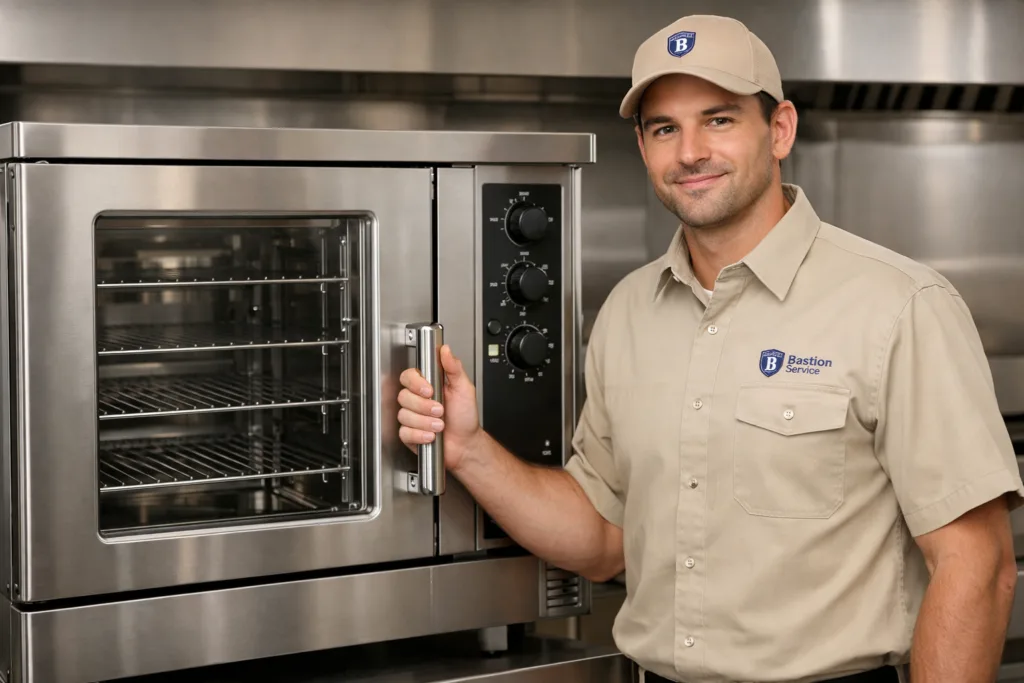




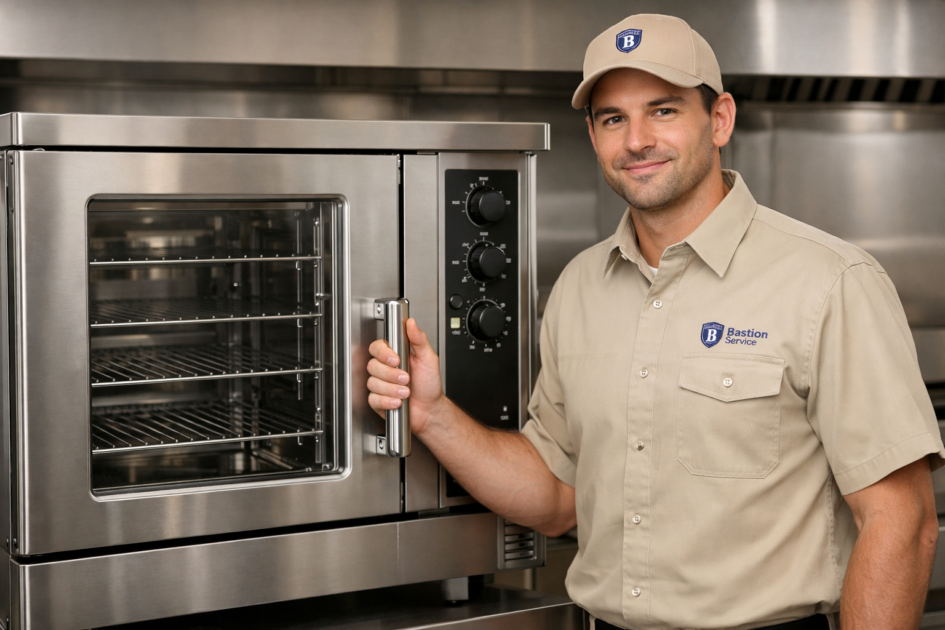
When a Blodgett oven starts heating unevenly, runs too hot, fails to recover between loads, or stops during service, the issue quickly affects food quality, timing, and kitchen output. For businesses in Brentwood, the most useful next step is service built around the actual symptom pattern, not guesswork. Similar complaints can come from very different causes, including ignition faults, sensor drift, airflow problems, control failures, or worn heating components, so testing the unit correctly matters before parts are approved or downtime is extended.
Related commercial service paths in Brentwood include Blodgett Commercial Repair in Brentwood, Commercial Oven Repair in Brentwood, and Southbend Oven Repair in Brentwood.
Bastion Service works with Brentwood businesses to diagnose Blodgett oven problems that interfere with production, consistency, and safe operation. Whether the oven is completely down or still running with unreliable results, service is most effective when it focuses on how the unit behaves through preheat, cycling, recovery, and full-load use.
Common Blodgett oven problems and what they often mean
Not heating or failing to reach set temperature
If the oven powers on but does not produce proper heat, possible causes depend on the model and fuel type. Common issues include a weak or failed igniter, temperature sensor problems, control board faults, relay or contactor failure, heating element issues, or a safety component preventing normal operation. In some cases, the oven heats partially but stalls below the target temperature, which can point to an intermittent component rather than a total failure.
This symptom matters because kitchens often try to work around it by extending cook times or increasing temperature settings. That can create inconsistent results and hide the actual problem until the unit stops heating altogether.
Uneven baking, hot spots, or inconsistent browning
When one side cooks faster than the other, pans need constant rotation, or different rack positions produce noticeably different results, the problem may involve airflow, circulation, door sealing, fan performance, or temperature feedback. On convection units, a fan motor that is weakening can change cooking performance before it completely fails. On deck or standard models, heat distribution problems may be tied to burner performance, calibration issues, or heat loss at the door.
What looks like a simple baking complaint can easily become a service issue with wasted product and slowed ticket flow. If staff are compensating every shift, the oven is no longer performing as it should.
Temperature swings, overshooting, or short cycling
An oven that overshoots the setpoint, cycles too frequently, or holds temperature poorly may have a faulty sensor, thermostat problem, control issue, or calibration drift. These problems are easy to underestimate because the oven still appears to be working. In daily production, though, unstable temperature control can affect batch consistency, increase energy use, and place extra strain on related components.
Erratic cycling is especially important to address when the oven seems fine during light use but struggles once the kitchen is busy. That pattern often points to a control or heat-management problem that only shows up under demand.
Ignition delays, lockouts, or mid-cycle shutdowns
If the oven starts inconsistently, requires repeated resets, or shuts down during operation, likely causes include ignition components, flame sensing, gas valve circuit issues, switches, or control faults. Intermittent shutdowns are disruptive because they make the oven unreliable even when it can still be restarted.
For a busy kitchen in Brentwood, that kind of failure can be harder to manage than a complete no-heat condition. Staff may waste time restarting the unit, adjusting production schedules, or shifting loads to other equipment while the root problem continues to worsen.
Slow preheat and poor temperature recovery
Slow warm-up or sluggish recovery between loads often signals declining heating performance, airflow issues, sensor inaccuracies, or heat loss from worn door components. Recovery problems tend to show up during peak service when the oven is opened often and expected to return to temperature quickly.
If the oven performs acceptably when idle but struggles during active use, that is a strong sign the unit needs diagnosis based on real operating conditions rather than a quick visual check alone.
Door, gasket, hinge, and latch wear
Worn door gaskets, poor alignment, weak hinges, or latch problems can reduce heat retention and affect bake quality. These are operational issues, not minor cosmetic concerns. Even a small gap at the door can lead to longer cook times, uneven product, and unnecessary strain on the heating system.
Structural wear is also worth addressing before it contributes to larger temperature complaints that seem electrical or gas-related but actually begin with heat escaping from the cavity.
Why accurate diagnosis matters before repair approval
Blodgett ovens can produce similar symptoms from different failures. An oven that will not reach temperature may have an ignition problem, a sensor problem, a control problem, or a heat-loss issue at the door. Uneven results may be caused by airflow, loading, circulation, or temperature regulation. Without proper testing, it is easy to replace the wrong part and still have the same complaint after service.
A focused diagnosis helps clarify whether the problem is isolated or part of a broader wear pattern. That matters for managers deciding how to schedule repairs, whether to keep the unit in rotation, and how to plan around downtime.
Signs it is time to schedule service
- The oven is not reaching the programmed temperature.
- Products are baking unevenly or requiring frequent pan rotation.
- Preheat times have become noticeably longer.
- The unit loses temperature after loading and recovers too slowly.
- The oven overshoots, short cycles, or holds heat inconsistently.
- Ignition is delayed, unreliable, or followed by shutdowns.
- Staff are adjusting cook times to compensate for poor performance.
- Door seals, hinges, or latches are visibly worn or affecting operation.
If any of these issues are recurring, the oven is already affecting workflow even if it has not failed completely. Scheduling service early is often the better decision when compared with waiting for a full outage during production hours.
When continued use can make the problem worse
Some ovens can continue running for a while with unstable temperatures, poor airflow, or worn door hardware, but continued use may increase wear on controls, heating components, and safety systems. In a kitchen environment, that also raises the risk of product loss, inconsistent quality, and avoidable delays.
If there is a persistent gas smell, stop using the oven and address that situation immediately through the appropriate emergency channel before arranging repair. If there is no gas odor but ignition behavior is inconsistent, the unit should still be inspected before being trusted for normal production.
Repair or replace?
Repair is often the practical choice when the oven is structurally sound, the failure is identifiable, and the unit still supports the kitchen’s production needs. Replacement becomes more likely when the oven has repeated breakdowns, multiple major components are failing together, or ongoing downtime is costing more than restoring the equipment is worth.
The right decision depends on condition, age, parts involved, and how important the oven is to daily output. A service assessment is useful because it separates a targeted repair from a broader pattern of decline.
What businesses in Brentwood should have ready before a service visit
- The model information if available.
- A short description of the main symptom.
- Whether the issue is constant or intermittent.
- Any error codes, lockout behavior, or reset pattern observed by staff.
- Whether the problem shows up during preheat, during a cook cycle, or under heavy load.
- Any recent changes in cooking results, recovery time, or door fit.
These details help narrow the diagnosis faster and make the service visit more productive, especially when the complaint only appears during certain parts of the day or under heavier use.
A service-focused approach to Blodgett oven repair in Brentwood
For businesses in Brentwood, oven repair is ultimately about restoring stable operation that supports consistent output and manageable scheduling. The best service approach confirms the exact failure, checks for related wear, and helps determine whether a targeted repair will return the unit to reliable use. If your Blodgett oven is affecting timing, product quality, or daily workflow, scheduling service before the problem spreads is usually the most practical next step.


