
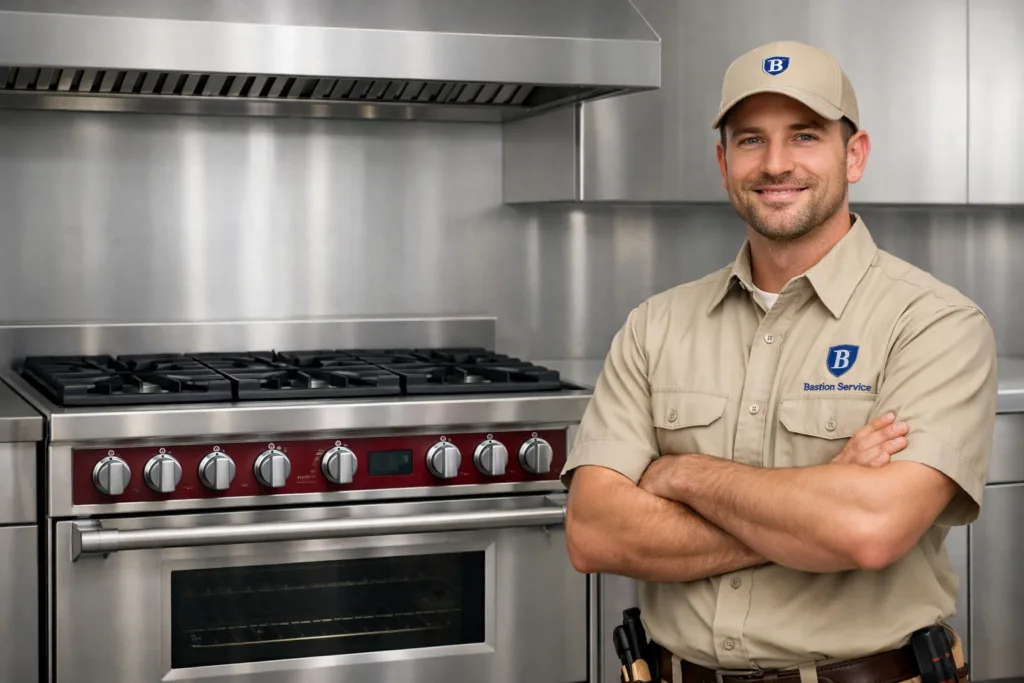




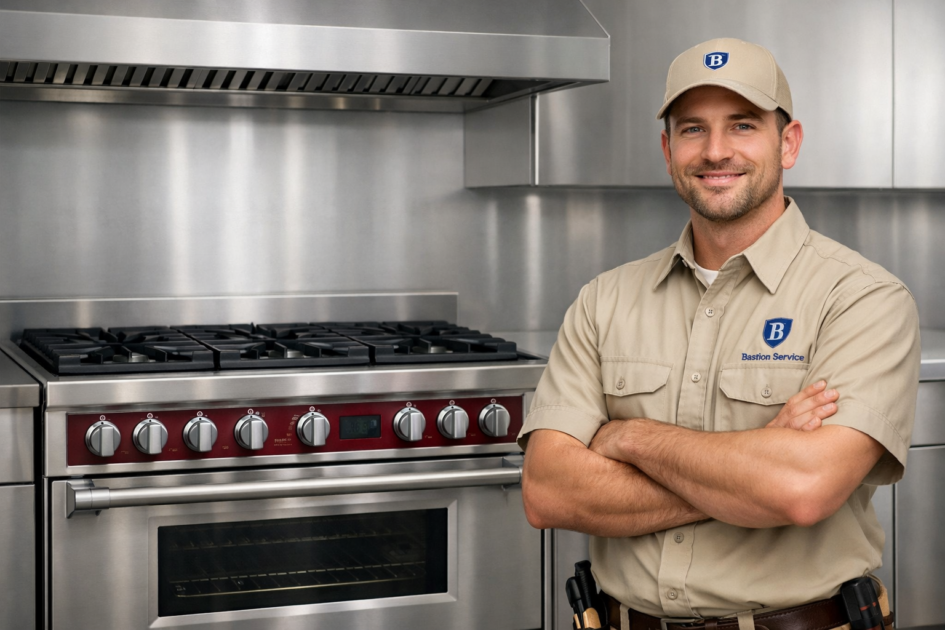
When Wolf cooking equipment begins missing temperature targets, failing to ignite, or shutting down in the middle of service, the priority is figuring out whether the problem is isolated, worsening, or likely to interrupt production again soon. For businesses in Brentwood, repair decisions usually come down to downtime risk, equipment role in daily output, and whether the symptom points to a part-level repair or a broader performance issue. Bastion Service provides Wolf cooking equipment repair for ovens, ranges, and fryers with service centered on diagnosis, scheduling, and the most practical next step for the equipment in front of you.
For specific equipment paths in Brentwood, review Wolf Oven Repair in Brentwood, Wolf Range Repair in Brentwood, and Wolf Fryer Repair in Brentwood.
What Wolf cooking equipment problems do you troubleshoot?
Wolf cooking equipment problems are often reported first as workflow complaints rather than technical faults. Staff may notice longer preheat times, uneven cooking, delayed burner response, unstable heat, or units that need repeated resets to stay running. Those symptoms can trace back to ignition components, thermostats, probes, controls, gas valves, burners, wiring, relays, safety circuits, or other operating parts depending on the equipment type.
The most common service calls in Brentwood involve:
- Ovens that bake unevenly, run too hot, run too cold, or take too long to recover
- Ranges with weak flame, burners that do not light consistently, or burners that drop out during use
- Fryers that struggle to maintain oil temperature or recover too slowly between batches
- Controls that stop responding, display erratic behavior, or trigger intermittent shutdowns
- Equipment that trips safeties, loses power unexpectedly, or behaves differently under load than it does at idle
These issues are not all equal in urgency, but they do tend to worsen service flow when left unresolved. A scheduled diagnosis helps determine whether the fault is limited to one component or part of a larger operating problem.
Symptom patterns that often point to repair needs
Temperature drift and uneven heating
When an oven cooks inconsistently or a fryer cannot hold the target temperature, output quality usually drops before the unit fails completely. Staff may start rotating pans, extending cook times, or compensating manually just to keep production moving. Temperature drift can come from sensor issues, control faults, calibration problems, burner performance loss, or heat-transfer limitations. The important question is not just whether the unit still heats, but whether it can hold stable performance during normal use.
Ignition trouble and burner inconsistency
Ranges and fryers with unreliable ignition often show warning signs before total failure. Burners may click repeatedly, light late, ignite unevenly, or go out after startup. In some cases, the issue is localized to one burner. In others, it points to gas-flow problems, flame-sensing faults, ignition wear, contamination, or control-related failures. Because burner issues can affect both output and safe operation, they should be evaluated before staff begin relying on workarounds.
Slow heat recovery during active production
Some equipment appears functional during startup but falls behind once service begins. A fryer may recover too slowly between batches, an oven may lose consistency during repeated cycles, or a range may struggle to maintain usable heat while multiple burners are in use. This type of complaint often matters more operationally than a simple on-off failure because it causes ticket delays, uneven results, and excess strain on other equipment. Slow recovery usually means the unit is no longer performing to the demands of real kitchen use.
Intermittent shutdowns and control faults
Unexpected shutdowns are especially disruptive because they are hard to predict and easy to misread as isolated events. If a Wolf oven, range, or fryer powers off, resets randomly, or stops responding to normal controls, the root cause may involve internal wiring, overheating, boards, safety devices, switch failure, or power-related issues. Intermittent faults often become repeat outages, so they are best addressed before the unit drops out at a peak service time.
How these problems affect business operations
Cooking equipment problems do not stay contained to the appliance itself. They affect prep timing, product consistency, staffing efficiency, and the ability to keep orders moving without disruption. In Brentwood, businesses often request service when the symptom has started causing delays rather than when the unit first behaved abnormally. By that stage, staff may already be changing cook times, avoiding certain burners, reducing batch sizes, or shifting work to backup equipment.
Those workarounds can keep service moving temporarily, but they also make it harder to judge how serious the fault has become. If operators are adjusting normal procedures to compensate for heat loss, ignition inconsistency, or shutdown behavior, repair scheduling is usually the better choice than waiting for a full outage.
When continued use may cause more disruption
Some problems mainly reduce efficiency. Others can increase wear, create product loss, or turn a manageable repair into a larger one. A fryer with unstable heat may affect food quality and recovery performance. An oven with drifting temperature can create repeat waste across multiple loads. A range with unreliable ignition may become increasingly difficult to use during rush periods.
It is usually time to stop treating the issue as minor when you notice:
- Repeated resets or restarts during the same day
- Burners that behave differently from one shift to the next
- Longer preheat times than staff consider normal
- Heat output that drops during peak use
- Shutdowns that clear temporarily and then return
- Performance changes that are spreading from one function to another
For gas-related symptoms, practical caution matters. If there is a persistent or strong gas odor, stop using the equipment and address the gas safety issue first before repair is scheduled.
Repair planning for ovens, ranges, and fryers
Not every service call leads to the same recommendation. Some faults are straightforward and involve replacing a failed ignition component, sensor, switch, thermostat, or burner-related part. Others raise bigger questions about equipment age, repeat service history, condition under load, and whether the unit is critical to daily production. The value of diagnosis is that it turns a symptom into a repair decision with clearer timing and fewer assumptions.
That matters most when the affected unit is central to operations. A primary fryer with poor recovery, an oven with unstable temperature control, or a range with multiple burner issues can have a larger impact than a secondary unit used only during rush periods. In those cases, repair planning is not only about restoring function. It is also about limiting repeat interruptions and deciding whether the current unit is still worth continued investment.
What to expect from a service visit
A useful service appointment should do more than confirm that the equipment is malfunctioning. It should connect the observed symptom to likely causes, evaluate how the unit performs in operating conditions, and help determine whether short-term use is realistic while repair is arranged. For Wolf cooking equipment, that process often includes checking heating behavior, ignition response, control function, shutdown patterns, and related components that may be contributing to the complaint.
If your oven, range, or fryer is slowing output, creating inconsistency, or forcing staff to work around unstable performance, scheduling repair is the practical next step. For businesses in Brentwood, timely diagnosis helps reduce avoidable downtime, supports smarter repair planning, and gives you a clearer path forward before the equipment problem disrupts another service window.


