
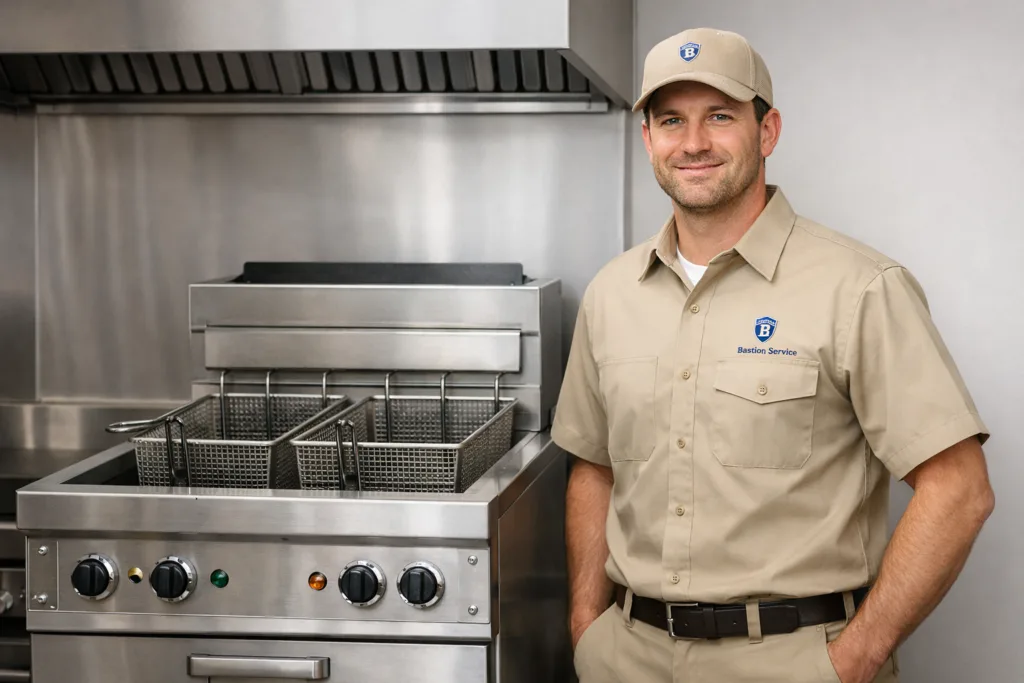




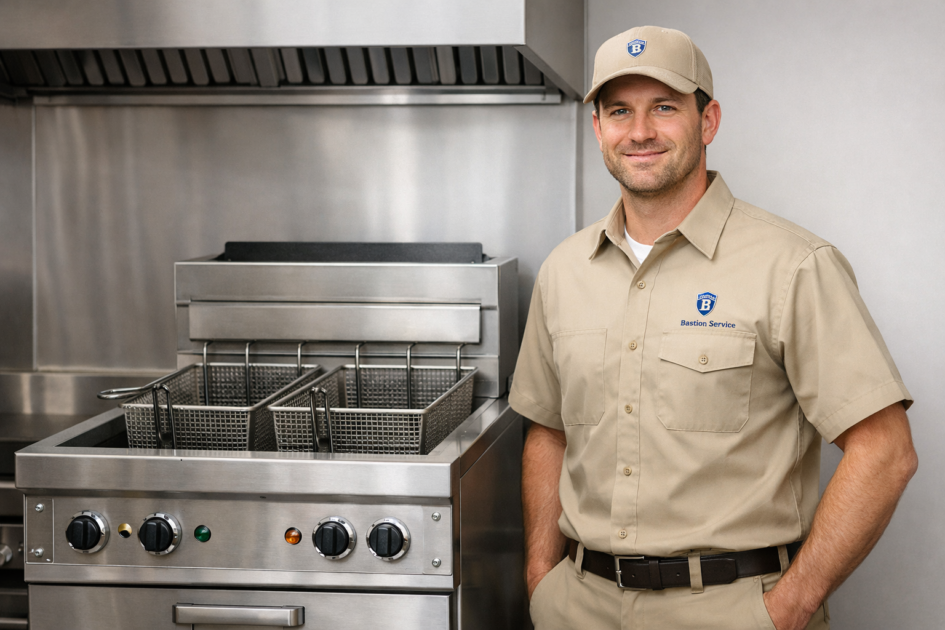
When a Pitco fryer starts missing temperature, cycling unpredictably, or failing to recover during service in Palos Verdes Estates, production slows quickly and food quality can slip with it. The most useful response is to service the exact symptom pattern instead of treating every heating complaint as the same problem. Bastion Service works with businesses in Palos Verdes Estates to identify whether the issue is tied to ignition, burner performance, controls, sensing components, gas flow, safety shutdowns, or wear that is now affecting daily output and scheduling.
Related commercial service paths in Palos Verdes Estates include Pitco Commercial Repair in Palos Verdes Estates, Commercial Fryer Repair in Palos Verdes Estates, and Frymaster Fryer Repair in Palos Verdes Estates.
For kitchens that rely on steady batch cooking, fryer trouble is rarely just an inconvenience. A unit that heats too slowly can delay prep. A fryer that overshoots or undershoots temperature can affect consistency from one basket to the next. A fryer that shuts down during a rush can interrupt ticket flow and force staff to shift production in ways that strain the rest of the line. That is why symptom-based repair matters: the right fix depends on what the fryer is doing before, during, and after it fails.
Common Pitco Fryer Symptoms and What They Can Mean
Not heating or not reaching set temperature
If the fryer will not heat at all, stalls below the target setting, or takes far longer than normal to get ready, several faults may be in play. The problem may involve ignition components, the temperature probe, a thermostat or control issue, gas valve performance, burner problems, or a safety device that is interrupting normal operation. In many kitchens, this first shows up as delayed opening work or a fryer that cannot keep up once production begins.
Slow recovery between batches
Recovery problems are especially disruptive because the fryer may appear functional at first, then fall behind under load. If oil temperature drops too far after a batch and takes too long to recover, staff may see longer ticket times, uneven product color, or pressure to reduce batch size just to maintain quality. Slow recovery can point to weak burner output, restricted gas flow, control problems, sensor issues, or buildup that is affecting heat transfer.
Oil temperature swings or inconsistent cooking
When the fryer runs too hot, too cool, or drifts noticeably around the set point, the result is inconsistent product and harder station management. This kind of issue may be caused by a failing probe, control calibration drift, thermostat-related trouble, or burner operation that is not staying stable through the cycle. If one load comes out correct and the next does not, the fryer needs attention before inconsistency becomes routine.
Ignition failure, burner dropout, or repeated restart attempts
A Pitco fryer that will not ignite reliably, loses flame, or requires repeated restart attempts should not be treated as a minor nuisance. Ignition complaints can involve the pilot system, flame sensing, ignition hardware, gas delivery components, airflow conditions, or safety circuit interruptions. Even if the fryer eventually starts, intermittent ignition usually worsens over time and can turn into complete downtime without much warning.
High-limit trips and sudden shutdowns
If the fryer shuts off mid-shift or repeatedly trips a safety limit, the equipment is signaling a condition that should be diagnosed rather than reset and ignored. Overheating, temperature sensing faults, control failure, airflow issues, or burner problems can all contribute to this type of shutdown. Repeated high-limit events are especially important because they affect both uptime and safe operation.
Leaks, residue, or unusual operating sounds
Oil around fittings, residue where it should not collect, or unusual noise during operation can indicate worn seals, line issues, valve trouble, heat-related stress, or other component wear. These symptoms do not always stop production immediately, but they often point to problems that become more expensive once they spread to additional parts or force unplanned downtime.
Why the Same Symptom Can Lead to Different Repairs
One of the more frustrating parts of fryer service is that the visible complaint is not always the failed part. A fryer that will not maintain temperature might have a sensor problem, but it might also be suffering from poor burner performance, a control fault, or a safety condition that is interrupting the cycle. A fryer that appears to have an ignition issue may actually be dealing with unstable gas delivery or a problem in the safety chain.
That is why diagnosis comes before parts replacement. Targeted testing helps determine whether the unit needs an adjustment, a specific component repair, or a broader recommendation based on overall condition. For businesses in Palos Verdes Estates, this approach helps reduce repeat calls and limits the risk of replacing parts that were never the root cause.
Signs Your Kitchen Should Schedule Service Soon
Some fryer problems are obvious, such as no heat or complete shutdown. Others build gradually and are easier to miss until output is affected. It is usually time to schedule service when you notice:
- Longer preheat times at opening
- Recovery that is slower than normal during active production
- Food finishing lighter, darker, or less evenly than expected
- Frequent manual restarts or pilot relighting attempts
- One vat behaving differently from the other
- Safety trips or unexplained shutdowns
- Staff adjusting workflow just to keep the fryer usable
These are not just minor annoyances. They are often early warnings that the fryer is no longer operating the way it should under normal kitchen demand.
How Symptom Patterns Help Narrow the Problem
Good repair decisions usually come from understanding when the failure occurs. If the fryer struggles only at startup, attention may go in a different direction than if it heats normally but loses performance after repeated batches. If shutdowns happen only after extended use, heat-related component stress or sensing issues may be more likely. If temperature complaints are worse during heavy production, burner output and recovery performance become more important to evaluate.
Useful details for service scheduling include whether the fryer fails cold or hot, whether the issue affects one vat or both, whether the display or controls show abnormal behavior, and whether the problem is constant or intermittent. Even simple observations from staff can help narrow the path to repair and shorten downtime.
Repair or Replacement: What Usually Drives the Decision
Many Pitco fryer issues can be resolved with focused repair when the fault is isolated and the rest of the unit remains in solid working condition. If stable heating, reliable ignition, and normal recovery can be restored without broader concerns, repair is often the efficient move. That is especially true when the fryer still fits the kitchen’s workflow and capacity needs.
Replacement becomes more likely when multiple failures begin stacking up, reliability has dropped over time, or the fryer has reached a point where recurring shutdowns are affecting staffing, production planning, and food consistency. For operators in Palos Verdes Estates, the real question is usually not just part cost but whether the unit can return to steady service without becoming a continuing source of disruption.
What to Do Before the Service Visit
Before scheduling repair, it helps to gather a few practical details so the problem can be assessed more efficiently:
- Note whether the fryer has no heat, slow heat, poor recovery, or temperature swings
- Record when shutdowns or ignition failures tend to occur
- Identify whether the issue is affecting one vat or the whole unit
- Let staff describe any workarounds they have been using
- Pause use if the fryer is shutting down repeatedly or operating unsafely
The more specific the symptom history, the easier it is to connect the complaint to likely failure points and move toward the next workable repair step.
Service Support for Pitco Fryers in Palos Verdes Estates
When a fryer is affecting throughput, cook quality, or safe operation, waiting usually increases the cost of the interruption. Service for Pitco fryers in Palos Verdes Estates should focus on what the unit is doing under real kitchen conditions, what that pattern suggests, and whether repair will restore reliable operation. If your fryer is not heating properly, recovering too slowly, swinging in temperature, failing to ignite, or shutting down during use, scheduling diagnosis early is the best way to limit downtime and make a sound repair decision.


