
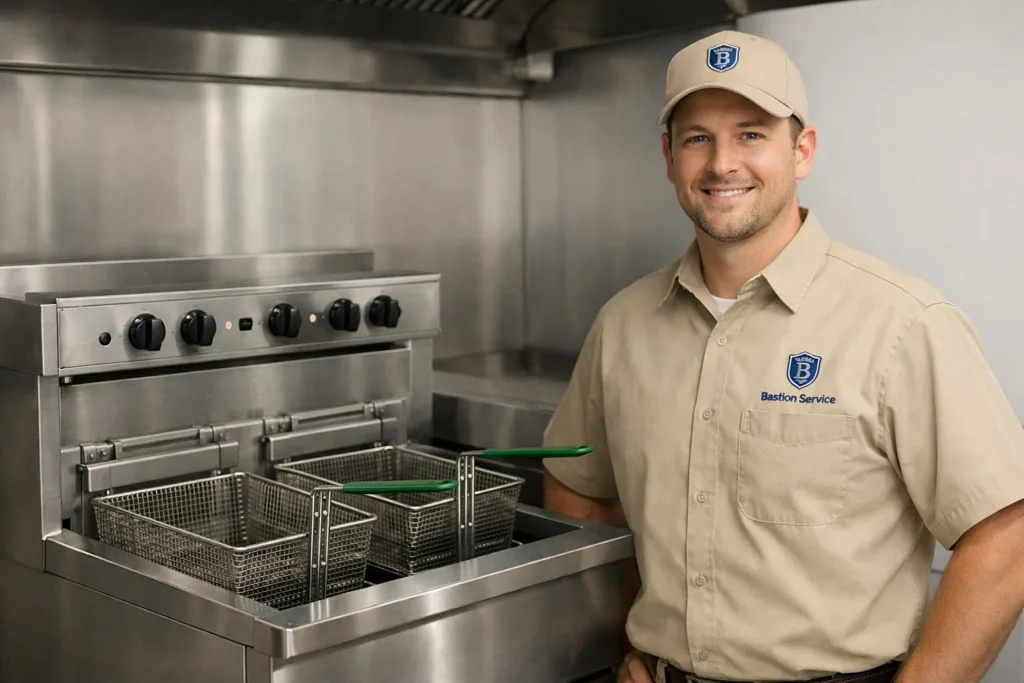




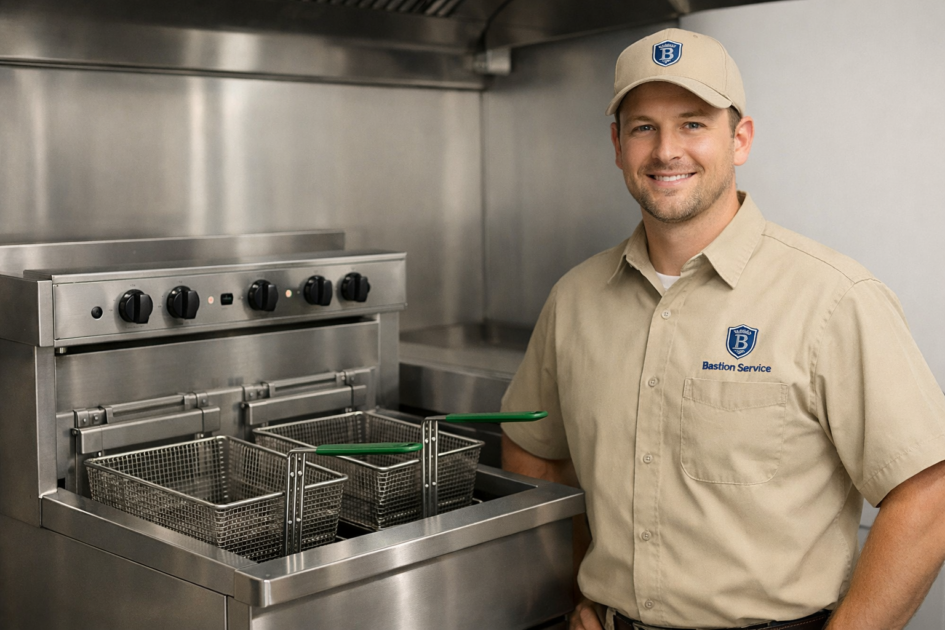
Fryer problems rarely stay isolated for long. A Wolf unit that starts missing set temperature, dropping out during production, or taking too long to recover between batches can affect ticket flow, product consistency, oil life, and staffing rhythm across the kitchen. In Los Angeles, the most useful repair visit starts with symptom-based testing so the fault is tied to the actual operating problem before parts are recommended or downtime stretches further.
Related commercial service paths in Los Angeles include Wolf Commercial Repair in Los Angeles, Commercial Fryer Repair in Los Angeles, and Wolf Oven Repair in Los Angeles.
Bastion Service works with businesses that need Wolf fryer repair based on what the equipment is doing in real use: no heat at startup, weak recovery under load, unstable oil temperature, shutdowns, ignition trouble, or controls that do not respond the way they should. Good service planning starts with the pattern of failure, when it happens, and how the fryer behaves before, during, and after a batch.
Why a Wolf fryer may stop heating or recover temperature too slowly
No-heat and slow-recovery complaints can look similar from the outside, but they often point to different failures. A fryer that does not heat at all may have a power supply problem, failed heating component, ignition fault on gas models, tripped high-limit, control issue, or an interruption in a safety circuit. A fryer that heats somewhat but cannot keep up usually needs deeper testing to determine whether the problem is related to heat output, sensing, control response, gas delivery on applicable units, or wear that is affecting normal operation.
Recovery problems are especially disruptive because they tend to appear during the busiest periods. Staff may notice longer cook times, uneven color, oil that seems to lag behind the set point, or a fryer that needs extra time between baskets. Those signs usually mean the equipment should be evaluated before the issue grows into a full outage.
Common Wolf fryer symptoms and what they can mean
No heat at startup
If the fryer will not begin heating, the cause may involve the control system, ignition sequence, heating circuit, limit protection, wiring, or incoming power. On some calls, the fryer appears completely inactive. On others, the control may respond while the heating function never starts. That difference matters because it helps narrow where the failure is occurring.
Slow heat-up and weak recovery
When the oil eventually reaches temperature but does so slowly, or drops too far after each batch, the unit may be losing heating efficiency or failing to regulate correctly under demand. This often affects throughput first. Kitchens may compensate by changing timing, reducing batch size, or rotating production to other equipment, but those workarounds usually signal that repair should be scheduled soon.
Oil temperature swings
Wide temperature variation can lead to overcooked product, undercooked product, darker oil, and inconsistent results from shift to shift. Possible causes include a sensor issue, thermostat or control fault, unstable cycling, or a limit device reacting to abnormal temperature behavior. When staff start adjusting settings repeatedly just to get usable output, that is usually a sign the fryer is not regulating correctly.
Burner or ignition problems
On gas configurations, ignition trouble may show up as delayed heating, failure to light, intermittent burner operation, or shutdowns that happen after startup. These issues require careful diagnosis because the visible symptom may be caused by more than one point in the ignition or safety chain.
Intermittent shutdowns
A fryer that runs for part of the shift and then cuts out can be harder to diagnose than a full no-start condition. Heat-related shutdowns, control failure, unstable connections, safety interruptions, and ignition loss can all produce an intermittent pattern. Details such as whether the shutdown happens during warm-up, during recovery, or after extended use help make the service call more efficient.
Leaks and drain-related issues
Oil leaks, valve problems, and drainage issues should be addressed promptly. Even a minor leak can create floor hazards, sanitation concerns, and avoidable wear around nearby components. If the fryer is difficult to drain or clean properly, routine maintenance becomes harder and daily operation becomes less predictable.
Why symptom-based diagnosis matters
Fryers rely on several systems working together: heat generation, sensing, control response, safety protection, and stable electrical or gas operation. One failed function can create a symptom that looks like another. For example, poor temperature control can be mistaken for a heating issue, and an intermittent safety interruption can look like a control board failure. That is why service should focus on verifying the actual failed function instead of replacing parts based only on the first visible sign.
For restaurants, hotels, and other food-service businesses in Los Angeles, this approach helps reduce repeat service calls and unnecessary downtime. It also provides a better basis for deciding whether the repair is straightforward, whether related components have been affected, and whether the unit is still a strong candidate for continued use.
When to schedule repair service
It is usually time to schedule service when the fryer begins showing repeat symptoms, even if it still operates part of the time. Partial operation can be more disruptive than a complete failure because it creates uncertainty during production and makes output harder to manage.
- The fryer needs resets to continue running.
- Cook times have changed without a menu or procedure change.
- Oil temperature drifts above or below the set point.
- The unit struggles to recover after normal batch loads.
- The burner or ignition sequence is inconsistent.
- The fryer shuts down unexpectedly during use.
- Leaks, drain problems, or unusual control behavior are becoming more frequent.
Addressing these issues early usually limits disruption and helps avoid a breakdown during active service hours.
When continued use can make the problem worse
Running a fryer with unstable heat, erratic cycling, repeated shutdowns, or visible leaks can increase strain on controls, heating components, and safety devices. It can also make diagnosis harder later if the original failure causes secondary damage. If the unit is overheating, failing to regulate properly, or creating inconsistent cooking results that affect normal output, it should be evaluated before being pushed through another busy shift.
If a gas-equipped fryer has a persistent or strong gas odor, stop using it and follow site safety procedures immediately before arranging appliance repair.
Repair versus replacement decisions
Many Wolf fryer issues are repairable when the failure is limited to a specific component or operating circuit and the rest of the equipment remains in solid condition. Repair tends to make sense when the fryer has been reliable overall, the current fault can be isolated, and the expected result supports stable daily use afterward.
Replacement becomes a more serious consideration when there are repeated breakdowns, multiple major systems involved, broad wear across the unit, or a service history that suggests more interruptions are likely. The real question is not only whether the fryer can be repaired, but whether the repair supports reliable output for the business after the work is completed.
How to prepare for a Wolf fryer service visit
A few details from the staff can make the diagnosis faster and more accurate. It helps to note when the problem started, whether it happens at startup or under load, if the fryer loses heat completely or only drifts, and whether the issue affects every shift or only certain times of day. Information about recent resets, unusual noises, visible leaks, ignition trouble, or changes in cook performance can also help narrow the cause.
If possible, be ready to describe:
- Whether the fryer fails cold, after warm-up, or during back-to-back batches
- How long heat-up is taking compared with normal operation
- Whether the problem is constant or intermittent
- Any recent shutdowns, error behavior, or limit trips
- Changes in product consistency, oil condition, or production pace
Service support for Los Angeles kitchens
Businesses in Los Angeles often need fryer repair that fits around prep schedules, service windows, and the realities of high-use kitchen equipment. When a Wolf fryer starts affecting output, the next step is usually to schedule diagnosis before the symptom becomes a full stoppage. A focused service call should identify what is failing, explain how serious the issue appears to be, and help the business decide whether to move forward with repair now, limit use temporarily, or plan for a larger equipment decision.





