
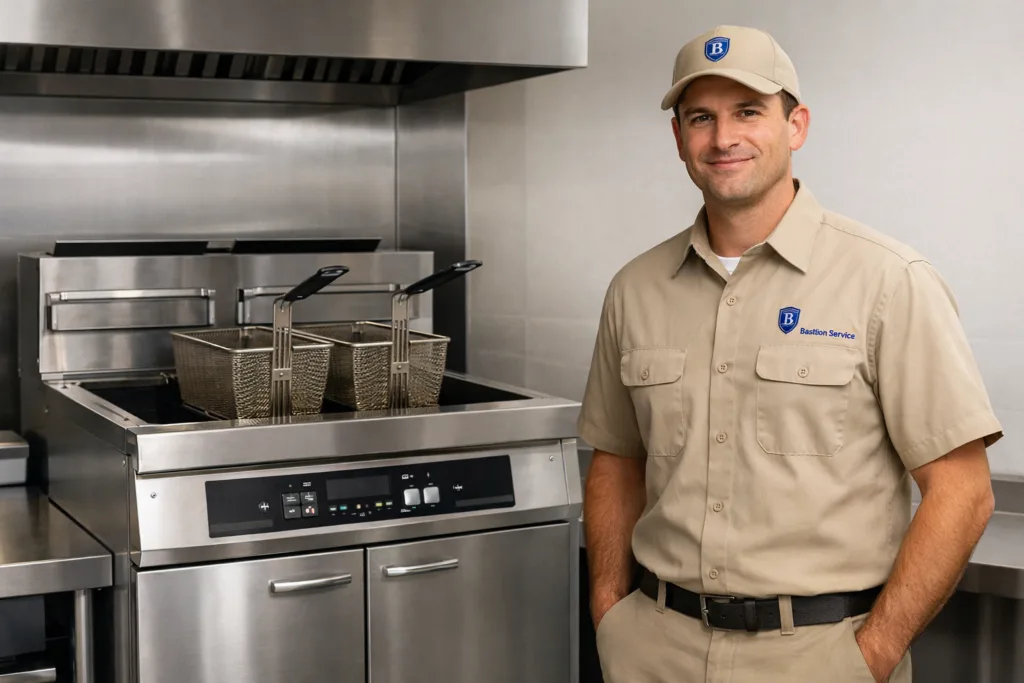




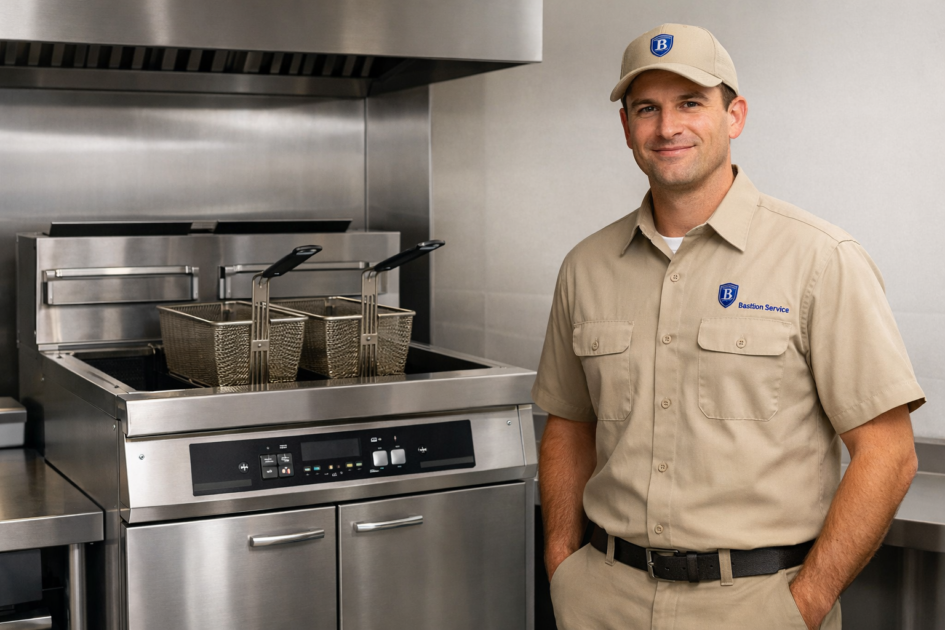
Fryer problems tend to escalate at the worst time: during prep, at opening, or in the middle of a rush when recovery speed and temperature consistency matter most. If a Frymaster unit is heating slowly, shutting down, or drifting away from the set temperature, service should focus on the actual failure pattern so the repair addresses the cause instead of only the symptom. For restaurants, cafeterias, commissaries, and other food-service operations in Los Angeles, that means scheduling repair based on how the fryer is behaving in real kitchen conditions and how that downtime is affecting output.
Related commercial service paths in Los Angeles include Frymaster Commercial Repair in Los Angeles, Commercial Fryer Repair in Los Angeles, and Pitco Fryer Repair in Los Angeles.
Bastion Service handles Frymaster fryer issues with attention to heating performance, control behavior, safety-related shutdowns, and the kinds of operating problems that disrupt daily production. The goal is to determine why the fryer is not performing normally, what repair makes sense, and how quickly the unit can be returned to stable use.
Common Frymaster Fryer Symptoms That Point to Service Needs
Not heating at all
If the fryer will not heat, the problem may involve ignition, a high-limit trip, a temperature control fault, a gas valve issue, an electrical supply problem, or a failed heating component on electric models. From an operations standpoint, the symptom looks simple, but the repair path can be very different depending on whether the failure is in the control circuit, the heat source, or a safety device stopping operation.
Slow recovery between batches
When the fryer heats up but cannot recover properly after product is dropped, kitchens usually notice it first through longer ticket times, uneven browning, or staff reducing load size to compensate. Poor recovery can be tied to weak burner performance, heating element problems, sensing drift, control issues, or buildup that interferes with normal heat transfer. This symptom matters because it affects throughput even when the fryer appears to be running.
Oil temperature swings
A fryer that runs too hot or too cool can create product inconsistency, shorten oil life, and force crews to adjust cook times just to maintain results. In many cases, temperature instability points to a sensor, thermostat, relay, contactor, or control-related issue. If the unit overshoots or undershoots repeatedly, that is usually a repair issue rather than something staff should manage around.
Ignition failure or repeated lockouts
Repeated ignition attempts, intermittent startup failure, or lockout behavior often signals a fault in the ignition sequence, flame sensing, gas flow, or a related safety condition. These problems can appear random from the line, but they usually follow a pattern that shows up during startup, reheating, or heavier use. Once a fryer starts locking out regularly, service is usually more cost-effective than repeated resets.
Unexpected shutdowns during operation
If the fryer shuts off mid-cycle or drops out of operation without a clear reason, the cause may involve overheating protection, control faults, unstable power, or an intermittent component that fails under load. These shutdowns can be especially disruptive because they affect both food timing and kitchen planning. A fryer that restarts after cooling down still needs repair if the shutdown condition keeps returning.
Leaks, seepage, or visible wear
Oil around fittings, valves, drain components, or nearby surfaces should be evaluated promptly. Some leaks come from serviceable parts, while others raise concern about more significant wear. Even when the leak seems minor, it can create cleanup issues, waste oil, and increase risk around the fryer station.
Why Fryers Stop Heating or Recovering Properly
One of the most common service calls is a Frymaster fryer that does not get hot enough or takes too long to return to cooking temperature. That symptom can come from more than one source. A heating problem may be caused by weak burner output, a failed heating element, a control that is cycling incorrectly, a temperature probe sending inaccurate readings, or a safety-related issue limiting normal operation.
In a busy kitchen, poor recovery often shows up before total failure. Staff may notice that the fryer struggles after a basket drop, takes too long to come back to setpoint, or produces inconsistent batches even though the control appears normal. Those are strong signs that the equipment should be checked before the next peak service period.
What Diagnosis Should Confirm Before Repair Begins
Fryer symptoms overlap, which is why diagnosis matters before parts are replaced. A unit that will not ignite may have a gas-side issue, a sensor issue, or a control problem. A fryer that cannot hold temperature may have a heating fault or a bad reading from the component that tells the control when to cycle. Looking only at the most obvious symptom can lead to unnecessary downtime and repeat calls.
A useful service visit should confirm the complaint, observe startup and heating behavior, inspect safety controls, and determine whether the issue is isolated or part of broader wear. For a kitchen manager, the important outcome is knowing what failed, whether the repair is likely to restore stable operation, and whether continued use before service creates additional risk.
Signs the Fryer Should Be Scheduled Soon
- The unit needs repeated resets to keep running.
- Recovery slows noticeably during busy periods.
- Food color or cook consistency changes without a menu change.
- The fryer overshoots temperature or struggles to reach setpoint.
- Error displays or shutdowns happen more than once.
- Staff are compensating by changing load size, cook time, or temperature settings.
- Oil leaks or seepage are appearing around the fryer base or fittings.
These are not just performance annoyances. They usually indicate that the fryer is no longer operating predictably, which can affect output, oil cost, and line coordination.
When Continued Use Can Make the Problem Worse
Some fryer issues allow limited operation until service is scheduled, but others should be addressed before the unit is pushed through another shift. Continued use can worsen the situation when the fryer overheats, cycles erratically, shuts down without warning, fails to recover after small loads, or shows signs of electrical or control instability. In those cases, the original problem can turn into added stress on ignition, switching, sensing, or heat-related components.
For Los Angeles kitchens trying to maintain pace, the practical question is whether the fryer is still predictable enough to support service without creating more disruption. If it is affecting food timing, product quality, or safe operation, prompt repair is usually the better decision.
Repair or Replace?
Many Frymaster fryer problems are repairable, especially when the issue is limited to controls, probes, ignition components, valves, relays, contactors, wiring, or other serviceable parts. Repair is often the right choice when the fryer’s core structure is sound and the fault is clearly defined.
Replacement becomes a more serious consideration when the unit has repeated reliability problems, multiple major failures at the same time, or wear severe enough to change the value of continued repair. The main point is not to guess. A symptom-based diagnosis helps separate a repairable failure from a larger equipment decision.
What to Have Ready Before the Service Visit
To speed up troubleshooting, it helps to note when the problem occurs and what the fryer is doing at that moment. Useful details include whether the issue happens at startup, after idling, during recovery, only under heavy use, or after the fryer has been running for a while. Error messages, unusual sounds, recurring shutdown patterns, and visible leaks also help narrow the cause more quickly.
If staff have already noticed workarounds such as lowering batch size, increasing cook time, or restarting the fryer to get through service, that information is worth sharing because it often points directly to the operating condition causing the fault.
Service-Oriented Next Steps for Los Angeles Kitchens
When a Frymaster fryer is no longer heating correctly, recovering on pace, or holding stable temperature, the next step is to schedule repair before the issue disrupts another shift. The most helpful service outcome is a clear explanation of the failure, the repair needed to correct it, and what that means for near-term uptime. For kitchens in Los Angeles, timely fryer service is about restoring reliable production, reducing avoidable downtime, and getting the unit back to work with predictable performance.


