
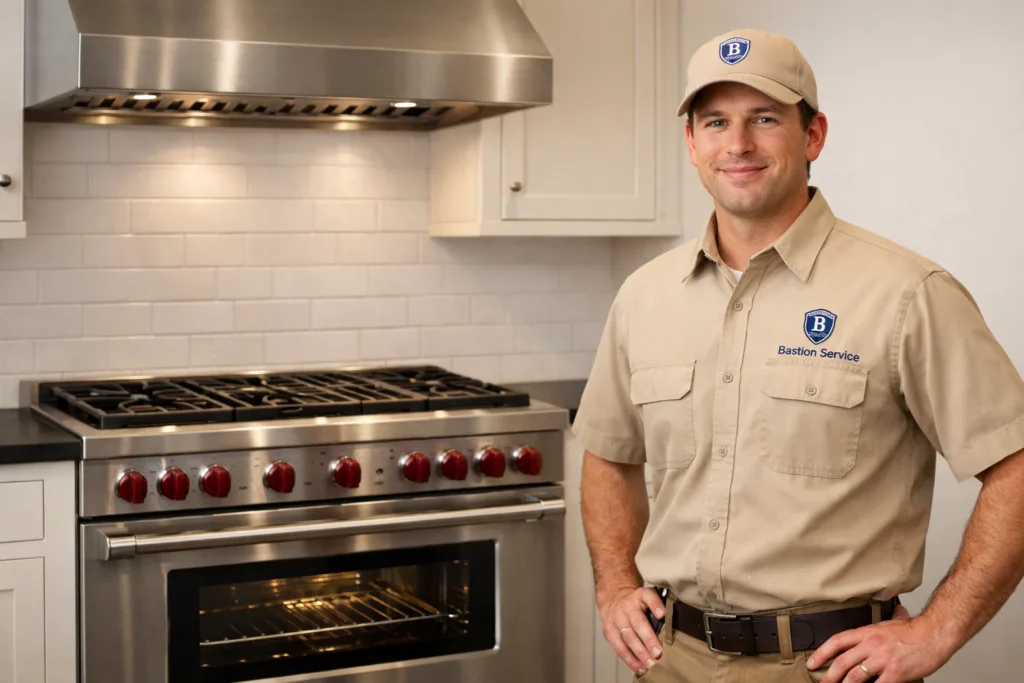




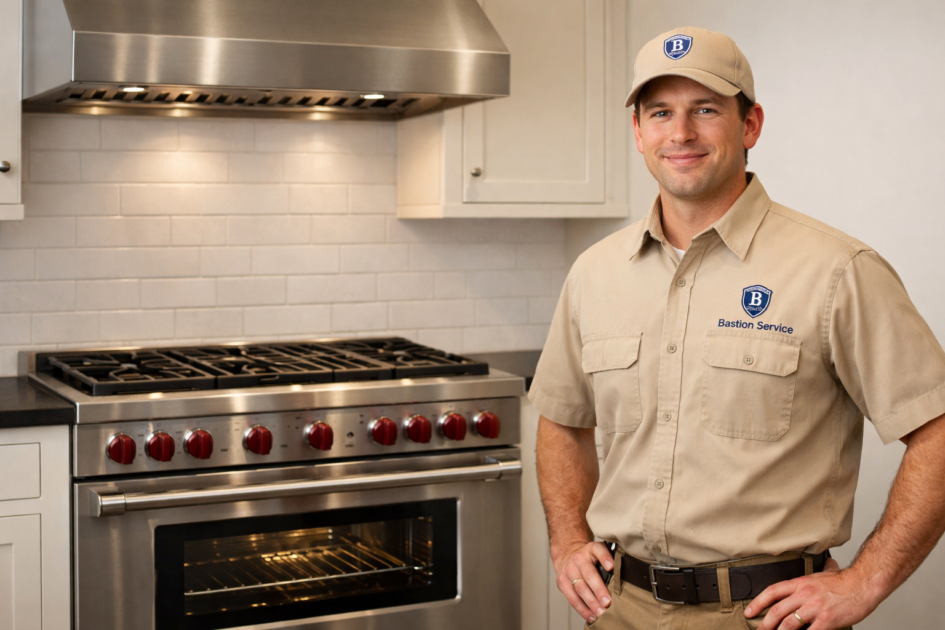
Wolf cooking appliances are built for precision, so even a small change in performance can affect everyday use. A burner that keeps clicking, an oven that drifts off temperature, or a range that preheats too slowly may all point to repairable faults, but the symptom alone does not reveal the full cause. What matters most is how the problem shows up, whether it is consistent, and whether the appliance is still operating safely.
For specific Wolf appliance paths in Brentwood, review Wolf Oven Repair in Brentwood, Wolf Wall Oven Repair in Brentwood, and Wolf Range Repair in Brentwood.
Start with the symptom pattern
Many household cooking problems look simple at first but can come from different failures underneath. For example, an oven that is not heating properly may involve an igniter, sensor, element, relay, or electronic control issue depending on the model and the way the failure presents. A surface burner that will not light may be dealing with moisture or residue, but it can also point to ignition or switch-related trouble.
That is why the most useful first step is to pay attention to the pattern. Does the problem happen every time or only sometimes? Is one burner affected or several? Does the oven eventually reach temperature, or does it stay noticeably cool? These details help separate a minor issue from a larger control or heating problem.
Cooktop and range problems homeowners often notice first
Clicking burners that do not ignite normally
One of the most common complaints on a Wolf cooktop or range is repeated clicking with delayed or failed ignition. In some homes, this starts after a spill or deep cleaning. In others, it shows up without any obvious trigger. If one burner is acting up while the others work normally, the problem may be localized. If multiple burners are affected, the issue may involve shared ignition components or controls.
Occasional clicking after cleaning can sometimes dry out and resolve, but persistent ignition problems should not be ignored. If there is a noticeable gas odor or the burner repeatedly fails to light, stop using the appliance until the issue is evaluated.
Weak, uneven, or unstable burner flame
A healthy gas flame should look consistent and respond predictably to setting changes. When flame height seems weak, uneven, or unreliable, cooking results can become harder to control. Restricted burner ports, ignition alignment problems, or gas flow issues can all affect burner performance. Homeowners may also notice that pots take longer to heat or that simmer settings no longer behave the same way.
Surface cooking works, but oven performance does not
With a Wolf range, it is possible for the cooktop portion to work normally while the oven section develops a separate problem. That usually suggests the appliance is not experiencing a total failure, but rather an issue in one specific system. If burners operate correctly and the oven does not preheat, bakes unevenly, or shuts off unexpectedly, the fault is often isolated to the oven side of the range.
Controls that respond inconsistently
If settings do not respond as expected, displays behave erratically, or temperatures seem to change without explanation, the problem may be tied to control components rather than the heat source alone. This can show up as delayed response, interrupted cooking cycles, or operation that feels unpredictable even though the appliance still powers on.
Common Wolf oven and wall oven symptoms
Slow preheating or no heat
An oven that takes far too long to preheat or never gets hot enough for normal cooking usually has a problem somewhere in the heating circuit. In practical terms, homeowners often notice this when recipes suddenly run long, preheat alerts seem inaccurate, or the cavity stays cooler than expected. The cause depends on the model and whether the oven is partially heating or not heating at all.
Uneven baking and temperature drift
When one side of a tray browns faster than the other, dishes need extra time for no clear reason, or familiar recipes start producing inconsistent results, temperature regulation becomes the main concern. In some cases, the oven is heating, but not maintaining the correct temperature throughout the cycle. That can make the appliance seem functional even while performance continues to worsen.
Hot spots, overcooking, or undercooking
Not every oven complaint feels like a failure to heat. Some problems appear as food that burns on top while staying underdone inside, baked goods that collapse, or meals that require constant checking and adjustment. These are often signs that the oven is no longer cycling heat the way it should. A unit that overshoots temperature can be just as frustrating as one that never reaches it.
Door and seal issues
If the oven door does not close firmly or the seal is no longer holding heat properly, the appliance may struggle to maintain stable cooking conditions. Heat loss can lead to longer cook times, poor browning, and added strain during preheating. Even when the heating system itself is still working, a door-related problem can change overall performance in a noticeable way.
Display or cycle interruptions
Wall ovens and full ovens can also develop issues that interrupt normal use without a complete heating failure. A blank or inconsistent display, controls that stop mid-cycle, or cooking programs that do not finish properly can all point to electrical or control-related faults. These symptoms are especially frustrating because the appliance may appear to work one day and fail the next.
When it makes sense to stop using the appliance
Some problems are inconvenient but stable for a short period. Others can worsen quickly with continued use. Repeated ignition failures, major temperature swings, or signs that the appliance is overheating should be taken seriously. If a burner is not lighting reliably, if the oven is performing far outside normal temperature, or if operation no longer feels predictable, it is usually better to pause use than to keep pushing through daily cooking.
Safety matters most with gas ignition complaints and any issue involving unusual smells, repeated failed starts, or controls that do not respond normally. In those situations, evaluation should come before another attempt at regular use.
Repair versus replacement depends on the whole picture
Many Wolf appliance problems are worth repairing when the fault is limited and the appliance is otherwise in good condition. A single failed component can create a major performance problem while still leaving the rest of the unit sound. That is often why early symptom review matters so much.
Replacement becomes a more realistic discussion when there are multiple system issues, recurring problems that have returned after prior work, or overall wear that no longer supports a sensible repair path. The key is to avoid assuming the worst based on one symptom. A dramatic complaint can still come from one failed part, while a vague complaint can sometimes reveal broader wear across the appliance.
What to note before scheduling service in Brentwood
Homeowners can make the repair process more efficient by noting a few simple details before service is scheduled. Helpful observations include:
- Whether the issue affects one burner or all burners
- Whether the oven fails completely or just runs at the wrong temperature
- Whether the problem is constant or intermittent
- Whether the symptom began after cleaning, a spill, or a power interruption
- Whether error behavior, unusual noises, or delayed ignition have become more frequent
These details can help narrow the likely cause faster and reduce guesswork during diagnosis.
Why brand-specific experience matters with Wolf cooking appliances
Wolf cooktops, ovens, ranges, and wall ovens are designed for performance, but that also means small faults can show up in ways that are easy to misread. A temperature complaint may not be a simple heating issue. An ignition complaint may not begin at the burner cap alone. Looking at the exact appliance category and how the symptom behaves is often more useful than assuming all cooking problems follow the same repair path.
For homeowners in Brentwood, the best next step is usually to have the appliance evaluated based on what it is actually doing in the kitchen. That approach helps determine whether the issue is isolated, whether repair is likely to restore normal performance, and whether the appliance should remain out of use until the fault is addressed.


