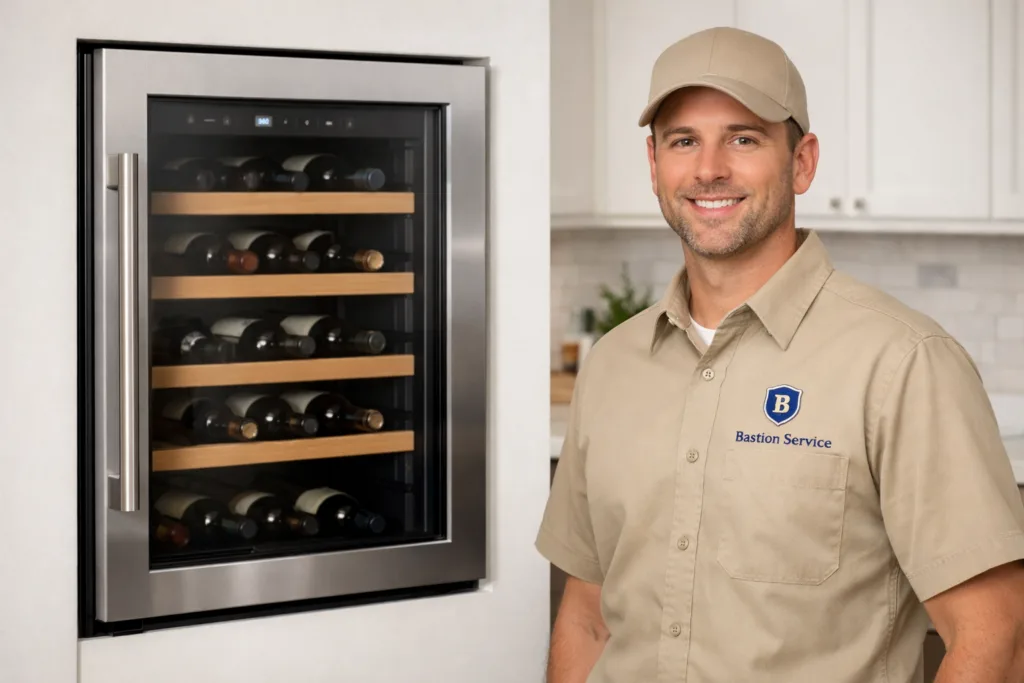
Wine coolers are sensitive to even small performance changes, so minor symptoms often show up before a full cooling failure. A cabinet that drifts a few degrees warmer than usual, starts cycling more often, or develops extra condensation may be reacting to restricted airflow, a door-seal problem, fan trouble, or a control issue rather than one single obvious fault. Sorting out which system is responsible helps prevent spoiled bottles and avoids replacing parts that are not actually causing the problem.
Common wine cooler problems and what they may indicate
Temperature too warm or inconsistent
If bottles feel warmer than the display suggests, the issue may involve a faulty temperature sensor, thermostat problem, weak evaporator fan, dirty condenser area, or poor door sealing. Built-in units can also struggle when surrounding ventilation is blocked, causing heat to linger around the cabinet and forcing longer run times. In some cases, one section cools acceptably while another does not, which usually points to airflow or circulation trouble rather than a simple setting error.
Runs constantly or cycles too often
A wine cooler that seems to run all day is often trying to make up for warm air entering through a worn gasket or from repeated door openings. Dust on coils, failing fans, and control boards that are not reading temperature correctly can create the same symptom. Constant operation does not always mean the compressor has failed, but it does mean the unit is under added strain and should not be ignored for long.
Not cooling at all
When the interior turns nearly room temperature, the cause can range from a power or control problem to failed start components, fan failure, or sealed-system trouble. If interior lights and the display still work, that only confirms part of the appliance has power. It still takes testing to determine whether the cooling system is starting, whether the compressor is engaging properly, and whether the unit is economically repairable.
Noise, vibration, or rattling
Unusual sounds often come from fan blades, loose panels, shelf vibration, compressor start issues, or an installation problem that allows the cabinet to sit unevenly. Because many wine coolers are installed in living areas, kitchens, or entertainment spaces, homeowners usually notice sound changes early. A new buzz or click is not always urgent, but persistent noise is often an early sign that a small mechanical issue is developing into a larger one.
Water inside, underneath, or around the unit
Water problems commonly trace back to a clogged drain path, excess humidity entering through a weak seal, or cooling irregularities that disrupt normal moisture removal. Condensation on shelves or glass can also happen when the appliance is struggling to hold temperature. If the moisture is concentrated around a water-fed ice feature rather than the wine compartment itself, Ice Maker Repair in Santa Monica may be the more relevant service path.
Signs the problem may not be limited to the wine cooler
Some household cooling complaints overlap, especially when more than one appliance seems to be warming, frosting, or running harder than usual. If the symptom is centered in the freezer compartment with frost buildup, poor airflow, or slow temperature recovery after the door opens, Freezer Repair in Santa Monica may be more relevant. That distinction matters because freezer-specific faults can look similar at first but involve different components and repair priorities.
Likewise, if the main concern is food spoilage, inconsistent fresh-food temperatures, or a refrigerator section that feels warm while the wine cooler seems normal, Refrigerator Repair in Santa Monica may be the better fit. Separating the source of the cooling issue helps avoid confusion when multiple appliances in the home appear to be underperforming at the same time.
When to schedule service
It makes sense to schedule a repair visit when the temperature will not stay stable, the unit runs nearly nonstop, condensation keeps returning, noise persists, or cooling stops altogether. If you have already confirmed the power supply, checked the settings, and made sure the door closes fully, ongoing operation can add wear to major components. Waiting too long also increases the chance of losing the bottles you are trying to protect.
Service is often worthwhile when the cabinet, shelves, hinges, and overall condition are still in good shape and the problem appears tied to controls, fans, drainage, gaskets, or other accessible parts. Replacement becomes more likely when the unit has repeated failures, severe age-related wear, or sealed-system issues that make repair less practical. The most useful next step is a diagnosis that identifies the actual failed component and explains the likely repair scope.
What a proper diagnosis should clarify
A thorough visit should determine whether the issue is internal to the appliance or related to setup conditions such as poor ventilation, leveling, cabinet fit, or door alignment. It should also confirm whether temperature readings are accurate, whether the fans and compressor are operating correctly, and whether the cooler is cycling as designed. That information helps homeowners in Santa Monica decide whether repair is the sensible path or whether replacement planning makes more sense.
Good service should stay focused on the symptom you are actually seeing, whether that is warm storage, frost, moisture, noise, or a unit that will not start. The goal is to explain what failed, what continued use could risk, and whether the repair is likely to restore reliable operation. For an appliance meant to protect stable storage conditions, that kind of straightforward answer is usually more valuable than guesswork.