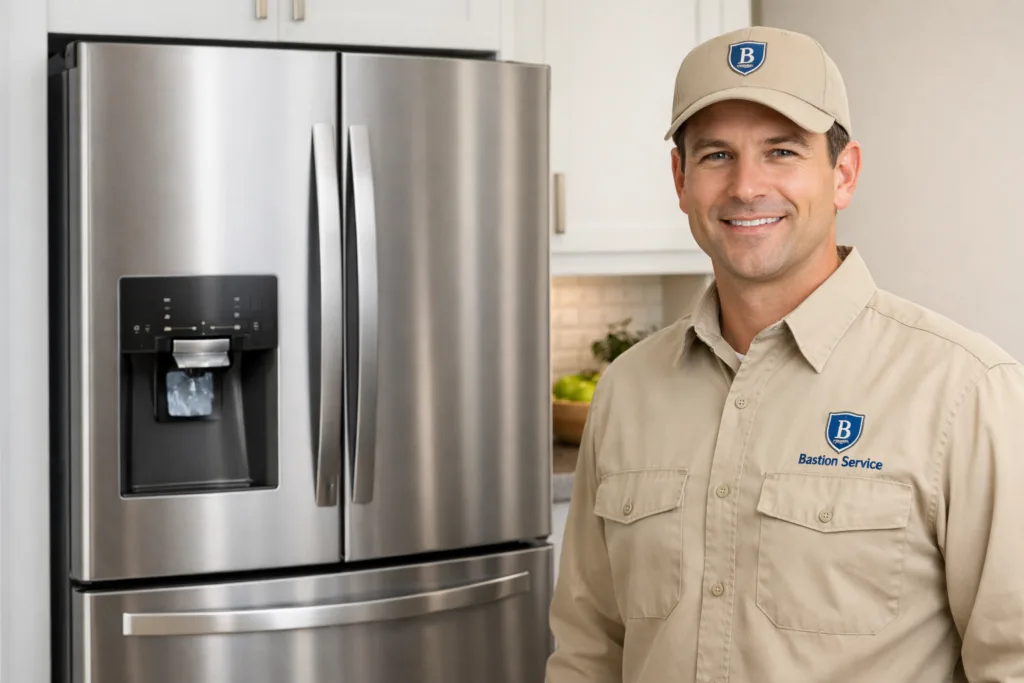
Ice maker problems tend to show up in everyday routines first: empty bins before dinner, cubes that come out thin or stuck together, or water appearing where it should not. While those symptoms can look similar from one household to another, the underlying cause may be very different. A blocked fill tube, weak water inlet valve, temperature issue, faulty sensor, or worn ice maker assembly can all interrupt normal production in different ways.
Common ice maker symptoms and what they can indicate
No ice production at all
When an ice maker stops completely, the problem may be as simple as a shutoff arm that is out of position or as involved as a failed motor module or control. Water supply issues are also common. If the mold is not filling, the unit cannot freeze and harvest new cubes, even if the rest of the appliance seems normal. In some cases, the ice maker is trying to cycle but the freezer compartment is not staying cold enough to complete that cycle on time.
Slow ice production
Slow output usually points to restricted water flow, low incoming pressure, partial freezing in the fill path, or a temperature problem that delays harvest. Households often notice this first during warmer weather or when they are using more ice than usual. If production has gradually declined over time, that pattern often suggests a weakening component rather than a sudden electrical failure.
Small, hollow, or misshapen cubes
Cube shape tells an important story. Small or hollow cubes often mean the mold is not getting enough water, while uneven shapes can point to fill timing problems or mineral buildup affecting flow. If the ice maker still runs but the cubes look wrong batch after batch, it is often a sign that the issue is upstream in the water system rather than in the freezing tray alone.
Leaking, overflowing, or clumped ice
Water under the appliance, frozen sheets in the bin, or large clumps of stuck-together cubes can happen when the mold overfills, the valve does not close properly, or melting and refreezing are occurring inside the compartment. These issues are worth addressing quickly because extra moisture can create heavier frost, interfere with door sealing, and add wear to nearby components.
How cooling conditions affect ice maker performance
An ice maker depends on stable temperatures to freeze water correctly and release cubes at the right point in the cycle. If the freezer section is running warmer than it should, the unit may make ice very slowly, produce soft or fused cubes, or stop harvesting entirely. If cooling problems are centered in the freezer compartment, Freezer Repair in Santa Monica may be more relevant.
In many homes, the ice maker is only one part of a larger refrigeration system. That matters because poor airflow, temperature swings, or excess condensation in the fresh-food section can affect ice production too. If you are also noticing warming food, inconsistent refrigerator temperatures, or moisture buildup around shelves and drawers, Refrigerator Repair in Santa Monica may be the better service path.
Signs the problem is in the water supply or fill system
Not every ice issue starts with cooling. A kinked supply line, clogged filter, weak inlet valve, or partially frozen fill tube can all reduce the amount of water reaching the mold. That often leads to smaller cubes, skipped harvests, or a cycle that sounds normal but never produces a full batch. Homes with hard water may also develop buildup that gradually restricts flow over time.
Another clue is inconsistency. If one batch looks normal and the next looks thin or incomplete, the water feed may be intermittent rather than fully blocked. Overflow can also trace back to the fill system when a valve allows too much water in or does not shut off cleanly at the end of a cycle.
When to schedule service
It usually makes sense to schedule service when the unit has stopped producing ice for more than a brief period, leaks repeatedly, makes unusual buzzing or grinding noises, or keeps turning out poor-quality cubes after basic checks. Emptying the bin or resetting the appliance may help in minor cases, but recurring symptoms generally point to a mechanical, electrical, or cooling issue that needs a closer look.
Prompt service can also prevent secondary problems. Continued leaking may damage surrounding flooring or cabinetry, and repeated freezing or overflow can lead to heavier ice buildup inside the compartment. Addressing the source early is often easier than dealing with the effects after they spread.
Repair or replacement?
Repair is often the practical choice when the problem is isolated to the ice maker assembly, inlet valve, sensor, switch, or fill components and the appliance is otherwise cooling well. Replacement becomes a more serious consideration when there are repeated failures, multiple cooling-related symptoms, or part and labor costs that no longer make sense for the age and condition of the appliance.
A good diagnosis should separate a single failed component from a broader refrigerator problem. That distinction matters because replacing an ice maker alone will not solve weak cooling, unstable temperatures, or airflow faults elsewhere in the appliance.
Specialty cooling and separate appliance considerations
Some Santa Monica homes use more than one cooling appliance for entertaining or everyday convenience. If the concern is less about ice production and more about maintaining steady temperatures for beverages, Wine Cooler Repair in Santa Monica may be the more appropriate service to consider.
What homeowners in Santa Monica should expect from a diagnosis
A useful visit should do more than name a part. It should determine whether the ice maker is receiving proper water flow, whether the compartment is cold enough for normal harvest, whether controls are cycling correctly, and whether leaks, frost, or temperature instability point to a larger refrigeration issue. That kind of practical repair guidance helps homeowners in Santa Monica make a sound decision about the next step, whether the fix is straightforward or the symptom turns out to be part of a broader cooling problem.