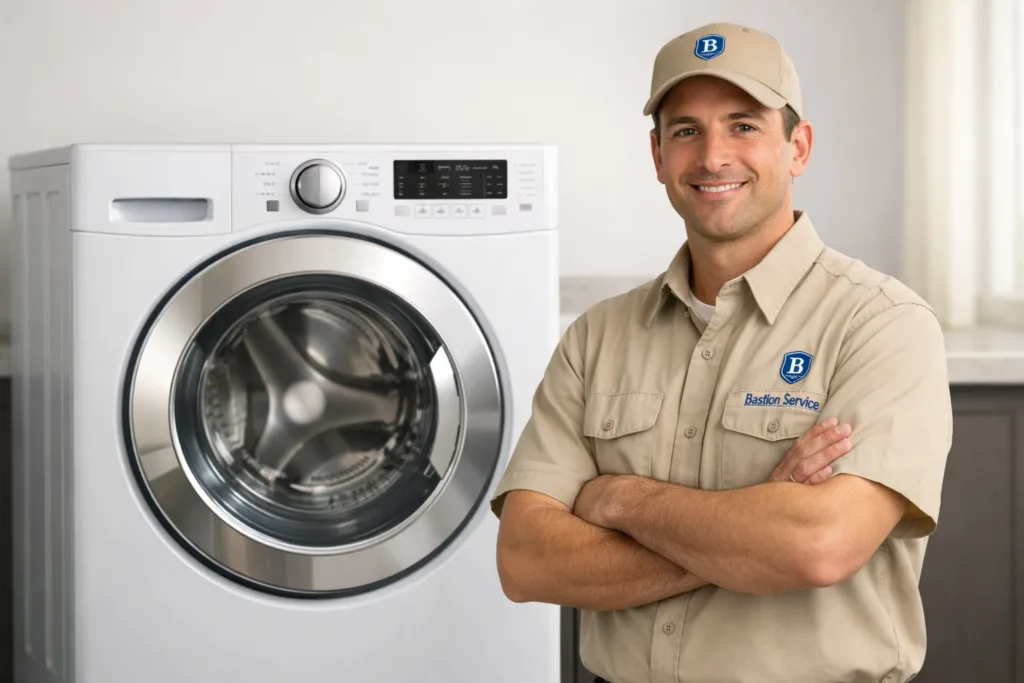
Washer problems often look simpler than they are. Clothes that come out soaked, a cycle that stalls at the same point, or water appearing under the cabinet can all trace back to different failures depending on how the machine behaves from start to finish. Watching what happens during fill, wash, drain, and spin usually reveals more than the symptom alone.
Common Whirlpool washer problems and what they may indicate
Washer will not start
If the control panel lights up but the cycle never begins, the issue may involve the door or lid lock, the control interface, or a failure in the start sequence. Some Whirlpool washers will appear ready but will not run if the machine cannot confirm the door is locked properly. In other cases, the display responds normally while the control does not send power where it needs to go.
This is also a symptom where model type matters. Front-load and top-load Whirlpool units use different lock and sensing systems, so the same complaint can lead to a different repair path.
Washer fills but does not agitate or spin
When the tub fills and then little happens, the cause can be mechanical, electrical, or sensor-related. A worn drive part, motor issue, actuator fault, or control problem can interrupt movement after fill. On some units, the washer may attempt to rebalance the load repeatedly and never advance into a full spin.
If the basket twitches, pauses, or changes direction unexpectedly, that pattern can help narrow down whether the problem is in the drive system or in the washer’s ability to sense position and speed.
Washer will not drain
Standing water at the end of the cycle usually points to a blocked drain path, restricted hose, clogged pump area, or failed drain pump. A humming sound without water movement often suggests an obstruction, while a completely silent drain phase may indicate the pump is not being energized at all.
Drain failures should not be ignored. Repeated attempts to run the washer with water trapped inside can leave odors behind, strain components, and keep clothing from rinsing properly.
Washer leaks during operation
Leaks are easiest to diagnose when you know when they happen. A leak during fill may come from an inlet hose, valve connection, or dispenser area. A leak during wash or spin can involve the door boot, drain hose, tub seal, or an internal hose that opens under movement and pressure.
Even a small recurring drip matters in a laundry area. Moisture that seems minor at first can damage flooring, baseboards, and the area around the washer over time.
Washer is noisy, bangs, or shakes excessively
A sudden change in sound often signals wear that has progressed past the early stage. Thumping during spin may be related to suspension issues or an unstable basket. Grinding or scraping can suggest bearing wear, loose hardware, or an object caught where it should not be.
If the machine moves more than usual or sounds much harsher on heavier loads, it is worth addressing before the extra vibration affects other parts.
Poor wash results or repeated residue on clothing
Not every washer problem is dramatic. Some Whirlpool washers still complete cycles but leave detergent residue, dingy fabrics, or loads that feel unevenly washed. That can happen when the washer is underfilling, not tumbling correctly, not rinsing fully, or cutting the cycle short because of a sensor or control issue.
When wash performance changes gradually rather than all at once, homeowners sometimes assume it is a detergent or loading issue. Sometimes it is. But if the change is consistent across multiple loads and settings, the machine itself may be the cause.
Why symptom patterns matter
Two washers can show the same basic complaint and require very different repairs. A unit that leaves clothes wet may have a spin problem, but it may also be ending the cycle early because it cannot drain. A machine that stops mid-cycle may have a control issue, or it may be pausing because the lock assembly is not confirming a safe condition to continue.
The most useful clues are usually the small ones: whether the washer locks the door, whether it drains partway or not at all, whether the noise happens only at high speed, and whether the issue appears on every cycle or only on certain settings. That information makes diagnosis faster and helps avoid replacing the wrong part.
Signs the repair should not wait
Some washer problems are inconvenient. Others can cause additional damage if the machine keeps running. It is a good time to schedule service when you notice any of the following:
- Water remaining in the tub after the cycle ends
- Recurring leaks under or behind the washer
- New grinding, scraping, or metal-on-metal sounds
- Repeated cycle cancellation or stopping at the same stage
- Persistent error codes
- Burning smells or tripped power during operation
- Strong vibration that was not present before
If the washer is leaking onto the floor or making severe mechanical noise, it is best to stop using it until the cause is identified.
Repair or replacement: how the decision is usually made
Many Whirlpool washer issues are still worth repairing, especially when the problem is limited to a pump, lock, hose, valve, suspension component, or another clearly defined part failure. A washer in otherwise good condition often has plenty of useful life left after the right repair.
Replacement becomes more likely when there are multiple major failures at once, extensive wear in core assemblies, or a history of repeat breakdowns that suggests the machine is no longer dependable. The better question is usually not just how old the washer is, but whether the current issue is isolated and repairable without chasing additional problems right after.
What to note before scheduling service in Mar Vista
A few observations can make the visit more productive. Try to note:
- Whether the washer fills with water normally
- Whether it locks and starts, or never begins at all
- Whether it drains fully, partially, or not at all
- Whether the basket reaches full spin speed
- What point in the cycle the problem appears
- Any error code shown on the display
- Whether leaking happens during fill, wash, drain, or spin
For front-load models, it also helps to mention any delay in door locking, visible moisture around the boot, or a musty odor after failed drain cycles. For top-load models, note whether the basket tries to engage and then stops, or whether it never attempts a proper spin.
Whirlpool washer repair in Mar Vista for everyday household problems
In Mar Vista homes, washer issues tend to show up at the worst time: full laundry baskets, interrupted routines, and wet loads that need immediate attention. The most effective repair starts with understanding the exact failure pattern instead of assuming every drain, spin, or leak complaint has the same cause.
When that pattern is identified correctly, homeowners can make a sensible repair decision based on the appliance’s condition, the scope of the issue, and whether the fix addresses the real source of the problem rather than just the visible symptom.