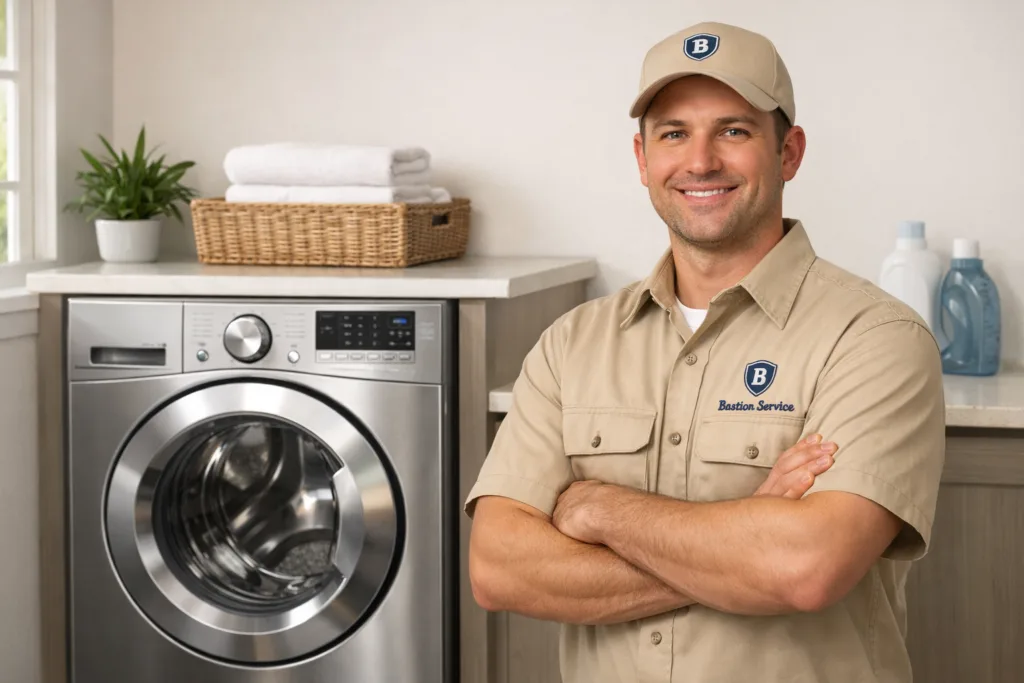
Washer problems usually show up as a symptom first, not a diagnosis. A machine may stop with water still in the tub, finish a cycle with clothes still soaked, shake harder than usual, or leave a puddle on the floor. Those symptoms can point to very different causes, which is why the most useful next step is looking at when the problem happens in the cycle and what the washer is doing at that moment.
Common washer symptoms and what they often indicate
If the washer will not start at all, the issue may involve power, a lid or door lock assembly, a control fault, or a safety switch that is not reading correctly. If it fills normally but does not agitate or spin, the problem can be tied to the drive system, motor components, belt wear, or a failed coupling depending on the design of the machine.
Drain complaints are among the most common. When water stays in the tub or drains very slowly, the cause may be a blocked drain path, a failing pump, a clogged filter area, or an obstruction deeper in the system. A washer that drains but still leaves clothing excessively wet can also have a spin-related issue, where the machine never reaches proper speed even though the cycle appears to continue.
Leaks need a closer look because the source is not always obvious. Water may come from inlet hoses, a damaged door boot, a loose drain connection, a cracked pump housing, or an internal overflow condition. In some homes, the leak appears only during fill, while in others it shows up during drain or high-spin, and that timing helps narrow the repair path.
Signs the washer should not keep running
Some issues can wait a short time for service, but others should prompt you to stop using the appliance. If the washer is leaking onto the floor, tripping the breaker, producing a burning smell, or making sharp grinding or banging sounds, continued use can lead to added damage. Water exposure can affect flooring and nearby cabinetry, and mechanical stress can turn a smaller repair into a more expensive one.
A machine that repeatedly stops mid-cycle, fails to unlock properly, or displays recurring error behavior is also worth addressing before laundry piles up. Intermittent faults tend to become more frequent, not less, especially when the underlying issue involves the pump, suspension, drive system, or controls.
Not draining, not spinning, or leaving clothes wet
When a washer will not drain, homeowners often assume the pump has failed, but that is only one possibility. A sock or other small item can obstruct the drain path, the filter area may be restricted, or the washer may be preventing spin because it senses an out-of-balance load or a door-lock problem. The difference matters because one repair may be straightforward while another requires deeper mechanical or electrical testing.
If the washer completes a cycle but clothing stays unusually wet, the machine may be draining without reaching full spin speed. That can happen with worn suspension parts, drive issues, or control faults that interrupt the spin sequence. If the laundry routine problem continues after washing and the next concern is poor drying or no heat, Dryer Repair in Santa Monica may be the better place to start for the second appliance.
Leaks, odors, and vibration
A leaking washer does not always mean a major internal failure. In some cases, a hose connection has loosened or a door seal has worn enough to let water escape during part of the cycle. In others, detergent buildup, drainage restrictions, or internal component cracks are involved. Finding the source depends on where the water appears and whether the leak happens during fill, wash, drain, or spin.
Strong odors can also point to a service issue rather than simple housekeeping. Standing water in the machine, partial draining, residue buildup, or a failing pump can all contribute to smells that linger around the laundry area. Front-load models are especially sensitive to seal condition and trapped moisture, but top-load units can develop similar symptoms when drainage is incomplete.
Vibration is another complaint that deserves attention when it becomes a pattern. A single unbalanced load is one thing; repeated thumping, walking, or hard shaking is another. Persistent vibration may involve leveling, worn suspension components, shock absorber problems, or basket support issues that should be checked before they create further wear.
Repair or replace?
Many washer issues are still worth repairing, especially when the problem is limited to one part of the system such as a pump, valve, latch, hose, or suspension component. A sensible recommendation usually depends on the age of the machine, the overall condition of the cabinet and tub, prior repair history, and whether the current symptom points to a single failure or a broader decline.
Replacement becomes more likely when the washer has multiple major problems at once, severe rust, repeated electronic faults, or signs of internal wear that make future breakdowns more likely. Homeowners in Santa Monica usually want more than a yes-or-no answer on whether the unit can be fixed. They want to know whether the repair is likely to hold up for everyday household laundry and whether temporary use would create additional risk.
What helps speed up diagnosis
A few observations can make service more efficient. It helps to note whether the washer fills with water, whether it drains fully, whether the drum turns in wash and spin, and whether the issue happens on every load or only sometimes. Unusual sounds matter too, especially clicking, humming, grinding, or repeated attempts to lock the door or lid.
If there is visible water, it is useful to notice where it appears first. Water at the front of the machine suggests a different path than water near the rear connections or under the center of the cabinet. If clothes come out wet, the key question is whether the washer skipped spin entirely or spun weakly without reaching normal speed.
Washer service for homes in Santa Monica
For households in Santa Monica, washer repair is usually about restoring a reliable laundry routine with as little disruption as possible. The most effective service approach is to match the symptom to the stage of the cycle, identify the failed part or blocked path, and recommend repair only when it makes practical sense for the appliance in the home.
Whether the problem is draining, filling, leaking, vibrating, or stopping mid-cycle, an accurate assessment helps avoid guesswork and repeat breakdowns. That is the difference between a temporary workaround and a repair decision that actually fits how the washer is being used day to day.