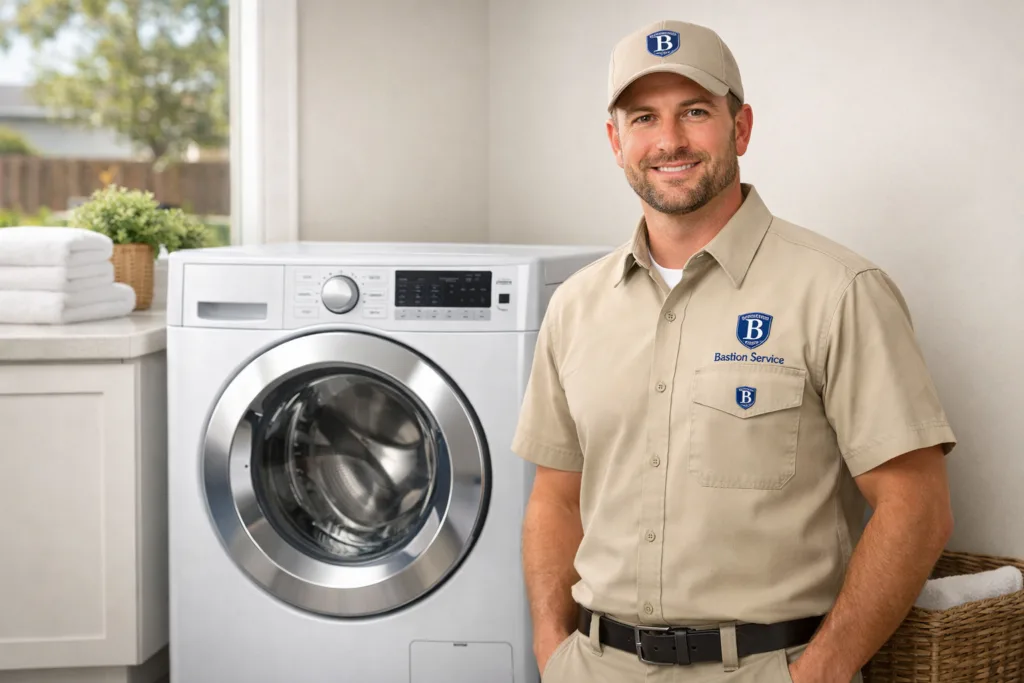
When a washer stops mid-cycle, will not drain, or starts leaking onto the floor, laundry can pile up fast in a Los Angeles home. The most useful next step is a clear diagnosis, because the same symptom can come from very different failures. A washer that will not spin may have a lid switch issue, a drain problem, or a worn drive component, and the right repair decision depends on identifying the actual cause before more damage develops.
Common washer problems homeowners notice first
Washer repair in Los Angeles often starts with a few familiar complaint patterns. Some machines will not start at all. Others fill but do not agitate, drain slowly, stop before the spin cycle, make grinding or banging sounds, or leave clothes wetter than usual. Water under the machine, a burning smell, repeated error codes, or strong vibration are also signs that the problem may be getting worse rather than resolving on its own.
Washer will not start or respond
If the washer does nothing when selected, the issue may involve power supply, the door or lid lock, the control interface, or an internal electrical fault. In some cases, the machine appears dead when the real problem is a failed latch that prevents the cycle from beginning safely.
Washer fills but does not wash or spin
This symptom can point to drive system wear, motor problems, a failed coupling, a belt issue, or a control fault. On some units, a drainage problem also prevents the spin cycle from completing, which is why symptom sequence matters during diagnosis.
Washer will not drain
Standing water in the tub is often related to a clogged drain pump, obstructed hose, or pump failure. Small clothing items and debris can restrict drainage and place extra strain on the pump. If the machine keeps trying to run while water remains inside, continued use can make the repair more complicated.
Leaks during or after a cycle
Leaks may come from hoses, the drain system, door boot damage, pump housing cracks, overfilling, or internal seal failure. The location and timing of the leak matter. Water at the front of the machine suggests a different repair path than water appearing underneath near the middle or rear.
What unusual noise and vibration can indicate
A washer should not bang violently, screech, grind, or walk across the floor. Excessive noise can mean an unbalanced load, but when the sound repeats across multiple cycles, mechanical wear becomes more likely. Suspension components, bearings, shock absorbers, pulleys, and motor-related parts can all create noticeable changes in sound. Ignoring these symptoms can lead to secondary damage, especially if the drum or support system is under added stress during spin.
Vibration is also worth taking seriously if it appears suddenly. A machine that used to run normally but now shakes heavily may have a leveling issue, worn internal supports, or drum-related wear. The distinction matters because one is relatively simple, while the other may affect whether repair still makes financial sense.
When continued use can make the problem worse
Some washer issues are inconvenient but not immediately destructive. Others should not be pushed through another load. If the machine is leaking, producing a burning odor, tripping breakers, failing to drain, or making harsh metal-on-metal sounds, continued use may increase water damage risk or turn a repairable problem into a larger one. A washer that struggles to spin can also overwork the motor and related components.
If clothes come out soaked, the machine pauses unexpectedly, or the drum movement seems abnormal, it is usually better to stop using it until the fault is identified. That helps limit strain on parts that may still be salvageable.
How diagnosis shapes the repair decision
Good service is not just replacing parts based on a guess. Washer problems often overlap in ways that can be misleading from the outside. For example, a no-spin complaint may actually begin with poor drainage. A leak may be caused by a simple hose issue or by a more serious tub or seal failure. Proper diagnosis helps determine whether the repair is straightforward, whether multiple components are involved, and whether the machine is still worth repairing based on age, condition, and overall wear.
For homeowners in Los Angeles, that matters because the practical question is not only whether the washer can be fixed, but whether the repair path is sensible compared with the condition of the appliance as a whole. A targeted repair on an otherwise solid unit is different from a major repair on a machine already showing repeated problems.
Repair versus replacement considerations
Replacement may become more relevant when a washer has severe bearing wear, major structural damage, repeated control failures, or a repair cost that approaches the value of keeping the machine. Age alone does not decide the issue, but age combined with multiple symptoms usually changes the conversation. On the other hand, pump problems, latch failures, hose leaks, and some drive-related issues can often make repair the more practical option if the rest of the washer is in decent condition.
A useful service visit should help clarify that difference. Homeowners usually need to know what failed, whether the problem likely caused collateral damage, and whether the machine can be used safely while parts are pending.
When washer problems leave laundry piled up, related drying issues may also become more noticeable, especially in homes where both appliances are used heavily. In those situations, Dryer Repair may also be relevant if the paired laundry setup is showing separate performance problems.
What to expect from washer service in Los Angeles
A focused washer service call should begin with the main symptom, when it started, and whether it happens in every cycle or only at a certain stage. From there, the inspection should narrow the problem to the drain system, drive components, controls, door or lid lock, water inlet issues, or internal wear. That process matters more than assumptions, especially when symptoms overlap.
For Los Angeles households, the goal is straightforward: restore dependable laundry use without guessing at the problem. Clear diagnosis, realistic repair guidance, and attention to whether continued operation is safe are what make washer repair useful rather than frustrating.