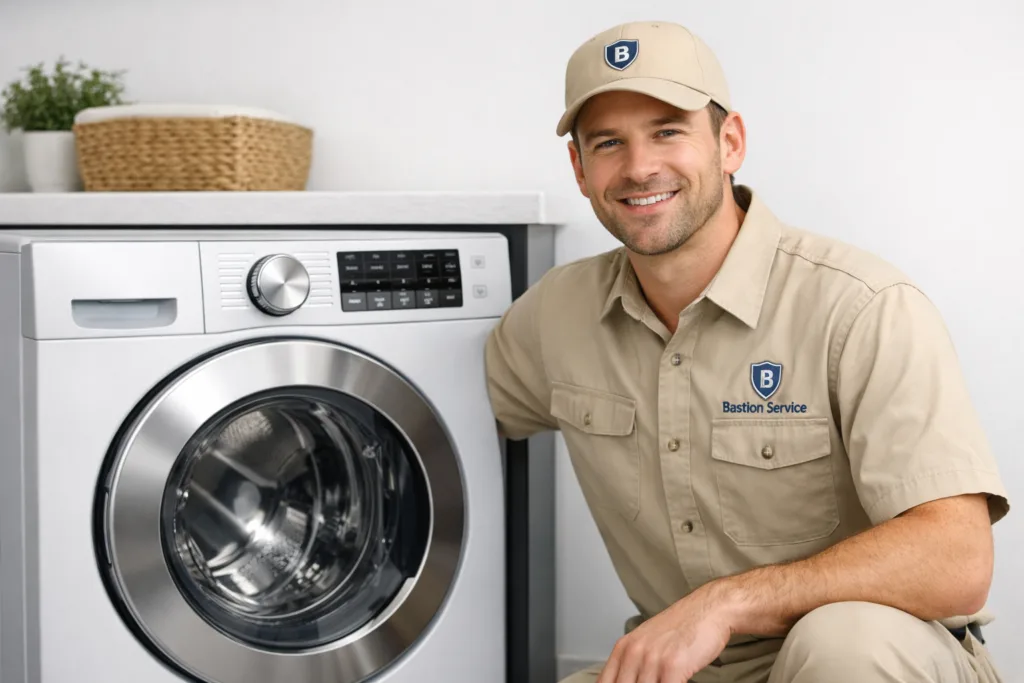
How to think about a Samsung washer problem before service

Most washer failures look bigger than they are at first, but the symptom pattern matters. A machine that stops with water still inside the tub points in a different direction than one that fills too slowly, shakes violently in spin, or will not lock the door. Looking at when the problem happens during the cycle often reveals whether the issue is tied to draining, spinning, filling, heating, sensing, or control response.
That matters in Los Angeles households where laundry loads are frequent and a washer problem quickly becomes disruptive. Repeatedly running a machine that is leaking, stalling, or banging can turn a limited repair into damage affecting nearby flooring, the door boot, suspension parts, or the drain system.
Common Samsung washer symptoms and what they may mean
Not draining or leaving clothes too wet
If your Samsung washer finishes with standing water in the tub or clothing that is still heavy with water, the problem may involve the drain pump, a restriction in the drain path, the filter area, or a control issue that is not completing the drain portion of the cycle. In some cases, the washer also refuses to move into high spin because it detects that water has not cleared properly.
Homeowners often notice this first as a slow drain rather than a full failure. That early stage is worth addressing. Slow drainage can lead to odor, residue buildup, repeated cycle interruptions, and extra strain on the pump.
Won’t spin or struggles to reach full spin speed
A Samsung washer that tumbles normally but never gets clothing properly spun out may be dealing with a balance issue, worn suspension, a drain-related problem, or a door lock fault. Front-load models may repeatedly attempt to redistribute the load, while top-load models may stop and restart without ever finishing strongly.
If the machine bangs during spin, pauses to rebalance over and over, or leaves towels especially wet, it is usually a sign that the washer is protecting itself from a condition it cannot correct on its own.
Leaks during fill, wash, or drain
Washer leaks are not all the same. Water near the front can point to a door boot or sealing issue on a front-load machine. Water appearing underneath or toward the back may involve hoses, pump connections, overfill conditions, or internal movement during agitation and spin.
Even a small recurring leak deserves attention because washer leaks rarely improve with time. In a residential laundry area, ongoing moisture can affect flooring, trim, and walls, especially when the leak happens only during part of the cycle and goes unnoticed.
Washer fills slowly, overfills, or does not fill correctly
Fill problems can show up as long wash times, poor cleaning, error codes, or cycles that never seem to move forward. Depending on the model and symptom, the cause may involve the inlet valve, supply flow, pressure sensing, or control interpretation of the water level.
If your washer starts but sits with little water entering, or if it seems to add water at the wrong times, the issue is usually more than a one-time glitch. Poor fill performance can affect rinsing, wash quality, and the machine’s ability to complete the cycle normally.
Poor wash results or detergent residue
When clothes come out with residue, dull spots, or an overall poor wash result, the problem is not always detergent related. A washer that is underfilling, not tumbling correctly, failing to drain fully, or stopping short of the intended cycle can all produce disappointing results.
If wash performance has changed suddenly rather than gradually, that is often a clue that a component or sensor issue is affecting how the machine runs, not just how the load was arranged.
Heating problems on cycles that should use warm or hot water
Some Samsung washer complaints involve water temperature not matching the selected cycle or sanitation settings not behaving as expected. Depending on the machine design, this may involve water supply conditions, temperature sensing, or internal heating-related faults where applicable.
When heating performance is off, homeowners often notice it indirectly through longer cycles, incomplete cleaning, or settings that no longer seem to produce the same results they used to.
Door will not lock, unlock, or start a cycle
If the control panel responds but the washer will not begin, the door or lid lock system is one of the first areas to consider. A machine may appear to power on normally yet still refuse to start if it cannot confirm the door is secured. In other cases, the door stays locked after the cycle, which can point to control, drain, or lock assembly problems.
Because the lock system is tied to safe operation, forcing the door or repeatedly restarting the washer can make diagnosis harder and may create added damage.
Error codes and cycles that stop mid-program
Error codes are useful, but they are not a full answer by themselves. A code may point to water movement, balance, sensing, communication, or door lock issues, yet more than one failure can trigger a similar warning. What matters is confirming why the code appeared and whether the fault is mechanical, electrical, or intermittent.
If the same code returns after resetting the machine or trying a different load, that is usually a sign the issue needs proper testing instead of more trial runs.
Signs the washer should not keep running
Some problems can wait a short time for service, but others should be treated as stop-use issues. It is best to avoid more loads if your washer is showing any of the following:
- Water leaking onto the floor
- Heavy banging or violent movement in spin
- Standing water left in the tub after the cycle
- A burning smell or unusually harsh mechanical noise
- A door that will not lock correctly
- Repeated error codes that interrupt every load
These symptoms raise the risk of added component wear, water damage, or a complete failure at an inconvenient time.
When service makes sense
Schedule Samsung washer repair when the machine is no longer reliably finishing cycles, when performance has clearly changed, or when the same problem keeps returning. Intermittent issues matter too. A washer that works on some loads and fails on others often has an underlying fault that is still developing.
For many households, the biggest concern is whether one more load will make things worse. If the washer is only slightly noisier than usual and still completing cycles, that may be less urgent than a machine that leaks or traps water inside. But if the symptom is growing more frequent, service is usually easier and less disruptive before the machine stops entirely.
Repair or replace: what usually decides it
The choice between repairing and replacing a Samsung washer usually comes down to the age of the unit, the condition of major mechanical parts, the type of failure, and whether there have been multiple recent problems. A pump issue, latch problem, fill valve fault, or hose-related leak is a very different situation from major tub damage, severe bearing noise, or repeated control failures in an already worn machine.
For Los Angeles homeowners, the most useful approach is to weigh the current repair against the washer’s overall condition rather than making the decision based on frustration alone. A single repair can be worthwhile when the rest of the machine is in solid shape. Replacement becomes more reasonable when the washer has broad wear or a history of recurring breakdowns.
What to note before your appointment
If you are arranging service, a few details can help narrow the problem faster. Try to note:
- Whether the issue happens on every load or only sometimes
- At what point in the cycle the washer stops
- Whether water remains in the tub
- If the machine is making new noises during spin or drain
- Any error code shown on the display
- Whether the problem started suddenly or worsened over time
Even small observations can help distinguish between a drain fault, a suspension problem, a lock issue, or a control-related interruption.
A focused repair approach for Samsung washers in Los Angeles
Samsung Washer Repair in Los Angeles is most effective when the symptom is traced to the system actually causing it, not just the part that seems most obvious. A washer that will not spin may really be failing to drain. A machine that will not start may be stuck on a lock confirmation issue. A unit with poor wash results may be struggling with fill or cycle completion rather than agitation alone.
For homeowners, that means the best next step is not guessing from the display or trying repeated resets. It is identifying the failure pattern, checking whether continued use is safe, and moving forward with a repair recommendation based on the machine’s real condition.