
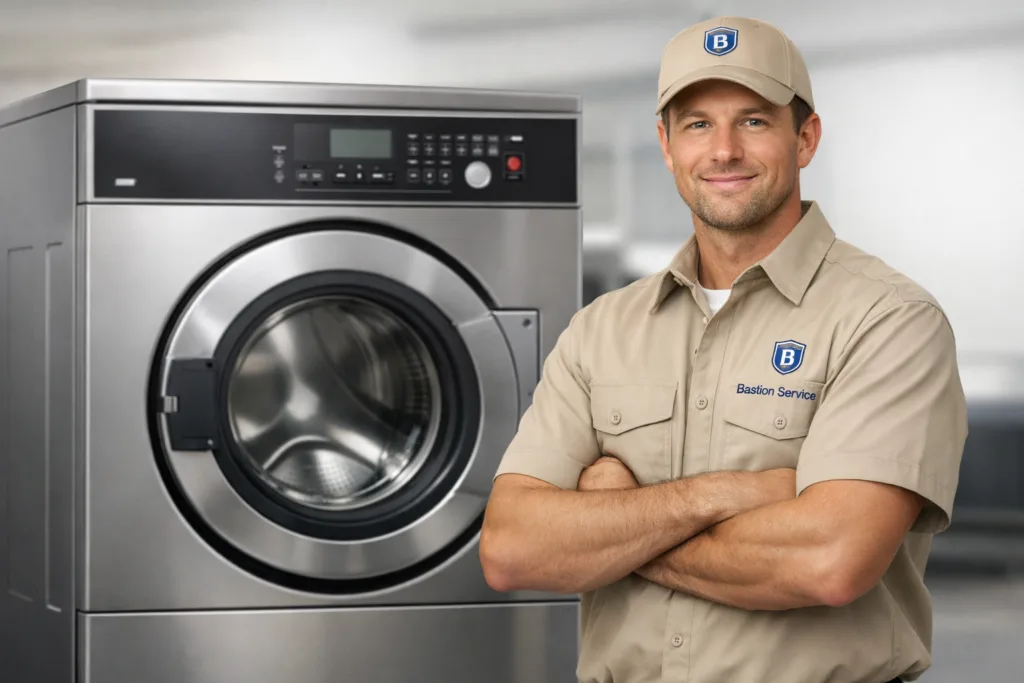




When a Wascomat washer goes down in Playa Vista, the effect is usually immediate: delayed turns, backed-up laundry flow, wet goods waiting for rewash, and staff spending time on workarounds instead of routine tasks. In that situation, the next step should be service-oriented, not guesswork. Bastion Service helps businesses in Playa Vista troubleshoot washer failures, confirm the actual cause, and schedule repair based on the symptoms that are affecting production, safety, and day-to-day operations.
Related commercial service paths in Playa Vista include Wascomat Commercial Repair in Playa Vista, Commercial Washer Repair in Playa Vista, and Wascomat Dryer Repair in Playa Vista.
For many operators, the issue is not just that a machine has stopped. It is that cycle timing becomes inconsistent, extraction quality drops, or one washer starts disrupting the rest of the room. A proper repair decision starts by matching the complaint to the machine behavior, checking whether the fault is isolated or developing, and determining whether continued use is likely to create more damage or more downtime.
Common Wascomat washer symptoms and what they can indicate
Unit will not start or stops before the cycle finishes
If the washer will not begin a cycle, shuts off during operation, or stalls before completion, possible causes include door lock problems, control issues, power supply concerns, drain-related faults, or communication problems between key components. A machine that seems dead at startup may not have a simple reset issue. It is important to determine whether the failure is electrical, mechanical, or control-related before any repair is approved.
Not draining, draining slowly, or leaving water in the drum
Drain failures can stop the next load, create standing water, and trigger repeated cycle interruptions. Slow drainage may point to a restricted drain path, pump wear, sensor problems, or an issue that prevents the washer from recognizing that water has cleared. If the machine keeps trying to advance while water remains in the drum, spin performance and cycle completion may both be affected.
Not spinning correctly or leaving loads too wet
When loads come out wetter than normal, the problem may involve imbalance sensing, drive components, motor performance, suspension wear, drainage issues, or a control fault that keeps the washer from entering or maintaining full extraction. This symptom often creates problems beyond the washer itself because drying times increase and the overall laundry process slows down. The key is to confirm whether the machine cannot reach spin speed or is being prevented from starting the spin stage at all.
Leaks, overflow, or inconsistent water levels
Water around the machine, overfilling, underfilling, or unstable water levels can be tied to valve trouble, hose failures, pressure sensing issues, drain conditions, or worn seals and related parts. Water problems should be addressed quickly because they can affect flooring, nearby equipment, and safe operation in the laundry area. What looks like a simple leak may actually be a fill-control or drain fault that needs a broader inspection.
Noise, vibration, or rough operation
Banging, grinding, rattling, or excessive vibration may indicate bearing wear, suspension problems, mounting issues, drum-related wear, drive system faults, or severe load-balance sensitivity. These complaints matter because abnormal noise often shows up before a larger mechanical failure. If a Wascomat washer is getting louder or less stable over time, that pattern usually points to a condition that should be inspected before the machine is put through heavier use.
Heating problems or poor wash results
If wash quality drops, temperatures seem inconsistent, or cycles run without reaching expected performance, the issue may involve heating components, temperature sensing, fill behavior, control timing, or related system faults. Poor wash results are easy to dismiss as chemistry or loading issues, but when the pattern keeps returning on the same machine, it often makes sense to inspect the washer itself. In business settings, inconsistent wash quality can create repeat processing and unnecessary labor.
Why exact diagnosis matters before repair
Two washers can show the same symptom and still need very different repairs. A no-spin complaint might come from a drain problem, a sensing issue, a drive failure, or a control fault. A leak could come from a hose, valve, seal, overfill condition, or a drainage problem that sends water where it should not go. Replacing parts too early can increase cost and still leave the original fault unresolved.
That is why service should focus on symptom confirmation, cycle behavior, error patterns, and machine condition under load. Once the fault is narrowed down, it becomes easier to decide whether the repair is straightforward, whether more wear is present, and how urgently the machine should be removed from use. For businesses in Playa Vista, that kind of diagnosis helps with scheduling, budget decisions, and uptime planning.
Why a Wascomat washer may not start or may not complete the cycle
A washer that does not start or does not complete the cycle can fail for several reasons. Door lock faults are a common cause because the machine may not allow filling or agitation if it cannot confirm a secure lock condition. Drain issues can also interrupt the cycle, especially if the washer cannot clear water within the expected time. In other cases, the cause may be a control problem, an electrical supply issue, or a sensor reading that keeps the machine from moving to the next stage.
If staff are repeatedly restarting the machine, trying different cycle selections, or finding that the washer stops at roughly the same point each time, that pattern is useful during service. It helps separate intermittent faults from consistent failures. A cycle that cancels early is often easier to diagnose when the failure point, load type, and any visible error behavior are documented before the repair visit.
Signs the problem is getting worse
Some washers still run even after a fault has started developing. That can make the problem seem manageable at first, but warning signs usually appear before a full stoppage. Longer cycle times, occasional standing water, increasing vibration, repeated retries, and inconsistent extraction are all signs that the issue may be spreading beyond one component. The machine may still complete some loads while quietly creating more wear.
Another common sign is when staff start adapting around one washer. If employees are redistributing loads to avoid imbalance errors, wiping up small leaks, running extra dry time because extraction is weak, or avoiding certain settings because the unit behaves unpredictably, the machine is already affecting workflow. That is usually the point when scheduled repair becomes more practical than continued trial-and-error use.
When continued use may create more damage
Continued operation is riskier when the washer is leaking, failing to drain, making heavy mechanical noise, vibrating aggressively, tripping protection, or stopping mid-cycle with repeat fault behavior. Running the machine in those conditions can increase wear on related parts and expand the eventual repair scope. A drain issue can lead to spin complaints. A vibration problem can lead to more mounting or suspension stress. A small leak can become a room-level cleanup issue if left unaddressed.
If the washer is affecting safe operation or creating uncertainty about whether a cycle will finish, it is usually better to pause use until the machine can be evaluated. That protects the equipment and helps prevent avoidable disruption to the rest of the laundry process.
Repair versus replacement considerations
Not every Wascomat washer problem points to replacement. Many failures are still good repair candidates when the machine is otherwise stable and the issue is isolated to a specific system. A targeted repair often makes sense when the washer has been performing consistently up to the recent fault and there is no broader pattern of repeated breakdowns.
Replacement becomes more likely when the machine has multiple overlapping issues, recurring failures in the same area, major mechanical wear, or repair history that no longer supports reliable operation. For Playa Vista businesses, the decision is usually based on whether the washer can return to stable cycle performance without creating repeated interruptions. The goal is not just to make the unit run again once, but to restore usable reliability for ongoing operations.
How to prepare for a service visit
Before scheduling repair, it helps to note what the washer is doing and when the problem occurs. Useful details include whether the machine fails at startup, during fill, before spin, during drain, or near the end of the cycle. It also helps to note whether the issue happens on every load or only under certain conditions, whether water remains in the drum, and whether there are unusual sounds, vibration, or visible leaks.
If the machine displays fault behavior consistently, keeping the washer available for inspection in that condition can help speed diagnosis. Even simple observations from staff can narrow the issue and make the repair process more efficient. When the symptom is tied to a specific cycle stage, the service path is often clearer from the start.
Service-focused next steps for Playa Vista businesses
Wascomat washer repair in Playa Vista is most effective when the response is tied to the actual symptom, the machine’s current operating condition, and the impact on daily workflow. Whether the problem involves draining, extraction, cycle completion, leaks, controls, or mechanical noise, the right next step is to confirm the fault and match the repair to the problem that is interrupting use. If your washer is causing repeated delays, inconsistent results, or signs of worsening wear, scheduling diagnosis promptly is the best way to limit downtime and decide on the most practical repair path.





