
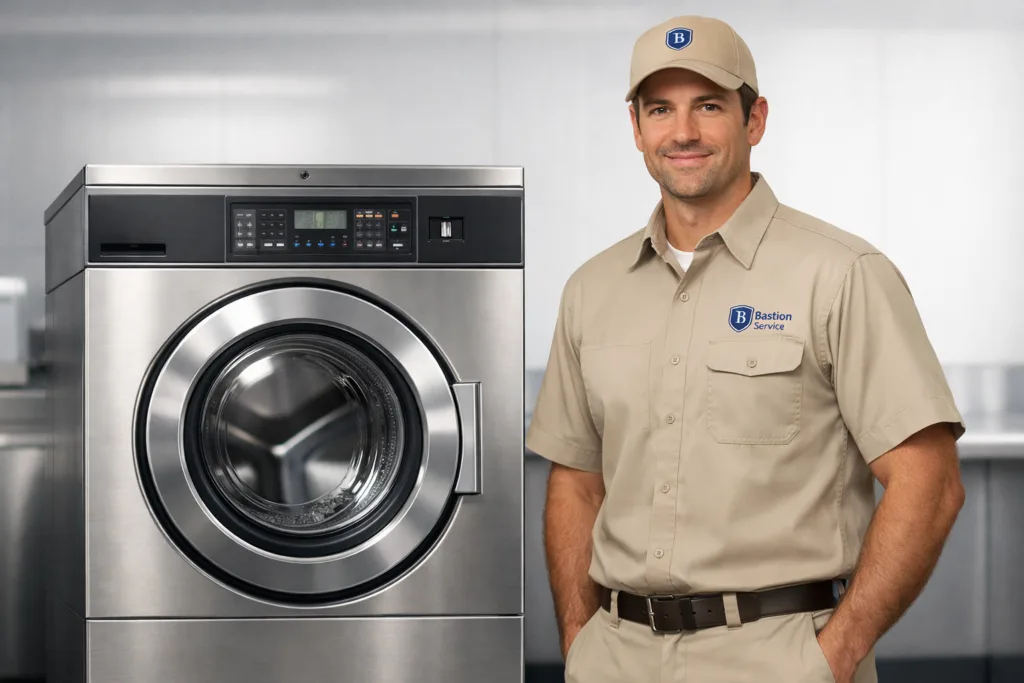




When a Speed Queen washer begins stopping mid-cycle, leaving loads overly wet, leaking, or showing intermittent faults, the best next step is to schedule service based on the exact symptom pattern rather than guess at parts. In business settings, a washer problem can quickly affect staffing, turnaround times, tenant support, guest readiness, or overall laundry flow. Bastion Service provides Speed Queen washer repair in Playa Vista with a service-first approach focused on diagnosis, repair planning, and reducing avoidable downtime.
Related commercial service paths in Playa Vista include Speed Queen Commercial Repair in Playa Vista, Commercial Washer Repair in Playa Vista, and Speed Queen Dryer Repair in Playa Vista.
Because the same complaint can have more than one cause, repair decisions should be based on what the machine is doing, when the problem appears, and how it behaves under normal use. A washer that fails during fill, drains slowly, shakes during extraction, or locks up near the end of the cycle may be pointing to very different issues, even if staff describe all of them simply as “not working.”
Common Speed Queen washer problems that interrupt daily operations
Washer not starting or not completing the cycle
If the washer powers on but does not begin, pauses unexpectedly, or never reaches the end of the cycle, possible causes include door lock faults, control problems, water fill issues, drainage restrictions, or drive-related failures. In some cases, the machine starts normally but stops only at a certain stage, which is an important clue during diagnosis. A cycle failure that happens only under load often requires in-person testing rather than assumption-based replacement.
Standing water, slow draining, or poor spin performance
When water remains in the drum or loads come out excessively wet, the issue may involve a blocked drain path, weak pump performance, a control fault, or a condition that prevents full-speed extraction. These problems often create delays beyond the washer itself by increasing dryer run time and slowing overall laundry turnover. If staff are rerunning loads or shifting work to other machines, the washer is already affecting operations enough to justify service.
Excessive shaking, banging, or unusual noise
Harsh vibration, grinding, scraping, or repeated banging should be treated as a repair issue, not normal wear. Symptoms like these can point to suspension wear, bearing problems, drive system trouble, mounting concerns, or internal movement during spin. Continued use in this condition may increase damage and expand the repair scope, especially if the washer is striking hard during extraction.
Leaks, overfilling, or fill problems
Water around the machine may come from hoses, inlet components, door seal areas, internal connections, or drainage-related problems. A washer that fills too slowly, overfills, or does not regulate water correctly may have one obvious symptom with a separate root cause behind it. In a business environment, even a small recurring leak deserves attention because it can affect flooring, surrounding work areas, and nearby equipment.
Error codes and intermittent shutdowns
Error codes can be useful, but they are only one part of the diagnosis. Control faults, sensor issues, communication errors, and safety shutdowns often need to be reviewed together with the cycle stage, machine behavior, and recent performance changes. If the washer works some days and fails on others, that inconsistency is still a meaningful symptom and should be documented before service.
Why symptom-based diagnosis matters
Washer failures are often linked to a chain of symptoms rather than a single failed component. A no-spin complaint may actually begin with poor draining. A cycle stoppage may be related to fill performance or door lock response. A visible leak may show up on the floor far from the part that is actually failing. Taking time to isolate the source helps avoid unnecessary parts, repeat visits, and short-term fixes that do not restore reliable operation.
For businesses in Playa Vista, this matters because the right repair is not always the most obvious one. A targeted fix may be enough when the fault is isolated, while a broader service recommendation may make more sense when wear is affecting several systems at once.
Signs the washer needs service now, not later
- The machine regularly stops before the cycle ends.
- Water is left in the basket after use.
- Loads are coming out much wetter than normal.
- The washer is leaking during fill, wash, drain, or spin.
- Staff hear grinding, scraping, or repeated impact sounds.
- Error codes are appearing more often.
- The unit has become unreliable enough that staff are working around it.
Those workarounds are often the clearest sign that service should be scheduled. If employees are reducing load size, avoiding certain cycles, restarting the machine, or rotating work to other units, the washer problem is no longer isolated to the equipment alone.
What businesses should note before a service visit
Helpful details can speed up diagnosis and make the service call more productive. Before the appointment, it helps to note:
- Whether the problem happens every cycle or only sometimes
- Which cycle stage fails: fill, wash, drain, spin, or end of cycle
- Whether the washer shows an error code
- If the issue occurs only with certain load sizes
- Whether there is active leaking or unusual noise
- How long the symptom has been affecting daily use
This kind of information helps connect the complaint to the most likely system involved and can make scheduling and repair planning more efficient.
Repair or replacement: how the decision is usually made
Not every washer problem calls for replacement, and not every repair is the best long-term investment. The decision typically depends on the machine’s age, service history, overall condition, parts involved, and how much downtime the unit is creating. If the failure is isolated and the rest of the washer remains in solid operating shape, repair is often the sensible path.
Replacement becomes a more serious consideration when the washer has repeated major failures, multiple wear-related issues at the same time, or repair costs that no longer align with expected service life. For Playa Vista businesses, the practical choice is usually the one that supports stable operation and predictable workflow rather than a quick temporary fix.
Service planning for Speed Queen washer downtime in Playa Vista
When a washer supports daily laundry volume, scheduling matters almost as much as the repair itself. Businesses in Playa Vista often benefit from arranging service as soon as a pattern is clear instead of waiting for a full shutdown. Early action can limit disruption, protect adjacent workflow, and reduce the chance that a manageable issue grows into a more expensive one.
If your Speed Queen washer is not draining, failing to complete cycles, leaking, vibrating heavily, or producing inconsistent wash results, the most useful next step is to arrange a diagnosis-based service visit. That allows the problem to be evaluated by symptom, the repair scope to be defined clearly, and the machine’s return to service to be planned around your operating needs.


