
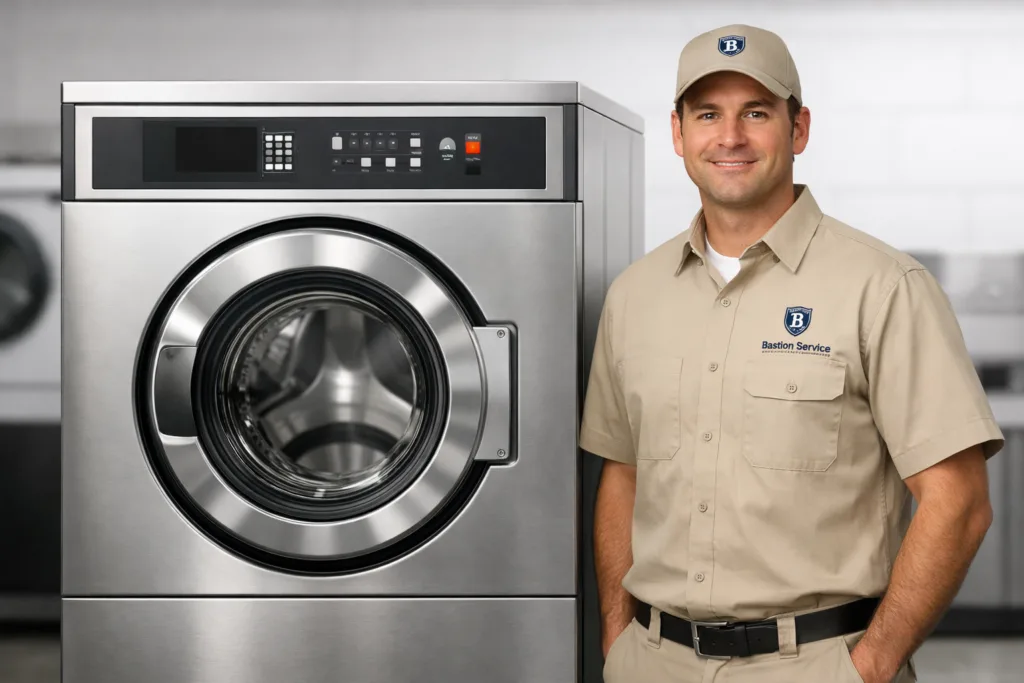




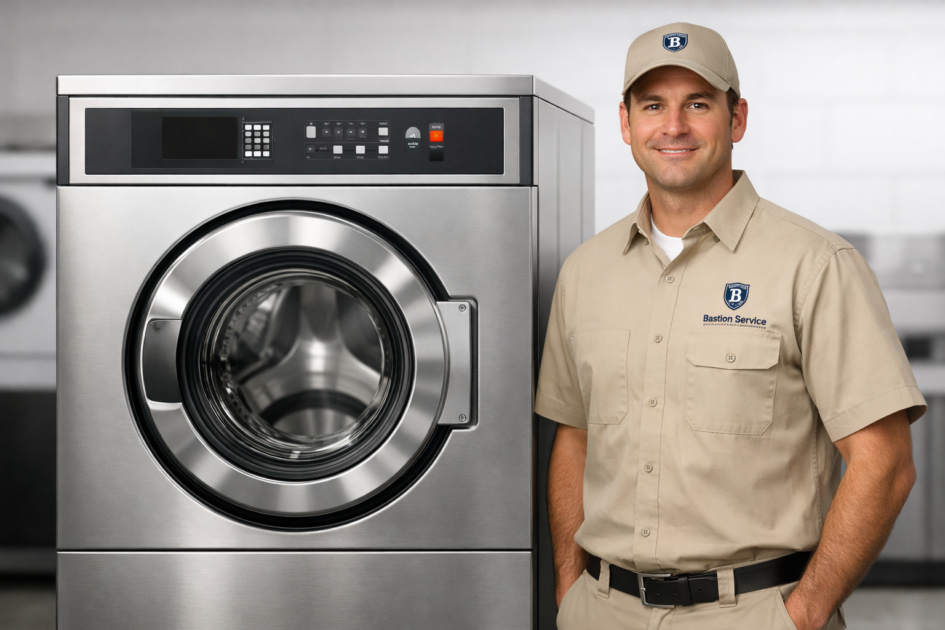
When a Wascomat washer starts interrupting production, the most important step is to identify which system is actually failing before more loads are pushed through the machine. A washer that stops mid-cycle, leaves water behind, or struggles to extract can affect scheduling, labor, and turnaround right away. Bastion Service works with businesses in El Segundo to inspect symptom patterns, isolate the fault, and determine whether the unit should remain offline until repairs are completed.
Related commercial service paths in El Segundo include Wascomat Commercial Repair in El Segundo, Commercial Washer Repair in El Segundo, and Wascomat Dryer Repair in El Segundo.
That service-focused approach matters because washer problems often overlap. A drain complaint may involve the pump, a restriction, a control issue, or a sensor problem. A no-start condition may be tied to incoming power, the door lock, the control interface, or wiring faults. Getting to the source first helps avoid unnecessary parts replacement and reduces the risk of repeated downtime.
Common Wascomat washer problems that need repair attention
Washer will not start
If the machine does not respond when a cycle is selected, the issue may involve the power supply, start circuitry, door lock assembly, control board, or a communication fault between components. In some cases, the washer may appear to power on but still refuse to begin because it is not seeing a safe operating condition. This type of symptom should be checked promptly, especially if the problem is intermittent and getting worse.
Cycle starts but does not complete
A washer that advances partway through the cycle and then stops can be dealing with drain errors, overheating, motor faults, sensor feedback problems, or board-related issues. Repeated mid-cycle stoppages often create rewash volume, delayed turnover, and extra staff involvement. If employees are restarting the machine to finish loads, the failure is already affecting normal operations.
Slow draining or standing water in the basket
Water left behind after a cycle usually points to a blocked drain path, pump wear, an electrical problem affecting pump operation, or a control issue that prevents the drain sequence from finishing correctly. Slow drainage can also extend total run time and lead to loads that remain too wet for the next stage. If water is regularly sitting in the drum, service should be scheduled before the problem contributes to additional wear.
Poor spin or weak extraction
When loads come out heavier than normal, the washer may not be reaching full extraction speed. Possible causes include imbalance detection faults, motor or drive issues, suspension wear, belt problems, or a condition that prevents the machine from safely ramping into spin. Weak extraction increases drying time and slows overall throughput, so it is usually more than a minor performance issue.
Leaks during fill, wash, or drain
Leaks can come from hoses, inlet components, door seals, drain connections, internal tubs, or overflow-related faults. Even a small recurring leak can create unsafe floors and affect nearby work areas. If staff are placing towels around the machine, stopping the unit manually, or avoiding certain cycles because of water loss, the washer should be inspected before the issue spreads.
Noise, banging, or heavy vibration
A Wascomat washer that suddenly sounds louder than usual may have bearing wear, suspension trouble, loose hardware, basket issues, drive component wear, or mounting instability. Harsh vibration during extraction is especially important to address quickly because continued use can stress surrounding parts and lead to a more involved repair. Changes in sound are often one of the earliest signs that a mechanical problem is developing.
Water fill problems or temperature-related issues
If the washer fills too slowly, does not fill at all, fills at the wrong stage, or is not reaching expected wash temperatures, the cause may involve inlet valves, screens, pressure sensing, controls, or heating-related components depending on the machine setup. These issues can affect wash quality, cycle timing, and consistency from load to load.
Why symptom-based diagnosis matters
Many washer failures do not announce themselves with one simple cause. For example, a machine that will not spin may actually be stopping because it cannot confirm door lock status, because it is not draining fully, or because the drive system is unable to accelerate under load. A leak may be a seal problem, but it may also be the result of overfilling or a drain-related backup. Looking only at the final symptom can miss the actual failure point.
Symptom-based diagnosis helps answer the questions businesses in El Segundo usually need answered quickly:
- What system is failing?
- Can the washer remain in use safely?
- Is there a risk of added damage if operation continues?
- Is the issue isolated, or are related components showing wear too?
- What repair path makes the most sense for the machine’s condition?
Signs the washer should be taken out of service
Some problems can escalate fast if the machine stays in rotation. It is usually best to stop using the washer and schedule repair if you notice any of the following:
- Repeated fault codes
- Standing water after cycles
- Uncontrolled leaking or overflow behavior
- Strong vibration that was not present before
- Grinding, scraping, or pounding noises
- Cycles that stop under load
- Burning smells or signs of overheating
- Door lock problems that prevent reliable operation
These symptoms often indicate more than a simple nuisance. Continued operation can lead to additional component damage, more difficult repairs, and longer outages.
Why intermittent problems deserve attention
A washer that fails only occasionally is easy to push down the priority list, but intermittent faults are often early-stage warnings. A machine may start most of the time but fail during heavier loads. It may drain correctly on one cycle and then leave water on the next. It may complete several runs before suddenly stopping.
Those patterns can point to wiring issues, sensors drifting out of range, heat-related electrical faults, or components that are beginning to fail under stress. Catching those problems earlier can help businesses avoid a full breakdown during peak demand.
Repair decisions for aging or heavily used washers
Not every service call leads to the same recommendation. Some Wascomat washer problems are limited to one failed component and can be addressed without broader concerns. Others reveal multiple wear points, long-term mechanical stress, or repeated failures that affect confidence in the machine. The right decision depends on the condition of the unit, the specific fault, the likely reliability after repair, and the impact of downtime on your operation.
That is why the most useful repair visit is not just about swapping a part. It is about understanding whether the washer is dealing with an isolated issue or whether the symptom is part of a larger decline in performance.
What to note before scheduling service
Before scheduling Wascomat washer service, it helps to gather a few details from staff who use the machine most often. Useful information includes:
- Whether the unit fails at the same point in every cycle
- Any error codes or indicator behavior
- Whether the problem appears only under full loads
- How long the symptom has been happening
- Whether leaks, noise, or vibration are getting worse
- Whether the washer still completes any cycles successfully
Even simple observations can make diagnosis more efficient and help determine whether the machine should stay offline until service is completed.
Service planning for businesses in El Segundo
For laundromats, hotels, multi-unit properties, and other businesses in El Segundo, washer issues are not just maintenance items. They affect throughput, staffing, customer expectations, and the ability to keep daily operations moving. When a Wascomat washer is not draining, not spinning correctly, leaking, or refusing to complete cycles, the next step is to schedule service based on the actual symptom pattern rather than rely on trial-and-error fixes. A focused inspection helps determine the fault, the repair scope, and the best path to getting the machine back into reliable operation.


