
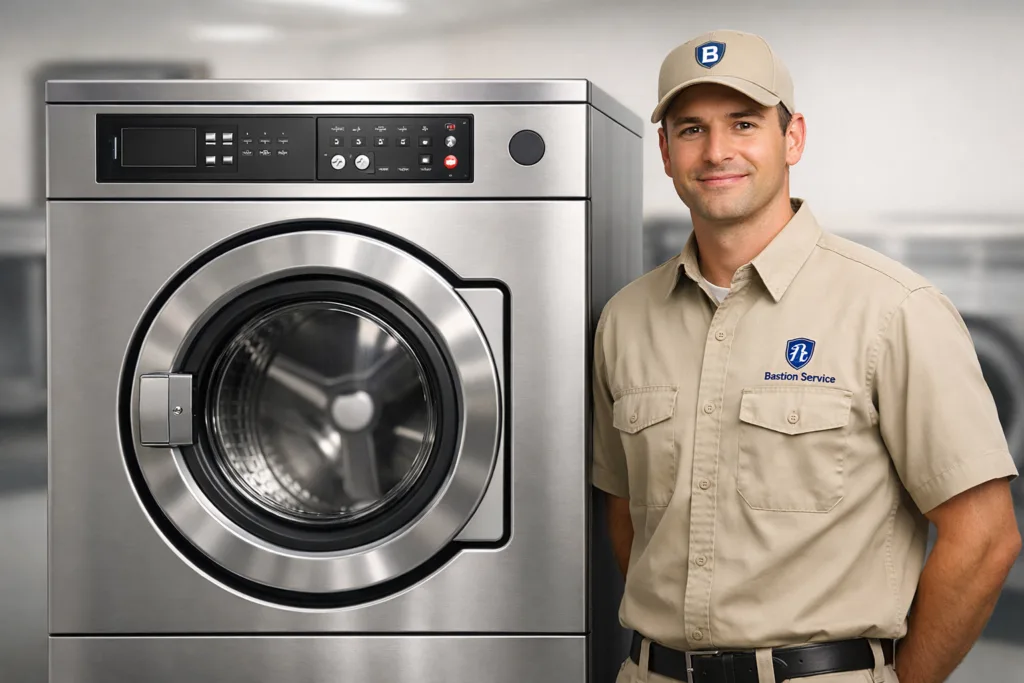




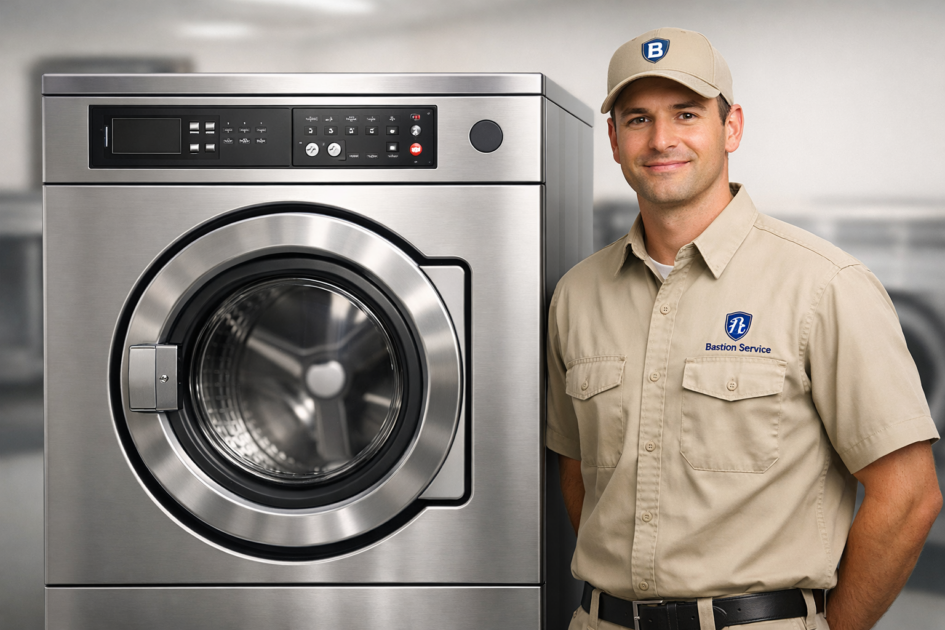
When a Wascomat washer starts failing during daily operations, the main priority is restoring consistent performance without wasting time on guesswork. For businesses in Del Rey, that usually means identifying whether the problem is tied to draining, extraction, water fill, controls, door locking, or a mechanical component that is beginning to wear out. Bastion Service provides Wascomat washer repair with a service-first approach focused on symptoms, downtime impact, repair scheduling, and the most practical next step for the machine in front of you.
Related commercial service paths in Del Rey include Wascomat Commercial Repair in Del Rey, Commercial Washer Repair in Del Rey, and Wascomat Dryer Repair in Del Rey.
A washer problem rarely stays isolated for long. One unit that will not finish a cycle can slow sorting, delay drying, force staff workarounds, and reduce output across the day. Early inspection helps determine whether the issue is limited to a single failed part or whether related wear, vibration, or repeated fault conditions are already affecting the rest of the machine.
Common Wascomat Washer Problems Seen in Del Rey
Washer not starting or stopping before the cycle ends
If the washer powers on but does not start, locks up at the beginning of the cycle, or stops before completion, several systems may be involved. Door lock assemblies, control boards, user interface problems, power supply issues, and protective shutdowns can all create similar symptoms. This is why a no-start condition should not be treated as a single-part assumption.
In many cases, the pattern matters as much as the fault itself. A washer that fails only on certain cycles, only after filling, or only once the drum begins to move points the diagnosis in a different direction than a unit that remains completely unresponsive. Tracking when the shutdown happens can speed up repair decisions.
Slow draining, standing water, or drain-related shutdowns
When water stays in the drum, loads cannot move to the next stage and staff often end up repeating steps just to keep work moving. Slow draining can be caused by pump problems, restrictions in the drain path, sensor faults, or a control issue that is not allowing the machine to complete the drain portion properly.
Drain trouble often shows up alongside other complaints, including long cycle times, spin interruptions, or loads that come out wetter than expected. If standing water is becoming routine, service should be scheduled before pump strain or repeated shutdowns create a larger outage.
Long fill times or poor water intake
A Wascomat washer that fills too slowly, intermittently, or unevenly may have trouble reaching the programmed water level. Possible causes include inlet valve wear, blocked screens, pressure-sensing issues, or control communication problems. These faults can affect both cycle timing and wash quality.
Fill issues are easy to underestimate because the machine may still appear to run. In practice, delayed fills can throw off production timing and create inconsistent results from one load to the next. If staff notice certain cycles taking longer than normal or stopping during fill, the machine should be checked before the problem spreads into repeated incomplete loads.
Vibration, banging, or unstable spin performance
Strong vibration during extraction is more than a nuisance. It can indicate suspension wear, bearing trouble, mounting concerns, drum support issues, or a control response to imbalance that is no longer working properly. The longer the washer runs under these conditions, the more likely secondary damage becomes.
Noise trends are important here. A washer that has gradually become louder, more unstable, or more prone to banging on spin usually needs attention sooner rather than later. Waiting can turn a repairable condition into a broader mechanical problem affecting multiple assemblies.
Leaks, residue, or poor wash results
Leaks may come from hoses, door boot areas, pumps, fittings, internal seals, or movement-related wear caused by vibration. Poor wash performance can point to incorrect water levels, weak draining, heating issues where applicable, or incomplete cycle execution. Soap residue, repeat rewashing, or inconsistent extraction usually indicates that the machine is not running through the process the way it should.
These problems are especially disruptive because they affect both equipment condition and load quality. If the washer is leaving behind water, detergent, or unsatisfactory wash results, the repair decision should include both the visible symptom and the underlying cause.
Why Accurate Diagnosis Matters on a Wascomat Washer
Washer symptoms overlap. A machine that stops mid-cycle might have a drain fault, a lock fault, a motor issue, or a control problem reacting to something else. A leak might be a straightforward seal failure, but it can also be connected to excessive movement or alignment issues that need to be addressed at the same time.
For businesses in Del Rey, the value of diagnosis is simple: it reduces repeat downtime. Instead of changing parts based on the most obvious symptom, the machine is evaluated as a system. That helps clarify what failed, what may be affected next, and whether the washer can return to stable operation under normal daily demand.
Symptoms That Usually Mean It Is Time to Schedule Repair
Service is usually the right move when the washer shows any of the following:
- It will not start consistently or does not finish cycles
- Water remains in the drum after washing
- Spin performance is weak or loads come out too wet
- The machine leaks during fill, wash, drain, or extraction
- Cycle times are getting longer without a clear reason
- New noise or stronger vibration appears during operation
- Error codes or lockouts are happening repeatedly
- Staff must reset, rerun, or closely monitor the machine to get through a load
These signs usually mean the washer is no longer operating reliably enough for routine use. Even if it still runs part of the time, unstable performance often leads to wasted labor, delayed turnaround, and a higher chance of more expensive failure.
Preparing for a Wascomat Washer Service Visit
Before repair is scheduled, it helps to note exactly how the problem appears in day-to-day use. Useful details include whether the washer fails on every load or only certain cycles, whether the problem began suddenly or worsened over time, whether any error messages appear, and whether the issue happens during fill, agitation, drain, or spin.
It is also helpful to identify whether the symptom is affecting one machine or several units used in the same workflow. That can help separate a machine-specific failure from a broader usage or utility condition. If leaking, noise, or breaker trips are involved, stopping normal use until the unit is inspected is often the safer choice.
Repair or Replace?
Many Wascomat washer problems are repairable when they are addressed before secondary damage spreads. Pumps, valves, locks, control-related faults, and various wear components can often be resolved without moving straight to replacement. The better question is not whether the current symptom looks serious, but whether the washer remains structurally sound and likely to return to reliable service after repair.
Replacement becomes a stronger consideration when multiple systems are failing at once, the machine has recurring outages, or the repair list keeps growing faster than the unit can provide value. A good evaluation looks at the full condition of the washer rather than a single visible complaint.
Service Support for Del Rey Businesses
Wascomat washer issues affect more than one load at a time. They interrupt workflow, reduce output, and force staff to compensate around equipment that should be doing its job predictably. If your washer is leaking, failing to drain, stopping mid-cycle, vibrating excessively, or falling behind normal production, scheduling repair is the practical next step. A symptom-based inspection helps determine what failed, what should be addressed now, and how to restore the unit with the least disruption to daily operations in Del Rey.


